Logo Eara

Dogs

AuthorEARA team
Although dogs are not commonly used in research, they are important for toxicity testing as well as for basic and translational studies. Dogs suffer from many naturally occurring diseases, hence veterinary research using dogs is also essential. 
Dogs are not commonly used in research. However, they are used in biomedical research because they have certain similarities with humans – for example in their genetics, anatomy and physiology – which are not present in most other animals. Dogs are also used for veterinary research and, because some human diseases also affect dogs, such as cancer and heart diseases, for studies that benefit both humans and dogs.   
EU legislation does not allow experimentation on any animal if there is an effective non-animal method available and dogs are only used when other animal models will not achieve meaningful results. This means they are used in only a very small percentage of procedures. In last years, dogs make up 0.1% of all animals used for research purposes in the EU and Norway. 

Why are dogs used in research?

Media Bank Image
Beagles are the most common dogs used in research due to their size, genetics and ease of handling. Other breeds, such as Boxers, Golden Retrievers and Labrador Retrievers are also used in research due to their natural predisposition to diseases, including cancer.   
Because dogs are domestic animals and share the same environment with humans, they are also exposed to the same environmental factors that can lead to diseases or affect disease progression and response to treatments. The lifespan of dogs, around 10-15 years, allows researchers to develop long-term studies that take ageing into account.  
Genetical engineering in dogs has ethical concerns and practical constraints. Instead, researchers rely more on natural occurring genetic disorders or breed-specific mutations that cause diseases in dogs and humans alike, such as muscular dystrophy and bleeding disorders. 
However, modern gene-editing therapies are now applied in dogs, as well as in humans, to treat specific diseases.  

Which areas of research use dogs? 

Toxicity tests
Before clinical trials in humans, the European Medicines Agency (EMA) and the US Food and Drug Administration (FDA) usually require that a new drug istested in both a rodent and a non-rodent mammal, usually dogs or, increasingly, minipigs (in specific cases monkeys are also used).  
The European Federation of Pharmaceutical Industries and Associations (EFPIA) has shared case studies that illustrate the value of dogs in toxicity testing, and therefore drug development and safety practices in the clinic. For example, in one case study, dogs were used to assess a compound for its use as a new cancer therapy, with the repeated dose toxicology study showing that the compound could cause severe issues with bleeding – this was not detected in rat studies, but was seen in an early clinical trial, reflecting the predictability of dogs for humans and ultimately leading to the termination of the project. 
Approximately 1 in 4 dogs will develop cancer at some point during their life. The effectiveness of some new cancer drugs is tested in dogs with the same cancers as humans, as an approved drug can then have a benefit for both humans and dogs. In a study at NUS Medicine, in Singapore, researchers tested an approach to trigger the immune system to fight cancer in pet dogs with existing cancer – which is hoped could become a standard treatment option for both humans and dogs. 
Research led by the UK National Centre for the 3Rs (NC3Rs) and pharmaceutical partners has shown that for some biological drugs, such as monoclonal antibodies, testing in a single rodent species may be sufficient — significantly reducing the need for dogs. 
Basic research and translational research
A small number of dogs is used in biomedical basic and translational research when the use of dogs is necessary. Examples include the study of heart conditions, due to the resemblance between dogs’ and humans’ hearts, Duchenne Muscular Dystrophy, cancer and diabetes, diseases that also occur naturally in dogs. In 2022, 8709 dogs were used in the EU and Norway for any research purpose, which corresponds to 0.1% of the total number of animals. 9% of all dogs were used for basic research and 34% in translational and applied research. 
Although dogs have much shorter lifespans than humans, the fact that they live with people and have similar social and environmental experiences makes them suitable for studying age-related diseases. A study at the University of Bath, UK, and Auburn University, USA, found that dogs as well as cats can provide a better reflection of ageing and, in turn, Alzheimer’s disease than traditionally used species such as mice. Another project, EVOLOR, from EARA member Eötvös Loránd University, Hungary, similarly found that dogs shared similarities to humans in terms of ageing on brain activity, cognition, personality and gene expression. 
The keen sense of smell in dogs means they can be successfully trained to detect certain diseases, including Covid-19 from urine samples, in a study at EARA member the University of Helsinki, Finland.   

In recent years, the dog has grown to be one of the most important animals for researchers who aim to understand the biological background of complex traits.

Researcher Enikő Kubinyi, Eötvös Loránd University, Hungary

Dogs are also used for improving diagnosis and finding therapies for haemophilia, a hereditary condition that naturally affects dogs, caused by genetic defects that reduce the ability of the blood to clot due to the lack of coagulation factors. EARA member Queen’s University, in Canada, have cared for a unique colony of mixed-breed dogs with naturally occurring haemophilia since 1981. Their research has directly contributed to the approval of two gene therapies now used in human patients. The dogs used in the studies are provided with excellent care that meets or exceeds the standards defined by Canadian regulatory bodies. As for the dogs that are born in the colony but do not have the genetic defect needed for the study, they are adopted by local community. 

Veterinary research
Media Bank Image
Media Bank Image
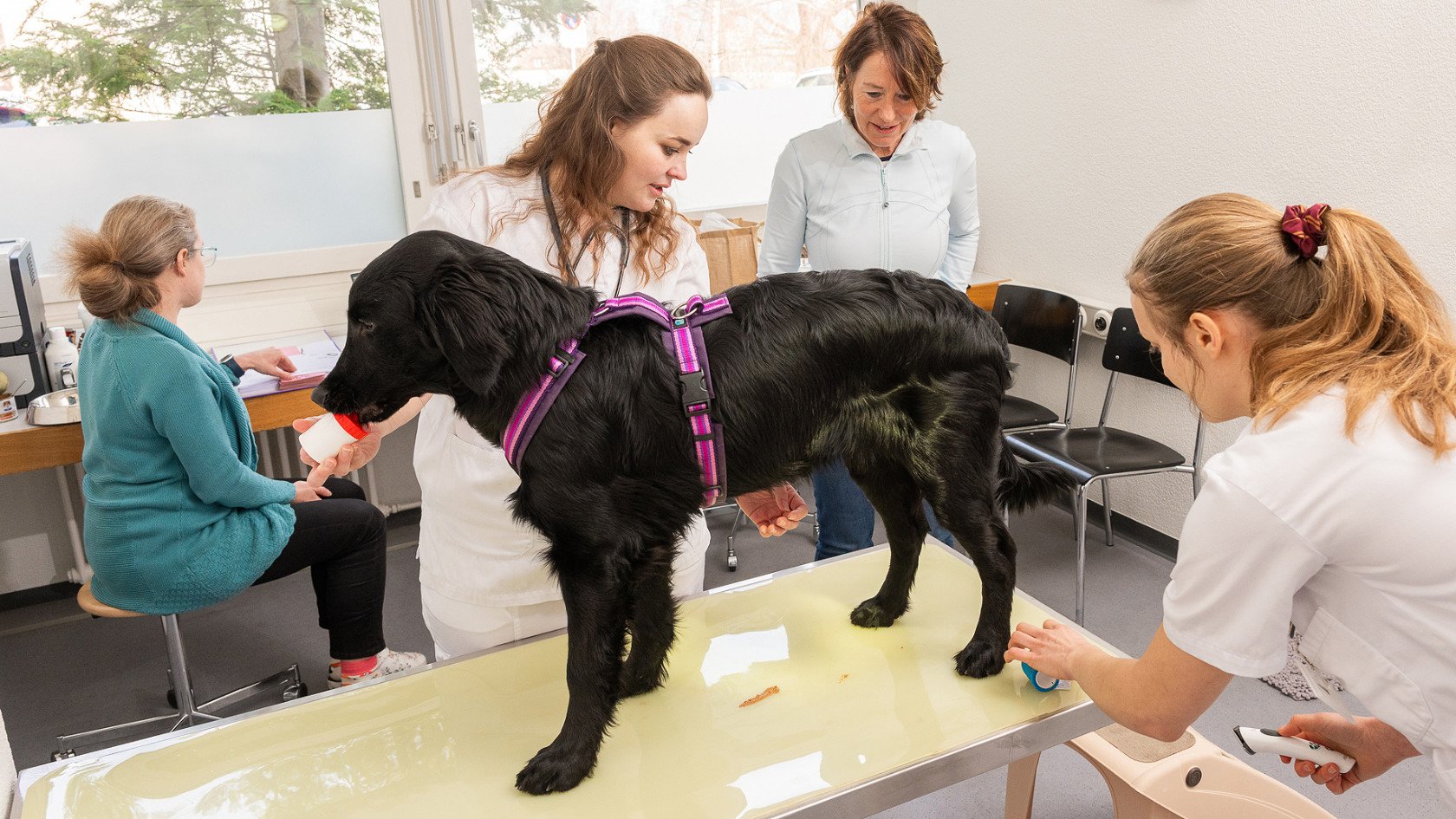
Because dogs also suffer from many diseases, including chronic diseases such as cancer, it’s important to monitor their health, improve diagnosis and develop new therapies. The Growing Dog Project, from the EARA member University of Zurich, Switzerland, is a unique long-term veterinary health project that follows the health of dogs through their lives to improve early disease detection and animal health. 
In 2022, researchers from the University of Guelph’s Ontario Veterinary College, Canada, tested a therapy for cancer in dogs combining nanotechnology and laser to diagnose and treat tumours. This non-surgical treatment could also be an alternative to cancer surgery in people. Also in Canada, researchers are studying new tomography systems to monitor prostate cancer therapy in dogs, which could additionally be applied to humans. Thanks to advancements in diagnosis and therapies, dogs today have a better chance of being treated. 
In the US, researchers at Yale School of Medicine developed a cancer vaccine that was able to slow, or halt the progression of, certain cancers in pet dogs in multiple successful trials. Meanwhile, trials of another vaccine (Griffioen) in pet dogs with bone or bladder cancer, by researchers in the Netherlands, including EARA member Maastricht University, showed that it could extend survival and, in some cases, restore health. The Maastricht researchers treated 35 dogs, suffering from bladder and bone cancer, with the Griffioen vaccine – half of them survived to the end of the 400-day test period, and two of them fully recovered. Among the dog patients was Rax, a 10-year-old dog, who had developed bone cancer. After treatment his tumours disappeared and Rax returned to normal health. 
CAR-T cell therapy, a new type of cancer treatment that uses the immune system to kill cancer cells has been used in humans and dogs with blood cancer. At the College of Veterinary Medicine of the University of Minnesota, US, researchers developed clinical trials using CAR-T cells to treat pets with lymphoma, which accounts for 15-20% of new cancer diagnoses in dogs. 

Beyond results that have shown to benefit our companion animals, it is our hope to extend the therapy to human patients in the future and improve healthcare outcomes for those who have cancer – especially when they have no treatment options left. 

Dr Ho Yoon Khei, NUS Medicine, Singapore 

How are dogs taken care of?

Dogs are well-understood animals, and it is relatively easy to provide them with good welfare and to be confident that they are happy and well-looked after. All dogs housed at both research and breeding facilities are given access to play areas for mental and physical stimulation, while pregnant dogs are carefully monitored to ensure the health of the mother and her litter, with improved housing conditions close to delivery and during whelping. 
Dogs are social animals and are therefore housed in groups, in cages that are adapted for the species and ensure that each animal has the appropriate spacerequired by law. The environment must be clean, dry and with appropriate and controlled temperature and humidity. For enrichment and stimulation, dogs are provided with treats, toys and platforms that are adapted to species-specific activities such as chewing.   
There are ongoing efforts by the EU to improve dog welfare including improving housing conditions and daily care handling as well as training dogs to reduce levels of stress during experimental procedures. In these facilities, as well as any other animal facility, veterinarians are on hand seven days a week, and in both the EU and UK it is a legal requirement that all staff are trained specifically in the care of dogs. 
See the video of a UK facility of EARA member Marshall BioResources, from Understanding Animal Research. 

Limitations of dogs as animal models for biomedical research

Like all research models, dogs do not perfectly replicate human biology, and findings from animal studies cannot always be directly translated to humans. Eventhough they resemble humans in many physiological processes and suffer from some of the same diseases, dogs have physiological and genetic differences that can cause discrepancies in drug metabolism, disease progression and response to treatments. To address these limitations, biomedical research rarely relies on a single species. Instead, different animal species and non-animal approaches are used in a complementary way, with each chosen for the specific biological features that best match the research question.   
Dogs have a lot of variability, even within the same litter, which makes it more difficult to draw conclusions. However, this genetic diversity can be also beneficial because it ensures that findings are physiologically relevant. On a practical side, the use of dogs in research is far more costly than mice, due to their size and longer lifespan and studies using dogs are also lengthier.  
The need to use dogs in research can be a controversial subject, and this has attracted significant attention from activists, who often campaign to shut down the facilities that house purpose-bred dogs, without consideration for what would be lost in research and medical advances.​​​ The public opposition to using dogs in research creates tension and can pressure researchers and policymakers to refrain from the use of dogs in research even when their use is necessary.  

Replacement, reduction and refinement

In studies compatible with rehoming, EU legislation requires that the breeder, supplier, or research facility have a rehoming program in place to ensure that healthy, well-socialised dogs are adopted. As new technologies reduce research impact and invasiveness, dogs are increasingly rehomed, and more programmes are being developed to allow more dogs to go to suitable homes after a research study is finished. 
There are numerous ongoing efforts – many of them funded – to minimise the number of dogs in research studies and toxicity tests wherever possible, as well as approaches to maximise their wellbeing. While these diverse initiatives are actively contributing to the replacement, reduction and refinement of dogs, their use remains essential in both basic and translational research for the foreseeable future, since there are still research areas that benefit specifically from the use of these animals, that other species cannot fill. 
Due to the risk of misinformation about the necessity of dogs in research, which can mislead the public, it is critical that the biomedical community continues to advocate for the responsible and regulated use of dogs for scientific discovery and medical developments. 
Other useful sources
Dogs in medical research, Understanding Animal Research
Dogs in Research FAQ, Americans for Medical Progress