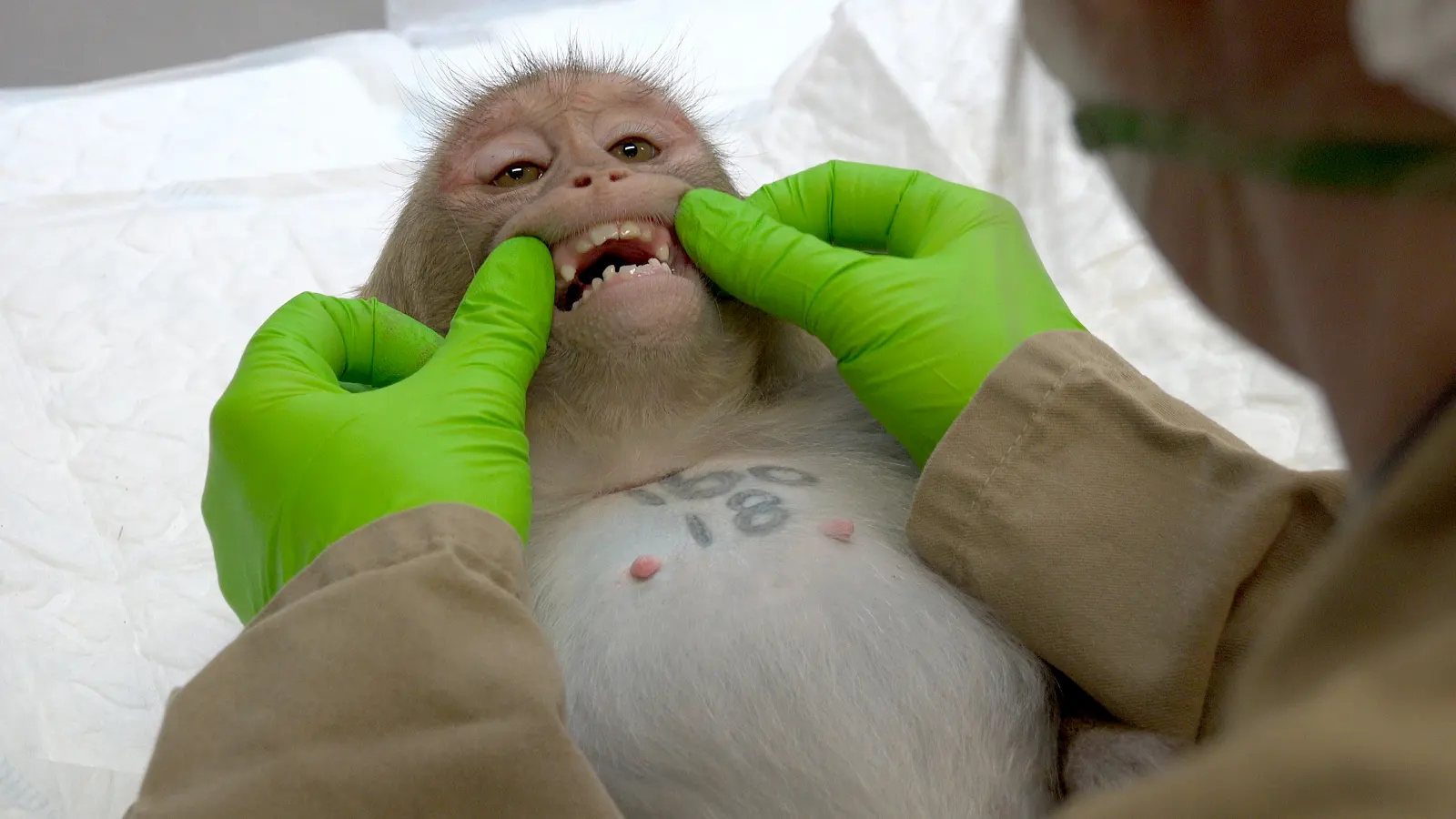
Monkeys are rarely used in research. They are only used when no other animal species is suitable, and no non-animal alternative can answer critical research questions.
Why are monkeys used in research?
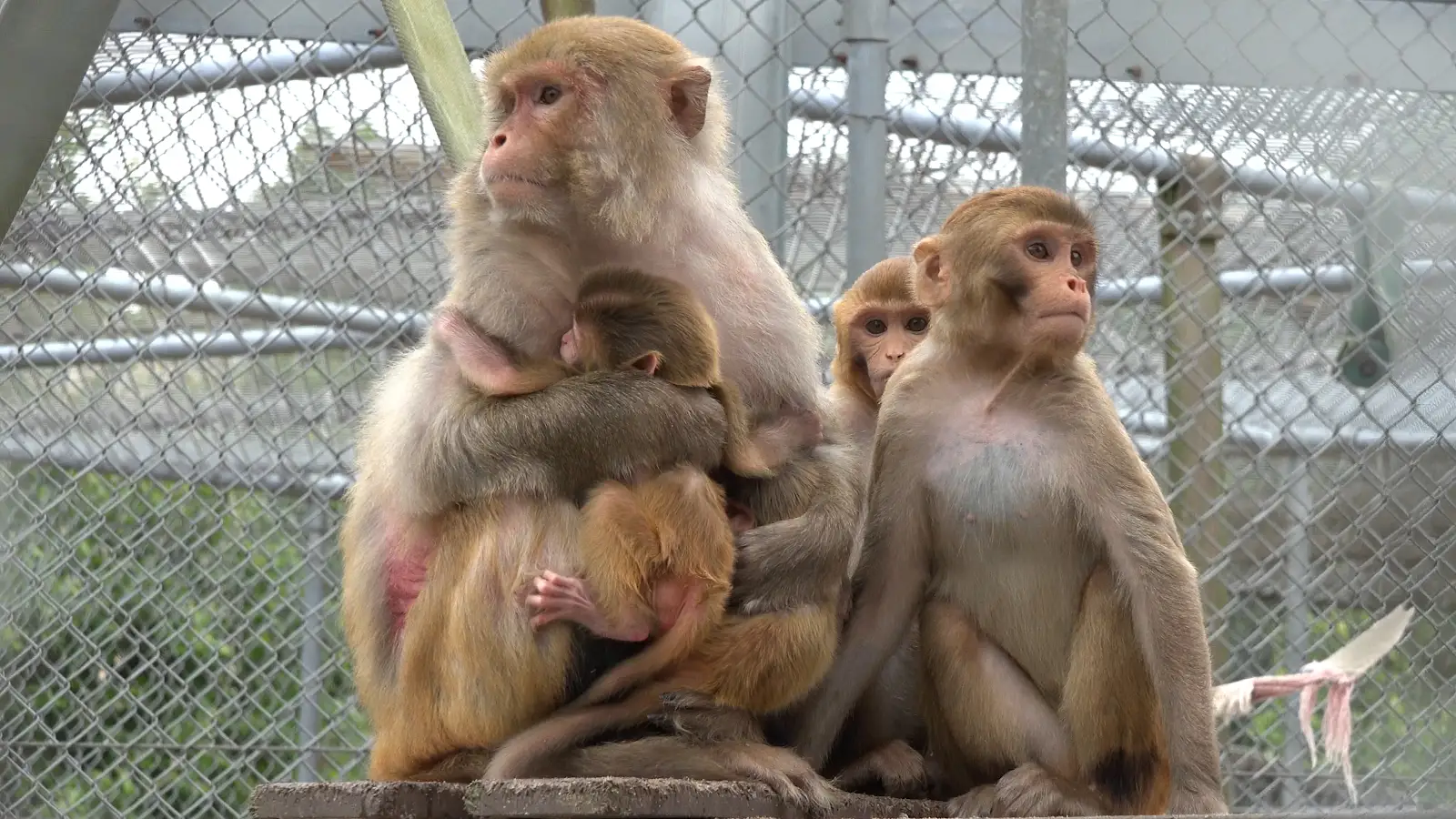
Ethically conducted research with nonhuman primates plays a critical role in understanding complex human diseases and in developing new treatments with efficacy across the human lifespan. Nonhuman primate models complement and support cell- and tissue-based systems, human subjects research and emerging new approach methodologies.
Which areas of research use monkeys?
Monkeys play a crucial role in understanding and combating infectious diseases that affect humans. Their immune systems are similar to ours, allowing them to respond to infections and vaccines in comparable ways. All leading COVID-19 vaccines (Moderna, Oxford/AstraZeneca, Pfizer/BioNTech and Johnson & Johnson) were tested for safety and efficacy in rhesus macaque monkeys before human trials. During the COVID-19 pandemic, monkey studies were essential to confirm that vaccine candidates could protect against the virus and were safe to use in people.
Likewise, monkeys have been key in developing vaccines or treatments for other deadly outbreaks: for example, experimental monoclonal antibody therapies for Ebola achieved 100% survival in infected monkeys, providing confidence to use them in patients.
Monkeys are also susceptible to simian immunodeficiency virus (SIV), a close relative of HIV, which allowed researchers to develop the combination antiretroviral therapies (ART) that have transformed HIV/AIDS from a fatal illness to a manageable condition. These are cases where no other animal model reliably replicates human disease.
As a recent U.S. National Academies expert panel emphasised, research with monkeys “is critical to [our] ability to respond adequately to public health emergencies and carry out high-impact biomedical research”. Their report warned that without enough monkeys for research, our capacity to develop life-saving vaccines and treatments for diseases like COVID-19, Ebola, polio or measles would be severely compromised.
Basic research
A lesser-known area where monkeys have been invaluable is in studies of human reproduction, pregnancy and development. Because monkeys have reproductive systems and hormonal cycles very similar to ours, they have contributed to several medical advances in this field. Research with rhesus monkeys in the 20th century was critical in developing in vitro fertilisation (IVF) techniques, which have since allowed millions of people to conceive children. Monkeys were also at the heart of the discovery of the Rhesus factor in blood – the Rh factor, named after rhesus macaques, is the blood antigen that can cause complications in human pregnancies (and blood transplants). Some reproductive studies continue with monkeys to answer questions that can’t be studied in humans.
For example, in 2022 scientists created the first detailed atlas of egg cells in the primate ovary, tracking the lifetime supply of eggs in monkeys. This kind of research improves our understanding of female fertility and ovarian ageing – knowledge that could inform new treatments for infertility or menopause-related conditions.
Monkeys have been used to improve care for newborn infants. Studies in baboons (a type of NHP) helped researchers develop better strategies for ventilating premature infants’ fragile lungs, reducing lung injury in preterm newborns. Scientists have also used monkeys to study how infections during pregnancy might trigger pre-term birth, an important finding since such infections are difficult and unethical to study in pregnant women. By observing how maternal infections affected pregnancy outcomes in monkeys, researchers identified inflammatory pathways that could be targets for preventing premature labour.
Research on monkeys is, quite rightly, a particularly sensitive issue… They are used only when no other species and no alternative approach can provide the answers to questions about such conditions as Alzheimer’s, stroke, Parkinson’s, spinal injury, hormone disorders, and vaccines for HIV… In the case of monkeys, the loss to medical progress would be enormous.
How are monkeys taken care of?