
What happened at #BOARD26?
The sixth edition of Be Open About Animal Research Day (#BOARD26), EARA’s global, 24-hour social media campaign, that celebrates examples of openness in animal research with the public, took place during the FENS Forum 2026, on 9 July.
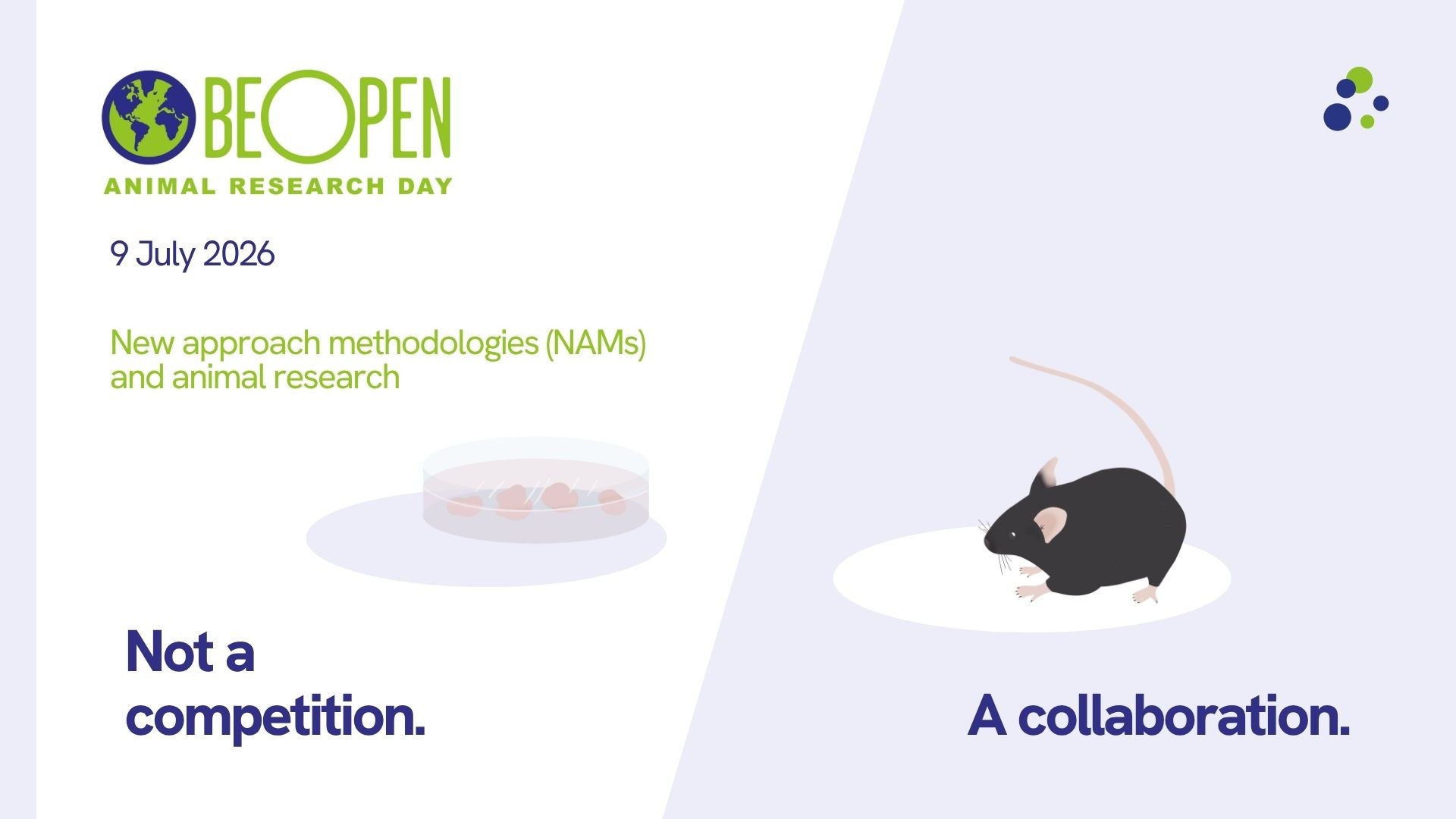
For the first time ever, #BOARD26 was a theme-driven campaign, addressing a commonly spread, misleading and polarising message that portrays animal research and new approach methodologies (NAMs) as competing rather than complementary. NAMs cover a wide range of tools, including advanced in vitro systems, organoids, organs-on-chip, computational modelling and human data approaches that are transforming biomedical research. However, the misconception that NAMs can already replace all animal research has been influencing policy decisions that endanger scientific progress.
More than 300 contributions, from 37 countries, put forward a central idea: animal models remain essential to study complex processes in living organisms, while NAMs provide crucial mechanistic insights. Most research requires the use of both approaches — each model is used according to the scientific question and animals are not used when there are alternatives. By sharing video and written statements, interviews, podcast episodes, case studies and infographics, the biomedical community highlighted how they welcome the advancement and increasing complexity of NAMs and animal models alike, reiterating that, in science, approaches that integrate multiple models are the only way to forward scientific progress.
With more than 300 people and institutions contributing from 37 countries, this has been our most global conversation yet. Two messages came through clearly: new approach methodologies and animal research are complementary, not competing — the right model always depends on the scientific question. And we heard an important warning from colleagues in Egypt, Uganda and Nigeria, that any phase-out of animal research risks hitting countries with less developed research infrastructure hardest, given the barriers they face in implementing NAMs. These are the voices that must shape the path forward. Thank you for making #BOARD26 a truly worldwide dialogue.
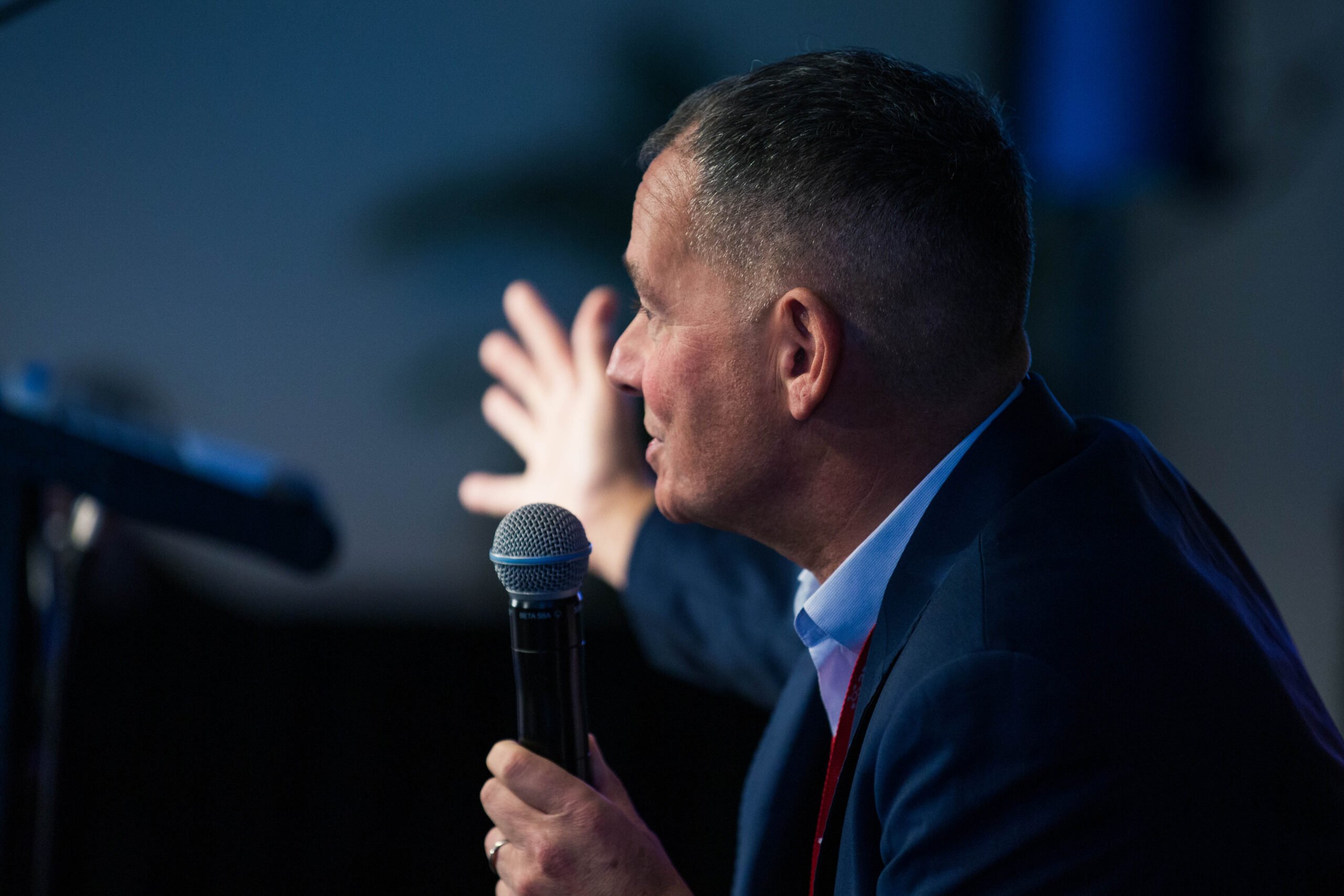
Kirk Leech, EARA Executive Director
Examples of participations in the campaign included:
- Institutions in Portugal and Germany organised visits to the animal facilities and open days to demonstrate how different research models are used together in biomedical research. At Instituto de Investigação e Inovação em Saúde (i3S), an EARA member in Portugal, the public event was covered by journalists, resulting in a national news piece on the ethical oversight of research using mice.
- In the Netherlands, a country with a particular focus on the development of NAMs and a political landscape that has recently threatened primate research funding, more than 150 scientists shared statements about animal research and the ability to use various research methods in the development of new treatments and medicines. All statements are available on Stichting Informatie Dierproeven (SID)'s website and more scientists are reaching out to contribute.
- In Belgium, KU Leuven shared case studies, statements from researchers and an interview with Professor Bart De Strooper on the use of NAMs in Alzheimer's research.
- A video feature with 15 scientists from different research institutions across Spain - including EARA members COSCE and CNB - sharing successful experiments in which animal research was essential.
- Videos from numerous researchers and institutions all over the world about research using animals and NAMs.
- Videos from the Organoid Facility at Imperial College London, United Kingdom, the rodent facility at EARA member Charité - Universitätsmedizin Berlin, Germany, and iCBR-FMUC, Portugal, showcasing research using NAMs and animals and the complementarity between both. EPFL, in Switzerland, highlighted a study on a severe rare disease that can lead to death before the age of two, in which researchers combine cells from patients, mice and mice organoids.