
Logo Eara

Rare Diseases

AuthorEARA team
Rare diseases, such as cystic fibrosis, haemophilia and Huntington’s disease, affect fewer than 1 in 2,000 people globally. But, collectively, they are estimated to affect 6% of all people around the world. Because each disease is rare, usually there is little information about them and 95% of those affected do not yet have any treatment available. Research using animals can play a crucial role in improving the undertanding of these diseases and develop treatments. 
Rare diseases are defined by the European Union as diseases that affect fewer than 1 in 2,000 people globally (and sometimes only a handful of individuals). Although they might be rare individually, collectively they are estimated to affect 6% of all people around the world and 95% of those affected still do not yet have any treatment available. 
As they are rare – unlike diseases such as many cancers, Alzheimer’s and Covid-19 – usually very little is known about them and there are likely to be few research studies available to help scientists move their knowledge forward. Therefore, research using animals can play a key part in understanding rare diseases and contributing to discoveries that can lead to treatments and cures.

Why are animals used in rare disease research? 
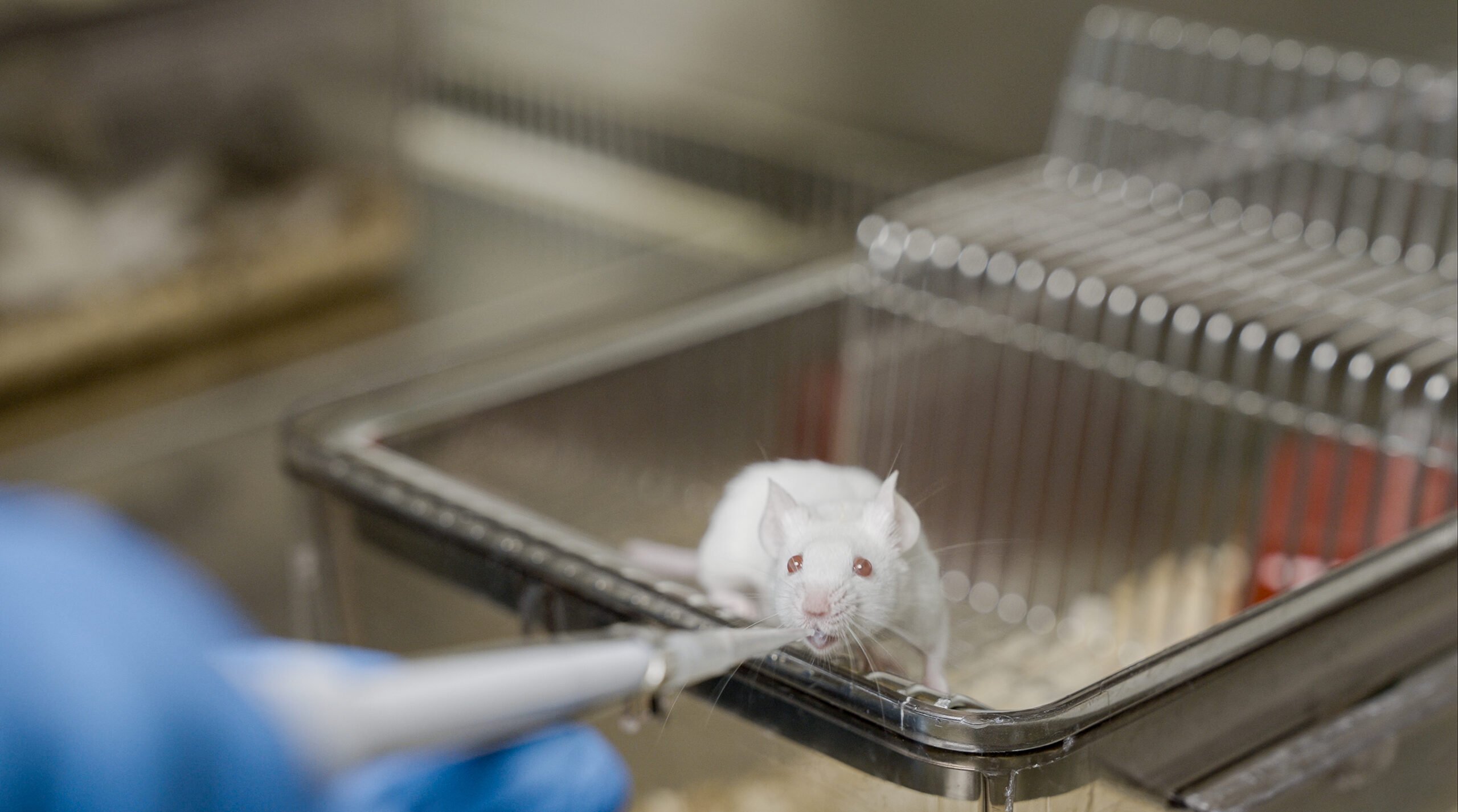
Media Bank Image
Oral administration of drug to a mouse using a micropipette. CREDIT: MELS, University of Zurich
Because rare diseases are complex and can affect any part of the body, scientists need to study organs like the brain, heart and liver, as well as body systems like the immune or reproductive system. This is why animals are frequently needed. Many rare diseases start in childhood and can affect either only males or females, therefore the sex or age of the animals can also be significant factor in a particular study.
There is one common theme for the majority of rare diseases – around 70-80% have a genetic basis, where certain genes have become faulty. This means a key way that animals can be used, to investigate what may cause a particular disease, is to introduce a specific gene of interest into the animal and assess the effects on its body and how these faults can be fixed or prevented. This can work the other way round as well, where animals showing certain symptoms or features characteristic of a disease can be analysed to see how their genes may differ to a healthy animal.
Any studies at this stage are part of basic research, which might not have a direct translatable application to treating diseases in the clinic, but is nonetheless essential to provide the scientific basis for understanding a disease in all its fundamentals and complexities.
Within this field, genetic manipulation of animals, such as mice and rats, is a crucial tool to make them have features that are similar to people, and mimic the human disease condition. This can be done by inserting something like a fragment of human DNA, or a tumour into them, so that the mice react in a similar way to a human. For example, several types of mice species have been bred with certain genetic differences to a normal mouse for the purposes of researching into a specific rare disease. At a later stage, such as when testing drugs that are intended for humans, this means that the animals are more likely to show the same reactions as us and can provide important insights into the drug’s safety and effectiveness. 

Which research on rare diseases benefits from animal research?

Genetic diseases, such those that are more generally familiar – cystic fibrosis (affecting the lungs), haemophilia (blood) and muscular dystrophy – arise either because of a faulty gene or genes, DNA damage, or a combination of genetic mutations and environmental factors. Sometimes, the mutations can develop throughout a lifetime, while in other cases they are already inherited. An example of the latter is sickle cell anaemia (or sickle cell disease), which affects the red blood cells and blocks blood flow due to the presence of a faulty gene. It is a lifelong condition that can only be cured with a bone marrow transplant, but requires a genetically similar donor. Researchers have therefore investigated alternative approaches, including the use of CRISPR gene editing to modify the red blood cells of people with the condition – which was safety tested in mice before it could progress to human trials (CRISPR itself was developed using animal research).

As well as using genetically altered mice, other treatments for sickle cell disease hold great potential such as producing cells of interest from human stem cells, which have the ability to develop into any type of cell, and then transplanting these into animals to grow and develop. 

A variation on this approach has been used at the University of Alabama at Birmingham, USA, which also previously developed the first mice that could be used to study sickle cell anaemia. By making mouse skin cells develop into stem cells, the researchers successfully made these mice models produce healthy, functioning blood cells and the diseased animals showed no symptoms.

The blood condition haemophilia, also known as the ‘Royal Disease’ because it ran in the family of certain royal lines, is where the ability of the blood to clot is severely hampered, leading to excessive bleeding. It is now known to be caused by a change in one gene in the X chromosome, that is inherited and passed down through generations. Studies in dogs that naturally had a type called haemophilia B led to the development of a gene therapy that later went to human trials, from research at Auburn University, USA, while a factor from the blood of pigs has historically been used as a treatment for specific types of haemophilia (such as haemophilia A), to successfully stop bleeding episodes in severe cases.

Rare diseases – individually rare but collectively common
There are varying estimates for how many rare diseases there are, in part because of the different definitions of a rare disease in different regions – it is classed to affect fewer than 1 in 2,000 people in the EU. It is thought there are more than 7,000 rare diseases, or potentially even more than 10,000, affecting between 3.5 % and 5.9% of the global population – which amounts to up to 446m people – 30m in Europe.
In addition, in a term known as the ‘diagnostic odyssey’, the average time that someone with a rare disease can expect to be diagnosed is 5.6 years, in large part because of the differing opinions and consensuses of different healthcare professionals, and the multiple appointments involved. 
The EU has therefore put in place strategic objectives aimed at improving patient access to the diagnosis, information and care of rare diseases.

Which animals are used in rare disease research?

Like us, dogs are also naturally prone to rare diseases. Some of these canine conditions have many parallels with human ones, and so research in dogs has helped to inform and improve both human and veterinary medicine, and holds the potential to do so for even more diseases in the future. Cancer-driving gene mutations, the biological make-up of tumours, and the spread of cancer (metastasis) all share similarities between dogs and humans. 

A rare disease that dogs can get is Batten disease – called neuronal ceroid lipofuscinoses in the canine version. Here, studies in dogs by a US team led by the University of Pennsylvania, have led to new findings about how best to deliver gene therapy to slow the development of the disease in children and in dogs. Studies at the University of Missouri have also looked at how to preserve the function of the retina – a common hallmark of Batten disease is vision loss. 

It was from a study at EARA member the University of Helsinki, Finland, that researchers found that the canine version of hypophosphatasia (impaired mineralisation of the bones and teeth) closely resembles the disease in human babies, and also marked the first report of this condition naturally occurring in dogs. The findings then allowed the team to develop a gene test for the specific dog breed they investigated, to identify the defect before birth. 

"Although hypophosphatasia has been extensively studied in humans, the results of the canine study are significant, as they provide the first spontaneous animal model for the disease, which may also open new avenues for the development of novel therapies," said Prof Hannes Lohi, University of Helsinki, Finland.

Dogs can also suffer from the blood disorder haemophilia. Another condition that is shared with dogs includes muscular dystrophy (MD), because the gene mutation in human MD matches that in golden retrievers with MD. In an unexpected development of studying a version called Duchenne MD in this breed, researchers at the University of São Paulo, Brazil, discovered a new gene mutation that can protect against muscle degeneration and weakness from the disease, opening new avenues to treatment.

Video from EARA member the Jackson Laboratory, USA, about how they use mice to explore genetic mutations involved in different rare childhood diseases, as well as translating these findings to the clinic.
How is the European Union tackling rare diseases?
With around 30 million people in the EU living with a rare disease, it has laid out its strategy for combatting this number by improving how patients can access diagnosis, information and care for their disease. One element to this is ‘building and broadening the knowledge base also through research’, including the funding of hundreds of research projects. 
The EU is working to pool different resources so that more professional expertise can be provided and shared, with a key component being a virtual European Reference Network (ERN), where those with expertise in rare diseases across Europe can collaborate to review people’s diagnoses and treatments. 
In addition, the EU Commission’s Joint Research Centre has developed the European Platform on Rare Disease Registration (EU RD Platform) to ensure that data is searchable for those who need it. Similarly, a resource created by EARA member the National Centre for Biotechnology (CNB-CSIC), Spain, is allowing users to explore the different molecular relations between rare diseases, and other clinical data, to improve the transfer of knowledge and identify scope for research collaboration. 
Another avenue is support for the development of so-called orphan medicinal products – new drugs for treating rare diseases that receive considerably less investment from the pharmaceutical industry given the smaller numbers of people who require them. 
"We need a European action plan on rare diseases because the world is changing – with new technologies, new knowledge, and new opportunities – and the 30 million people living with a rare disease in Europe cannot be left behind,", said Yann Le Cam, Chief Executive Officer at EURORDIS (Rare Diseases Europe).

Limitations of animal models 

While animal studies are crucial to study rare diseases, no animal model fully replicates the human organism in genetics, structure and function. For this reason, researchers use the model that better fits each research question, including non-animal models, and the conclusions are usually obtained from a combination of several complementary models.  
Mice and other small animals cannot replicate certain aspects of inherited neuropathies, such as Charcot-Marie-Tooth Disease, which appear first and most severely in the longest nerve fibres, because their nerves are too small compared to humans and other bigger animals.  
Other limitations can be linked to the causes of the diseases themselves. In the case of Amyotrophic Lateral Sclerosis (ALS), although mouse models that mimic hallmarks of the disease have been developed by removing specific genes, there are no models available that mimic all types of ALS because the disease is heterogeneous and can be caused by mutations in many different genes in humans. At least 40 gene mutations have been identified that cause ALS.  
Because animals in the laboratory are kept in controlled environments, it’s also difficult to study how rare diseases can be influenced by environmental factors.  
General challenges of rare diseases research 
Studying rare diseases poses an extraordinary challenge in the validation of models, which includes both animal and non-animal methods. The very poorly understood mechanisms behind rare diseases complicate the development and validation of methods that mimic their pathology because, collectively, we still don’t know enough about them.  
In addition, the low number of people affected by each disease restricts the availability of samples and data from patients that could help validate whether the models applied are mimicking the human disease. The fact that patients are often spread throughout the world additionally complicates the logistics of obtaining human data.   
Clinical trials, which are necessary to validate findings obtained in other models, including animals, also struggle with recruitment, making it more difficult to confirm if findings are translated to humans.  

New approach methodologies in rare disease research

The study of rare diseases spans many different research fields and employs various types of scientific technique, and animal research will undoubtedly continue to be a core component of this work, to understand how diseases arise and operate, and how they can be treated. However, it can also be complemented by a range of other methods. 

Human cells and tissues that are grown and cultured in the lab, for example, can fill some of the role of testing drugs and other compounds as possible treatments. Though they cannot give a comprehensive picture of how the drug will behave in the body, the effect on cells and how they respond can be very useful for informing future directions of research and strategies for treatment – such as whether a particular drug is suitable for investigating further in a living animal and, possibly, humans later down the line. 

On a larger scale, cells can be made to develop into organoids that resemble parts of organs or complete organs. This can now be achieved for virtually every organ, whether that is the brain, retina or pancreas, and research groups have increasingly been making use of organoids to model how different diseases take hold, as well as to test drugs. On a more fundamental level, organoids can also give insights into organ development, how cells interact with each other, and much more, to provide the basic information necessary to inform future medical interventions. 

By combining the use of rats and organoids, a study at Stanford University, USA, successfully reversed some of the molecular defects of Timothy syndrome, which causes severe neurological complications in newborns. It achieved this by creating brain organoids from human stem cells, which were then transplanted into the brains of the animals. 

Before drug tests even take place, computer modelling can help to predict the effect that a drug will have in the body and whether it is suitable to use for people. Computation also has the benefit of allowing researchers to screen many different compounds for their suitability as drugs, and the ease of use, accuracy and speed are often important advantages. 

One way that computation can be achieved, and that is gaining popularity in many fields (not just biomedical research), is through Artificial Intelligence (AI). A team at EARA member the University of Zurich, Switzerland, developed an AI that could identify drug targets for cystinosis. This condition is caused by the build-up of the amino acid cystine in different tissues and organs, leading to varied symptoms that can be severe and necessitate organ transplants, such as of the kidneys. The drug targets were then validated by testing them in mice and zebrafish, revealing treatments for the condition with new or existing drugs. 
Together with animal research, the techniques outlined here can provide the best possible picture of our knowledge and treatment of rare diseases. 
Despite advances in other types of research methods, there is no doubt that animal research will continue to be needed in the field of rare diseases. Overall, researchers, doctors and healthcare professionals still know very little about rare diseases, and so to encapsulate as many aspects as possible of a disease’s cause, emergence, progression and effects, studies in a whole, living organism must be carried out to provide the essential information to ultimately develop, treat and prevent these diseases. 
Useful sources 
Rare Diseases, European Commission
Orphanet, Knowledge on rare diseases and orphan drugs
A multi-animal model collaboration to speed up rare disease research, Lab Animal