
Neuroscientists in the US have succeeded in transplanting human brain tissue into mice, creating a new way to study human brain development and disease.
Studying how human brain cells develop and interact is challenging because living human brain tissue is rarely accessible for research. Human brain organoids, small clusters of neurones grown from human stem cells in the laboratory, can reproduce some features of brain development, but they lack blood vessels and connections to a living body and do not fully develop some specialised cell types.
Researchers from Stanford University genetically modified mice so they lacked the cells that would normally form the cerebral cortex — the outer layer of the brain involved in functions such as memory and interpreting information from the senses. The researchers then transplanted human brain organoids into the newborn mice. Over the following two to three months, the human tissue grew to fill more than 90% of the space left and formed connections with the mouse brain and spinal cord.
The transplanted tissue also developed specialised neurones that have not previously been produced in laboratory-grown brain tissue. The mice performed similarly to healthy mice on behavioural tests, showing that the human tissue did not enhance their behaviour or intelligence. In another experiment, mice with the human tissue developed motor problems after exposure to low oxygen, providing a way to study how human brain cells respond to conditions linked to cerebral palsy.
“We couldn’t study complex human behaviour in a dish (...) Neuroscientists will be able to learn much more about the causes and mechanisms of neurodevelopmental and pregnancy-incurred disorders and to test possible interventions to correct or prevent them,” said Sergiu Pașca from Stanford University and lead author of the study published in Nature. Pașca recently participated in the Brain Debate at FENS Forum 2026, alongside EARA.
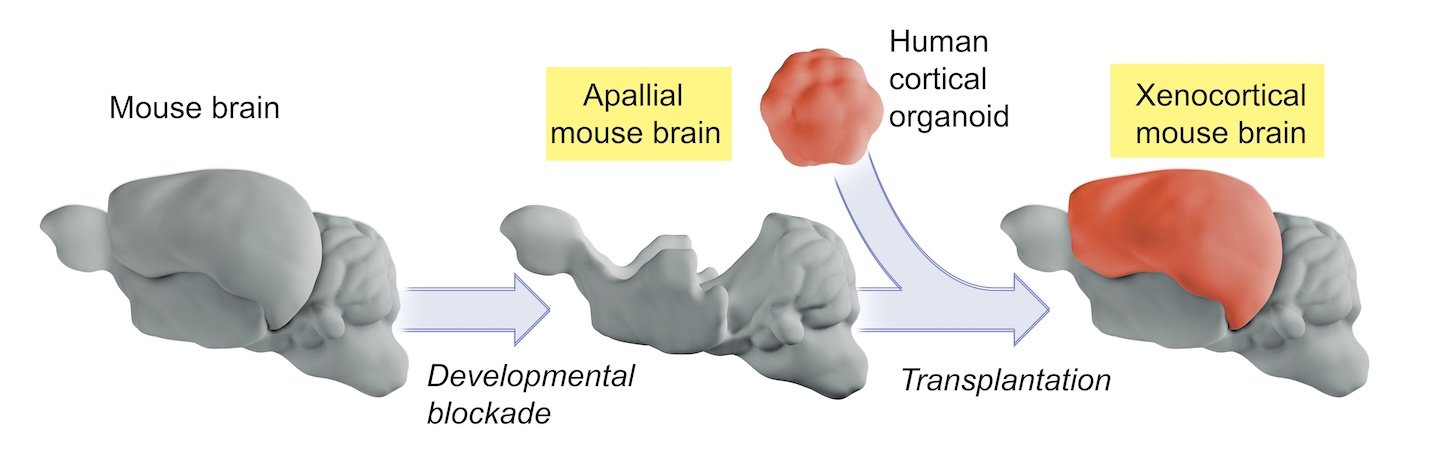
Credit: Standford Medicine