Zebrafish are one of the most widely used non-mammal species in biomedical research, especially for understanding how diseases develop and for testing potential treatments at early stages. As vertebrates, they are similar to humans in many biological aspects and they can be used to study diseases, to understand the effects of genetic and environmental factors and to identify new targets for treatments.
Zebrafish are particularly valuable in research because they are vertebrates (they have a backbone, like humans), they develop quickly, and in early life stages their bodies are naturally transparent, which lets researchers watch biological processes in real time.
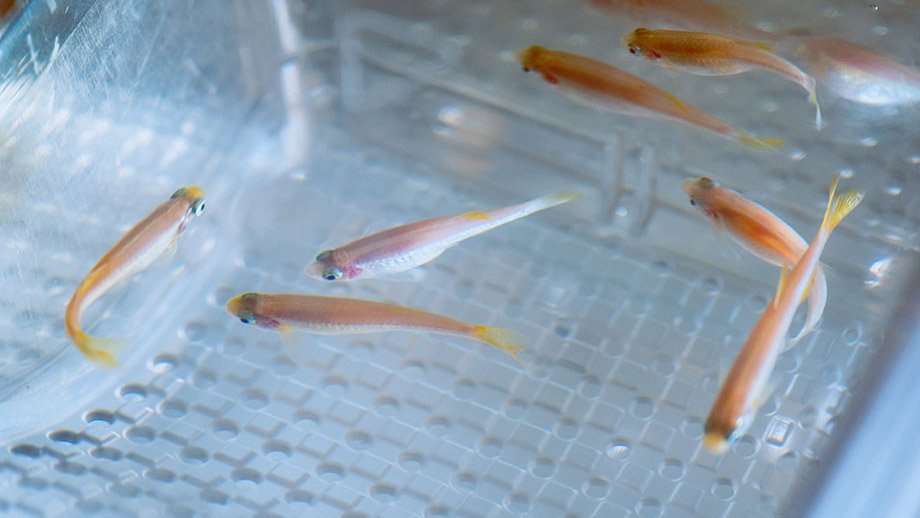
Zebrafish (Danio rerio) are freshwater fish that grow up to two inches in size, with characteristic blue horizontal stripes across their body. They are found in a variety of habitats in large social groups and originate from India. For laboratory strains of zebrafish, embryos hatch into larvae three to four days after the egg has been fertilised. The swimming, feeding larvae will then take around six weeks to develop fully into adults. In the EU in 2022 (plus Norway), zebrafish were the seventh most common animal used in scientific research, making up 367,306 of the total number (4.33%). They are the second most genetically altered animal, behind mice, with 23% of all zebrafish being modified for the purposes of research (2020).
The use of zebrafish in the EU has been steadily rising over the years – for example, there was a 12% increase in the EU from 2018 to 2019. One reason for this increase is that these animals are beginning to replace other animals such as rodents, under the principles of the 3Rs (replace, reduce, refine) in research.
There are plans to use zebrafish embryos as a
replacement for mice when researching some of the genetic mutations involved in depression, in an upcoming study led by
King’s College London, UK.
Zebrafish research is also part of a broader effort to use the most appropriate model for each question, including choosing species with simpler biology when they can answer the question well and using non-animal methods whenever they can provide reliable results.
Why are zebrafish used in research?
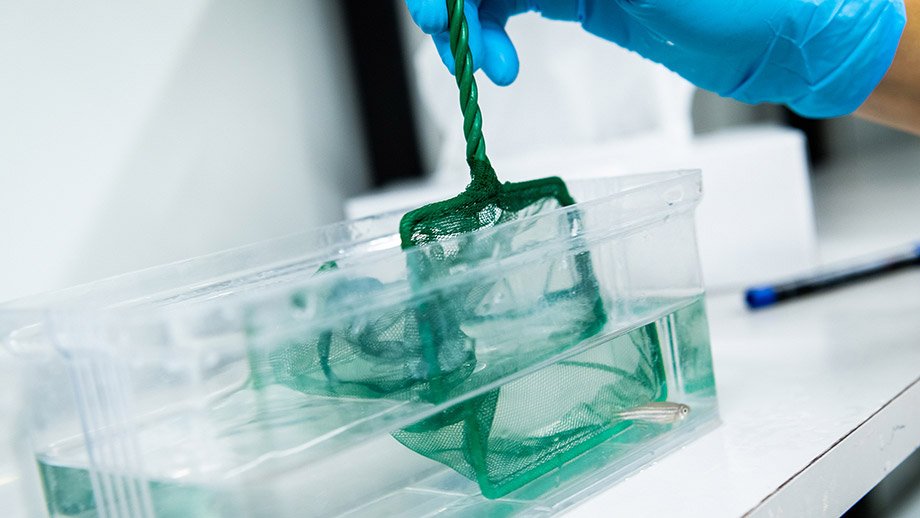
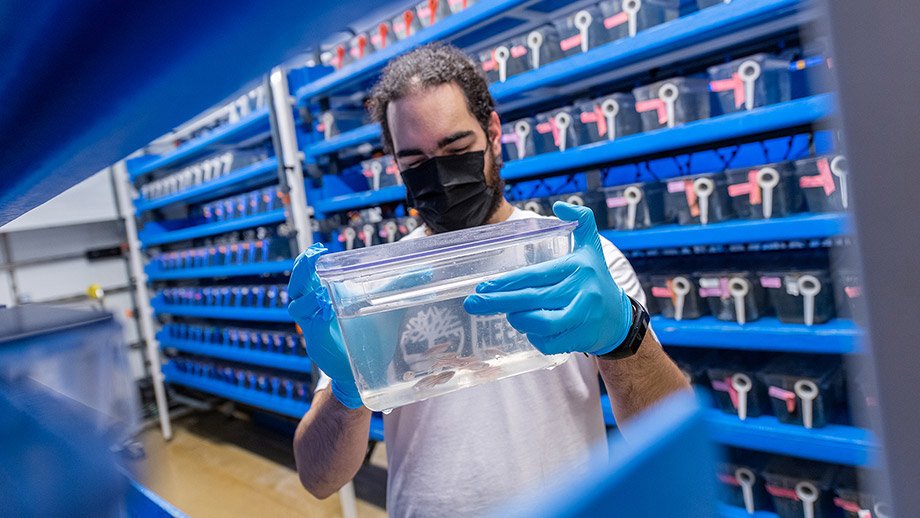
Zebrafish are small in size, have a short lifespan and quick and prolific reproduction (females can lay hundreds of eggs in one week), giving them many of the qualities that make them appropriate for use in a research setting. Compared to mice, it can also be easier to keep zebrafish in the lab thanks to their flexibility in diet, water quality and habitat.
Zebrafish are useful as a lab animal because many of their genes and core organ systems overlap with ours. A major milestone was the publication of the zebrafish reference genome in 2013 by the
Wellcome Sanger Institute, UK, and collaborators, showing that around 70% of human genes have a zebrafish counterpart and that most genes linked to human disease have a zebrafish equivalent too. and collaborators, showing that around 70% of human genes have a zebrafish counterpart and that most genes linked to human disease have a zebrafish equivalent too.
Common ways zebrafish are used include watching development and disease in real time. Because embryos and larvae are transparent, researchers can observe organs forming, blood vessels growing, immune cells moving and tumours spreading without needing major invasive procedures.
Researchers also have
tools to study disease genetics in zebrafish. Techniques used can switch genes on or off, or edit them, to understand what a gene does and how a mutation might cause disease. One widely used tool is CRISPR, a method that lets scientists make targeted changes to DNA (often described as “gene editing”).
Zebrafish are also popular for drug and toxicity screening. Because zebrafish are small and develop quickly, they are often used to screen many candidate compounds efficiently before moving to more complex models, also reducing other animal use further down the line.
Their embryos are also used to transplant cells from humans. In some cancer research, human tumour cells can be implanted into zebrafish larvae to see, rapidly, how those cells behave and how they respond to treatments (explained further below).