
Researchers in Switzerland have transplanted, into diabetic mice, a graft with insulin-producing cells and endothelial cells that can restore long-term blood sugar control, offering a potential strategy to improve cell-based therapies for type 1 diabetes.
Type 1 diabetes occurs when the immune system destroys insulin-producing cells in the pancreas, causing chronically high blood sugar levels. Transplanting pancreatic islets — small clusters of cells that produce insulin — can temporarily restore blood sugar control. However, transplanted islets (grafts) often fail to survive because they lack a support structure and are exposed to inflammation, poor blood supply and attacks from immune cells after transplantation.
Researchers from the University of Geneva (UNIGE) and Geneva University Hospitals (HUG) used Amniogel, a water-based gel derived from the human amniotic membrane, which can recreate the environment that insulin-producing cells need to survive and function, to develop grafts containing pancreatic islets and human endothelial cells — cells involved in blood vessel formation — and implanted the grafts under the skin of diabetic mice.
After transplantation, the endothelial cells in the grafts formed blood vessels that connected with the mice's blood supply, restoring insulin release in response to blood sugar levels. Diabetic mice receiving these grafts maintained normal blood sugar levels for more than 100 days, while islets transplanted alone and nonvascularised grafts had poorer long-term blood sugar control and reduced survival of pancreatic islets.
The researchers also found that Amniogel delayed immune cell migration and reduced the destruction of insulin-producing cells, suggesting it may help protect transplanted cells from the immune system in the early stages after implantation.
“This experimental evidence represents a decisive step toward the development of a functional bioartificial pancreas. The next step, in order to consider a clinical application, will be to produce larger grafts — or a greater number of them — to meet the requirements for use in humans,” said Ekaterine Berishvili, from UNIGE and HUG, and lead author of the study published in Trends in Biotechnology.
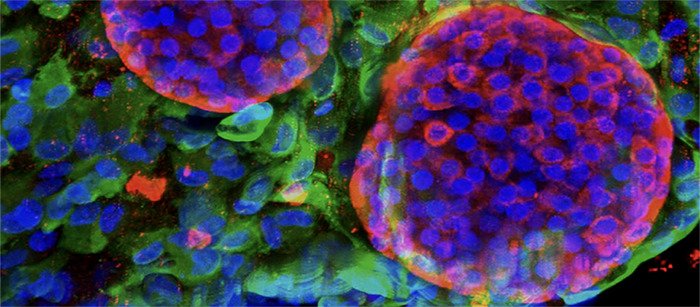
Clusters of insulin-producing islet cells (in red) housed within the hydrogel designed by the UNIGE and HUG team.CREDITS: Berishvili Lab, University of Geneva