
EARA partnered with EARA member Champalimaud Foundation for a Discovery Day, inviting Young Parkies Portugal to explore the role of animal research in studying Parkinson’s disease.
Participants visited the animal research facilities, where researchers Joseph Tutt and Madalena Bettencourt from the Alves da Silva Lab and Prannay Reddy from the Paton Lab presented their work using mice to study brain alterations underlying symptoms of Parkinson’s disease.
“The visit to the animal facility, together with the explanation of some ongoing research, helped us better understand the challenges, demands and complexity behind the work carried out there. Seeing the rigour of the research up close did not give us promises, but rather a certainty: that there is a genuine commitment to finding solutions. For those living with early-onset Parkinson’s, this does not solve the present. But it changes how we face the future, giving us greater hope,” said Martine Pinheiro from Young Parkies Portugal.
During the visit, attendees observed behavioural tests used to assess specific aspects of movement alterations associated with Parkinson’s disease and discussed how these studies contribute to understanding disease progression and developing potential therapies.
“Sharing our work in animal research is always rewarding, but this visit was especially meaningful. Welcoming people living with Parkinson’s and connecting them with research related to their condition made the experience more personal and impactful for everyone involved,” said Rute Marques, Animal Welfare Officer at Champalimaud Foundation.
This initiative represents another step in EARA’s efforts to engage patient communities across Europe, fostering trust and collaboration between scientists and those directly affected by medical conditions. The EARA Patient Discovery Project is also building a network of informed patients who will in a position to take part in discussions about the role of animals and new approach methodologies (NAMs) in biomedical research.
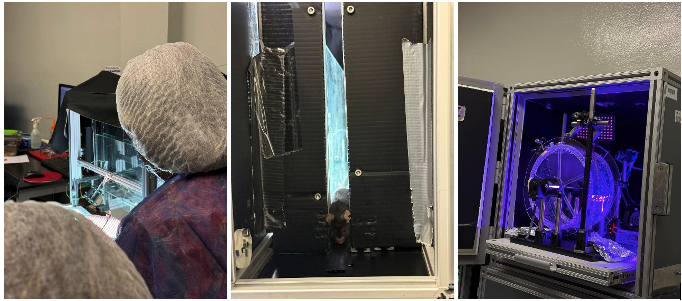
Tests in mice used to assess the brain connections that are responsible for movement and locomotion in mice genetically altered to present Parkinsonâs disease symptoms.