
Research from Germany showed that an existing cancer drug could help prevent heart damage caused by a type of chemotherapy in mice.
Doxorubicin is a common drug used to treat a variety of cancers, including breast, ovarian, bladder, thyroid, lymphoma, lung and gastric cancers. However, it causes a series of adverse effects, one of the most serious being severe heart disease and failure.
Researchers at EARA member Heidelberg University and Heidelberg University Hospital investigated how doxorubicin damages heart muscle. The team used heart muscle cells from newborn rats and human heart muscle cells grown from stem cells and showed that doxorubicin activates genes that lead to heart damage.
The researchers found that cancer-treating drug SAHA (vorinostat) alters gene expression and consequently attenuates heart damage. The team tested this in mice, giving them doxorubicin either alone or together with SAHA and monitoring their hearts for up to ten weeks. Doxorubicin alone caused a decline in heart function, while mice also receiving SAHA maintained better heart function and showed fewer signs of damage to heart muscle cells.
Lorenz Lehmann, from Heidelberg University and lead of the study published in Nature Communications, said: “This opens up new perspectives for the development of targeted strategies to protect the heart during chemotherapy [in humans]. SAHA clearly shows potential in this regard.”
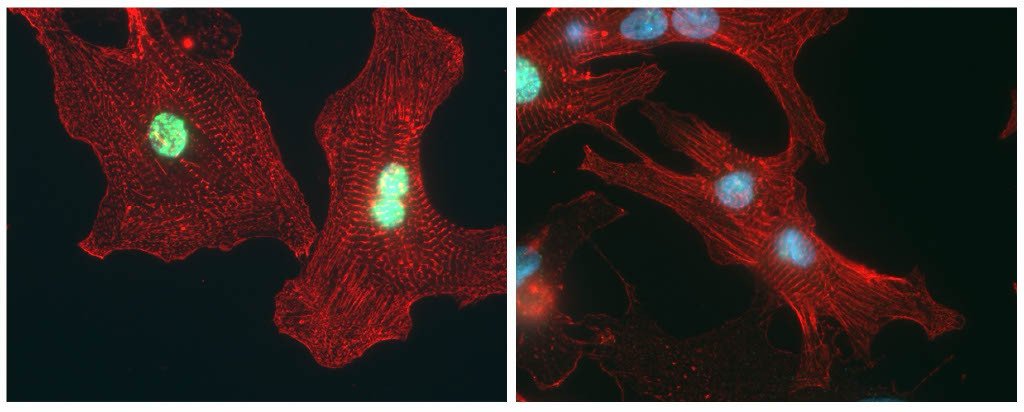
Heart cells. CREDIT: Heidelberg University Hospital