
Researchers are still working to develop a vaccine against hantavirus, a rare but potentially deadly rodent-borne infection, following renewed concern after a recent outbreak linked to a cruise ship.
Hantavirus is usually spread through the air in particles from rodent urine, droppings or saliva. Some species can occasionally spread between people in close contact. The Andes virus, confirmed by the World Health Organisation (WHO) as the species involved in the MV Hondius cruise-ship cases, also caused an ongoing outbreak in Argentina. While hantavirus infections are rare, some species have a fatality rate of up to 50%, making preparedness a serious scientific and public health challenge.
Despite some alarmist media coverage, hantavirus does not have a contagion potential comparable to the COVID-19 pandemic. Jorge Salinas, medical director of infection prevention at Stanford Health Care, said that there are “respiratory viruses like flu and COVID-19 that are incredibly efficient at transmitting person to person. That’s what they have evolved to do”, whereas “hantavirus just isn’t like that”. Even in the case of the Andes virus, the only hantavirus known to occasionally spread between people, he said: “It can jump to a few people after close contact with an infected, symptomatic individual, but we don’t expect it to spread very far”. Salinas even stated that hantavirus is “rare and unable to cause a global pandemic”.
Nature interviewed virologist Jay Hooper, from the US Army Medical Research Institute of Infectious Diseases, who has been working on hantavirus vaccines since the 1990s, when new hantaviruses causing hantavirus pulmonary syndrome (HPS) appeared in the United States and South America.
“A key advance of our team has been developing hamster models of a lethal disease very similar to human HPS. This provides a realistic animal model to test vaccines and therapeutics”, says Hooper. In a 2017 study, immunosuppressed Syrian hamsters were infected with various New World hantavirus strains, resulting in an acute disease that mimicked hantavirus pulmonary syndrome in humans.
The work has advanced to Phase I human clinical trials of vaccines for Andes virus, Hantaan and Puumala hantaviruses. The Andes DNA vaccine induces neutralising antibodies in humans, suggesting promise, but requires at least three doses instead of a single shot. Human cases of Andes virus are rare and scattered, making it challenging to conduct a Phase III efficacy trial in humans.
The research team is developing an antibody-based treatment, SAB-163, by vaccinating genetically modified cows that produce human antibodies to combat the Andes virus and three other hantaviruses
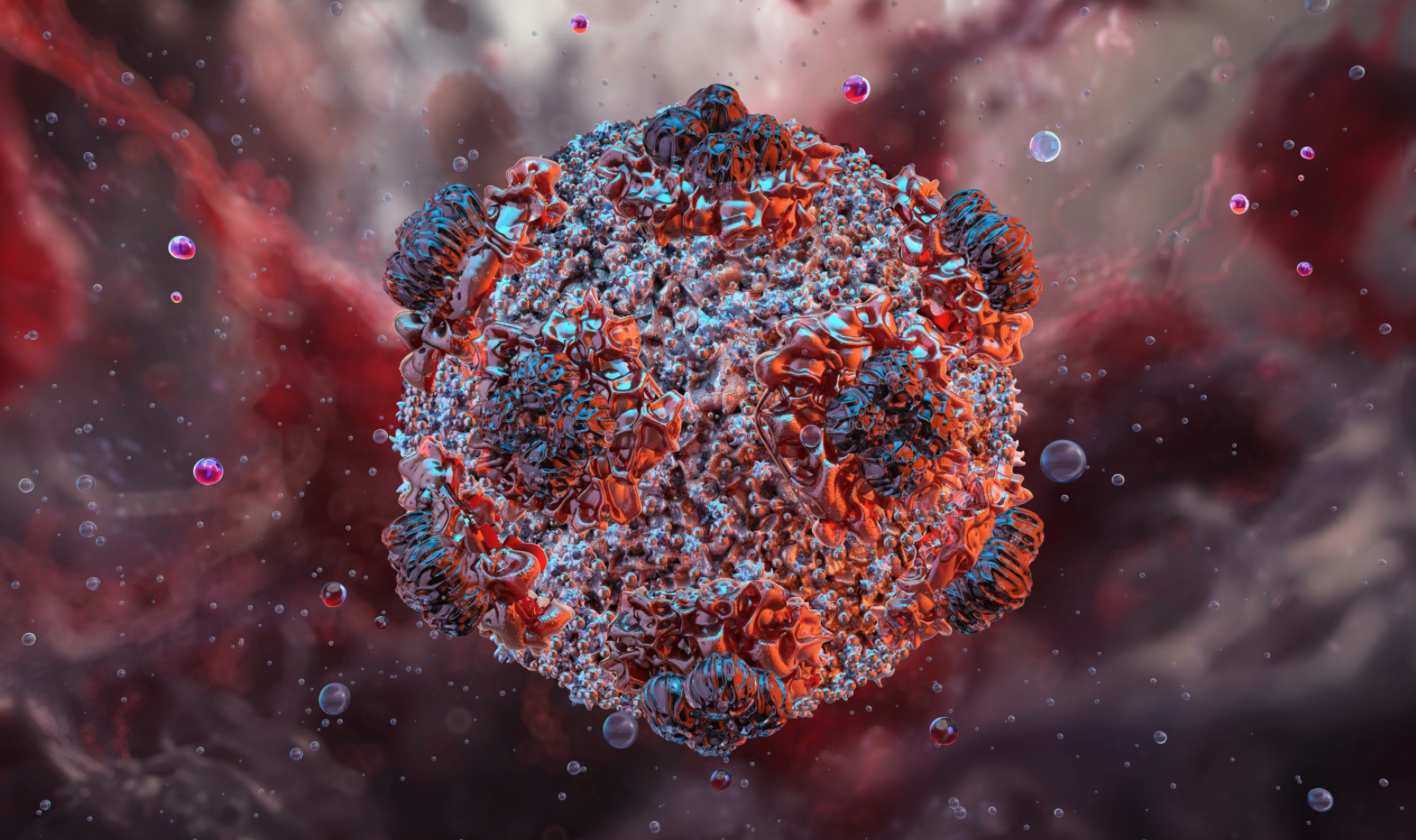
Illustration of a hantavirus. CREDIT: Ruslanas Baranauskas, Science Photo Library