
A study in Canada, combining mice and bioinformatics, unveiled how immune cells form life-threatening clusters during sepsis and pointed to a drug that could improve treatment.
Sepsis is an overwhelming infection response and one of the most frequent causes of death worldwide. While the immune response is necessary to clear infection, some of its processes can lead to multi-organ failure, including the formation of immune cell clusters in blood vessels that block blood from reaching organs.
Researchers from the EARA member University of Calgary, using live microscopy, found that immune cells in the lungs of mice that had sepsis caused by E. coli bacteria infection, move in a coordinated way that resembles bird murmuration. The team recorded the size and shape of cells, their speed and direction, and used bioinformatics to make sense of the data.
“We found 18 different clusters of behaviors involved in the cellular swarms during sepsis... Understanding cell behaviour can provide insight on new treatments including when to administer the treatment,” said Luke Brown,first author of the study published in Science.
By treating mice with an asthma drug that blocks leukotriene B4, a protein involved in inflammation, certain types of cells could not form clogs and mice could resolve the infection, suggesting a possible application in sepsis.
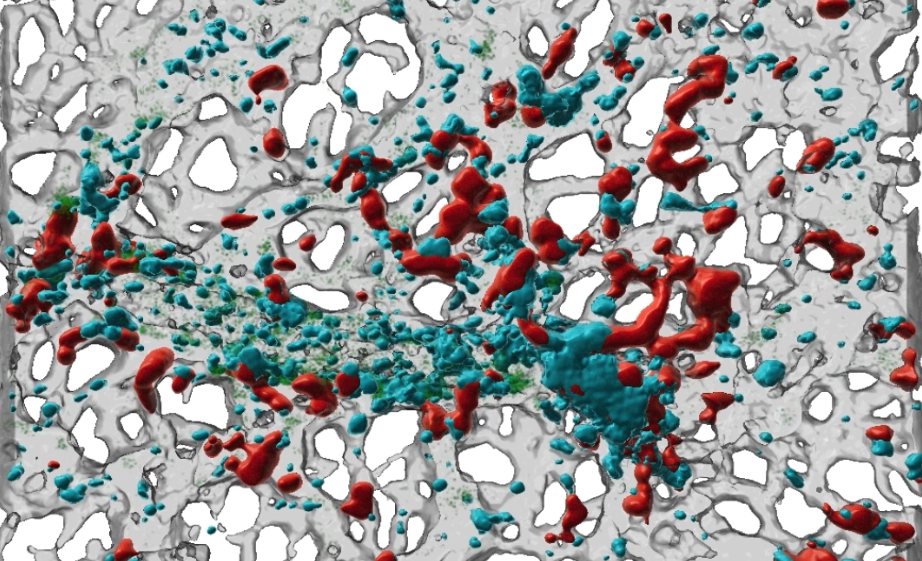
Reconstruction of microscopy images showing blood flow disturbance.