
Researchers in Germany have developed an artificial intelligence (AI) tool, called genESOM, that can learn from data obtained from animal studies and generate additional data, potentially reducing the number of animals needed in research.
In early drug development, researchers aim to keep the number of animals used as low as possible while still including sufficient animals to produce reliable results on whether a drug is safe and if it has beneficial effects.
To tackle this dilemma, researchers from Goethe University Frankfurt, an EARA member, Philipps University Marburg and Fraunhofer ITMP, trained AI to learn patterns from data obtained in experiments using animals and generate artificial data points that expand those results.
Since generative AI can’t distinguish relevant patterns from random variation, it can amplify errors and attribute meaning to false results. The team introduced a known artificial error during the learning phase, so they could monitor and consider the amplification of errors when generating new results.
Using an existing study that required 26 mice to test the effects of an experimental drug for multiple sclerosis, the researchers purposely reduced the data to 18 animals, which was insufficient to provide meaningful results, and generatedadditional data artificially using genESOM. By compiling the data from the 18 animals with the AI-generated data points, the researchers obtained similarly meaningful results as the original study, without introducing false results.
Despite genESOM’s potential to contribute to reducing the number of animals used in preclinical research, Jörn Lötsch, from Goethe University and author of the studies published in Pharmacological Research, iScience and Briefings in Bioinformatics, warned: “If too few animals are included in an experiment and the number is then simply supplemented using generative AI, the experiment could quickly become scientifically worthless due to the amplification of random findings.”
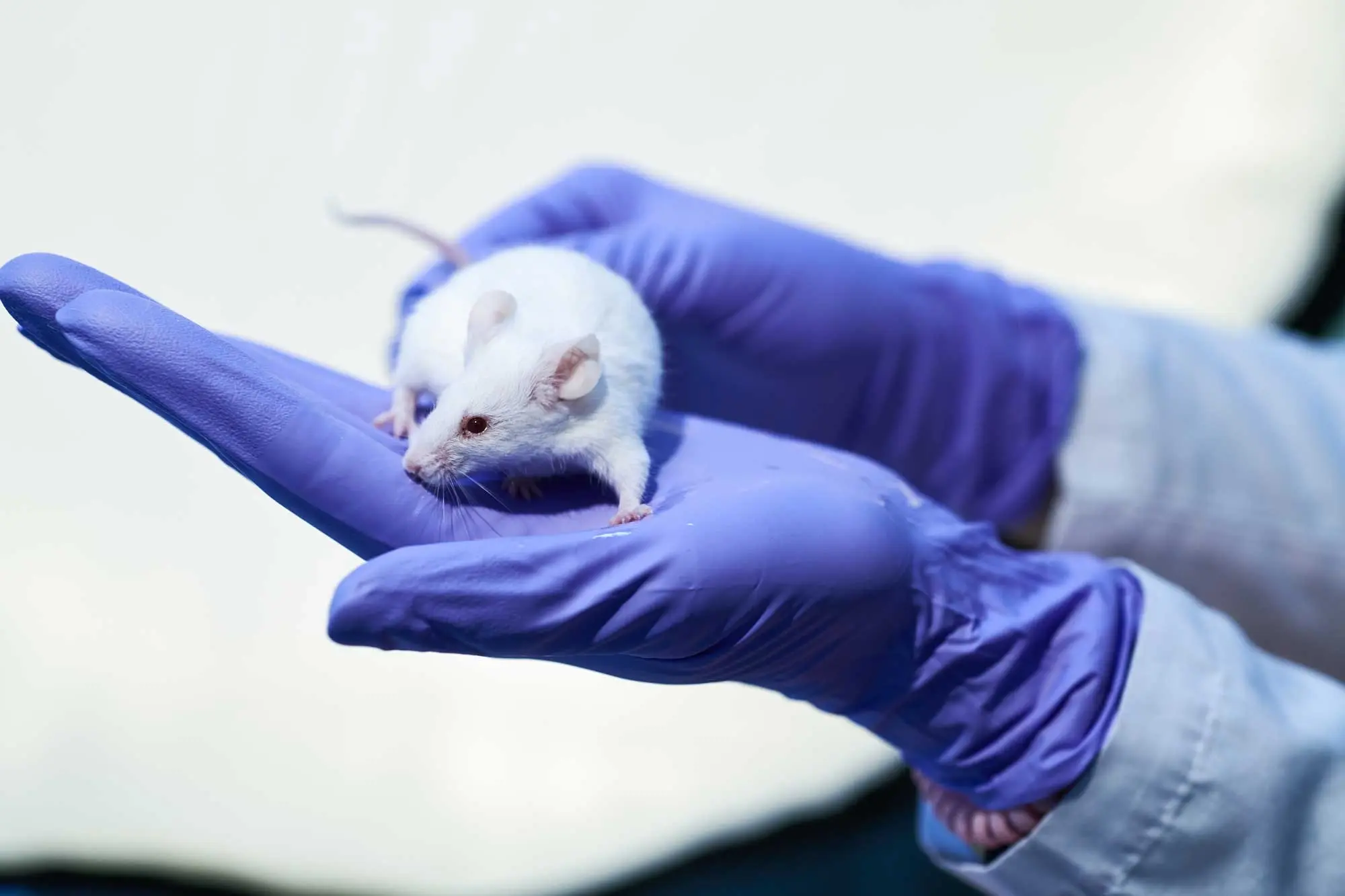
CREDIT: aI7 / Shutterstock