
Researchers in Germany have shown that inflammation helps zebrafish regenerate their hearts after injury, offering insights that could contribute to the development of new therapies for heart repair.
After a heart attack, the damaged tissue is replaced by stiff scar tissue, reducing the heart’s ability to pump blood and increasing the risk of irregular heartbeats and heart failure. Zebrafish, however, can fully regenerate damaged heart tissue.
A team at EARA member Max Delbrück Center mimicked heart damage in zebrafish by briefly applying a cold needle to the heart, creating a small injury similar to the ones observed in humans after a heart attack. The researchers then examined how individual heart cells responded during the first six hours after injury, by measuring which genes were switched on in each cell type as the repair process began.
The researchers found that macrophages, a type of immune cells, were among the first cells to respond, rapidly activating inflammatory signals that helped kickstart regeneration. When specifically reducing some of these inflammatory signals in macrophages, the researchers found that blood vessels grew faster and more heart muscle cells began dividing, both essential steps for heart regeneration. However, completely preventing this initial inflammatory response impaired heart regeneration, suggesting that improving tissue repair requires fine-tuning of the inflammation, rather than broadly suppressing it.
"By targeting specific cell types, we may be able to steer regeneration in a beneficial direction," said Jan Philipp Junker, from the Max Delbrück Center and lead author of the study published in Nature Communications.
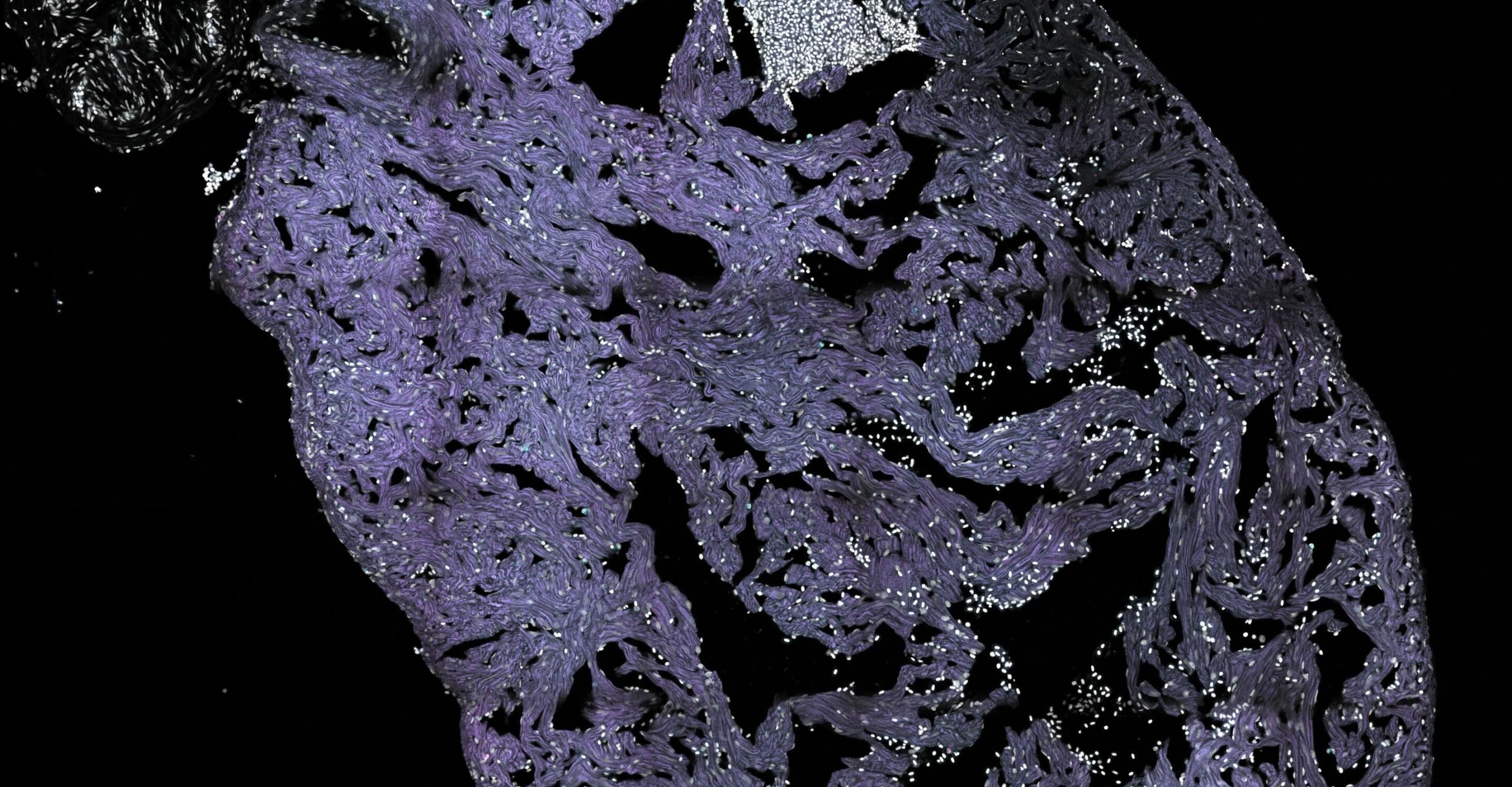
A zebrafish heart 6h after cryoinjury, visualized with confocal microscopy.CREDIT: Janita Mintcheva, Max Delbrück Center