
Researchers in the US have found that alcohol abstinence elicits different brain responses in different individual mice, which could predict vulnerability to relapse and compulsive drinking.
Alcohol abstinence is associated with improved health and is a gold-standard treatment for alcohol addiction, but its effects in the brain are not clear. Researchers at UMass Chan Medical School, Massachusetts, gave mice voluntary access to alcohol for 1 hour on 14 consecutive days, followed by a period of 28 days with no alcohol access. The team discovered that, when access to alcohol was restored, some of the mice had developed compulsive drinking behaviour, drinking more alcohol than mice that had not undergone abstinence. Their compulsive drinking continued even when a food additive was added to make alcohol increasingly bitter.
The behaviour was associated with increased brain activity, even before mice regained access to alcohol, in a region of the brain previously implicated in alcohol use, the bed nucleus of the stria terminalis. “It was like a marker of a population of animals that are going to go on to potentially engage in maladaptive alcohol seeking,” explained Danny Winder, leader of the study published in Molecular Psychiatry and UMass researcher.
“This study has allowed us to look at animal models on an individual level; but now we’re asking, can we have individual therapeutics that will help subsets of people? When it comes to potential therapies, trying to tease out what might work for certain individuals, especially those that are more likely to relapse, is important,” added UMass researcher and first author Marie Doyle.
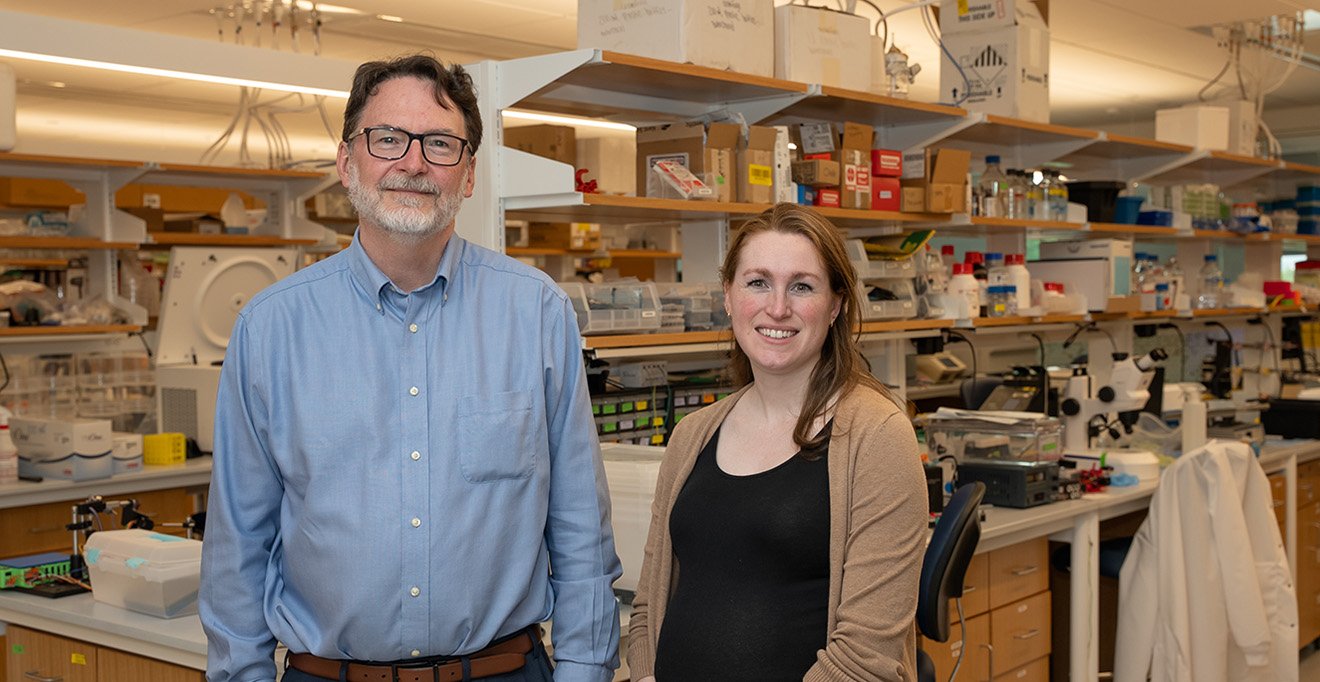
Danny Winder and Marie Doyle, UMass researchers. CREDIT: Bryan Goodchild.