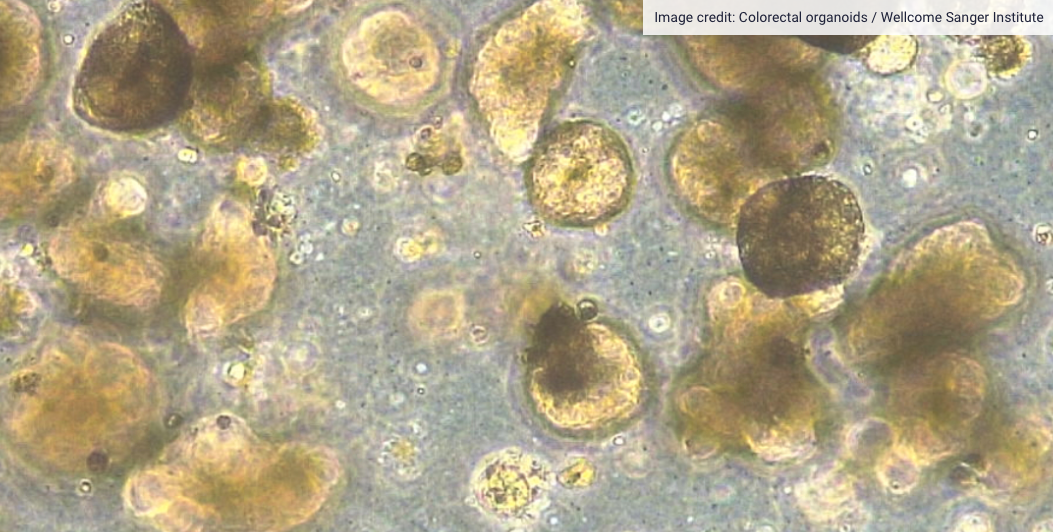
An international research team from Europe and North America has created a large collection of patient-derived cancer organoids that could help scientists better understand how tumours grow and identify potential treatments.
Laboratory-grown cells and animal studies have long been used and continue to provide important insights into cancer, although they cannot capture the genetic diversity and complexity of tumours in real patients.
As part of the international Human Cancer Models Initiative, researchers created 665 patient-derived cancer models from 2,780 people with 25 types of cancer, most of which were organoids – mini-tumours grown in the laboratory from patients’ cancer cells. When comparing with the patient tumours, they found that the organoids retained many genetic and biological features.
In a complementary study, researchers at the Wellcome Sanger Institute, UK, analysed 256 organoids from patients with colorectal, oesophageal, pancreatic, stomach and ovarian cancers. By switching off genes one by one in 162 organoids, they identified genes essential for cancer cell survival, including genes shared across cancer types and others specific to some cancers.
A third study, involving researchers at the Koch Institute for Integrative Cancer Research and the Broad Institute, Massachusetts, used more than 300 of the new patient-derived organoids to expand the Cancer Dependency Map, a resource that identifies the genes that cancer cells depend on. The researchers found additional genetic weaknesses associated with different cancer types, providing potential starting points for future research.
These various results support using these complementary methods in animal research to further study cancer development and treatment response.
“This study brings together patient-derived cancer models, genomics and functional screening at a scale that has not previously been possible in organoids. It provides a new way to uncover cancer vulnerabilities in models that capture more of the diversity of real tumours and creates a resource that the wider research community can build on,” said Mathew Garnett, from the Wellcome Sanger Institute and lead author of one of the studies, all published in Nature.