
A study from Taiwan developed an ear implant with drugs that reduced inflammation and tissue damage and improved auditory responses in guinea pigs.
Cochlear implants are medical devices that help restore hearing in people with severe to profound hearing loss by electrically stimulating the auditory nerve. However, inserting an electrode into the inner ear cantrigger inflammation and scarring that may damage the remaining sensory cells and affect residual hearing.
Researchers from National Taiwan University (NTU) and NTU Hospital developed a flexible, porous electrode that releases the anti-inflammatory drug dexamethasone inside the inner ear. When implanted into guinea pigs, the drug-releasing electrode reduced signs of inflammation and foreign-body responses, while improving auditory brainstem responses, which measure how the auditory nerve and brain respond to sound or electrical stimulation.
“By combining pharmacological protection with neural stimulation, this multifunctional electrode platform represents a crucial step forward in preserving residual hearing and maximising communication outcomes for cochlear implant recipients,” said Chen-Chi Wu from NTU Hospital and co-lead author of the study published in Advanced Healthcare Materials.
The device will now be tested in larger animals to assess its safety and long-term performance.
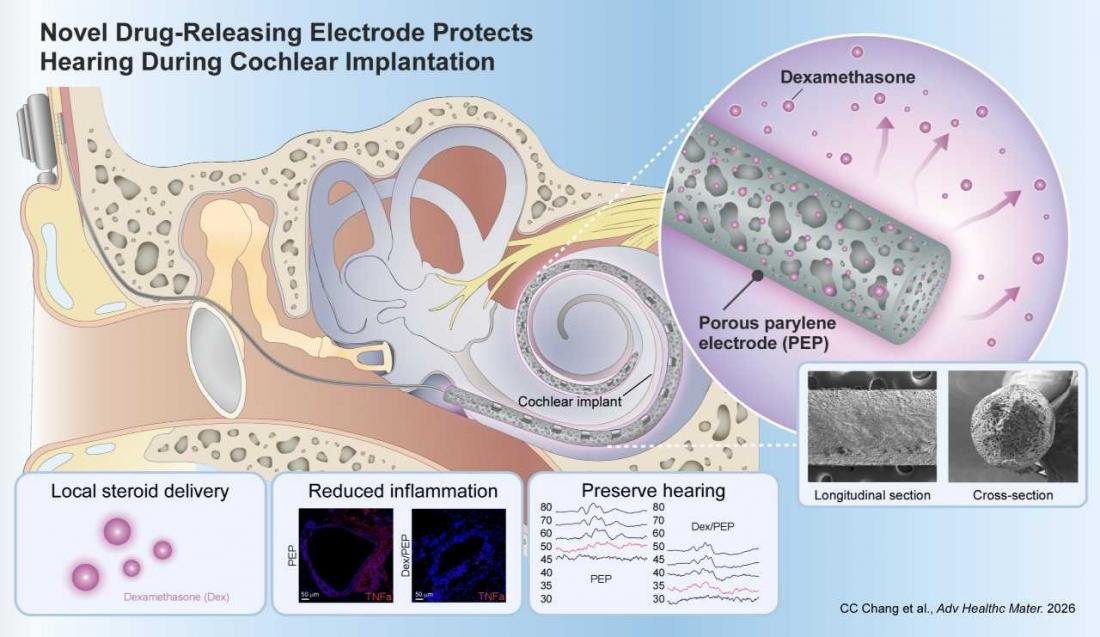
CREDIT: National Taiwan University