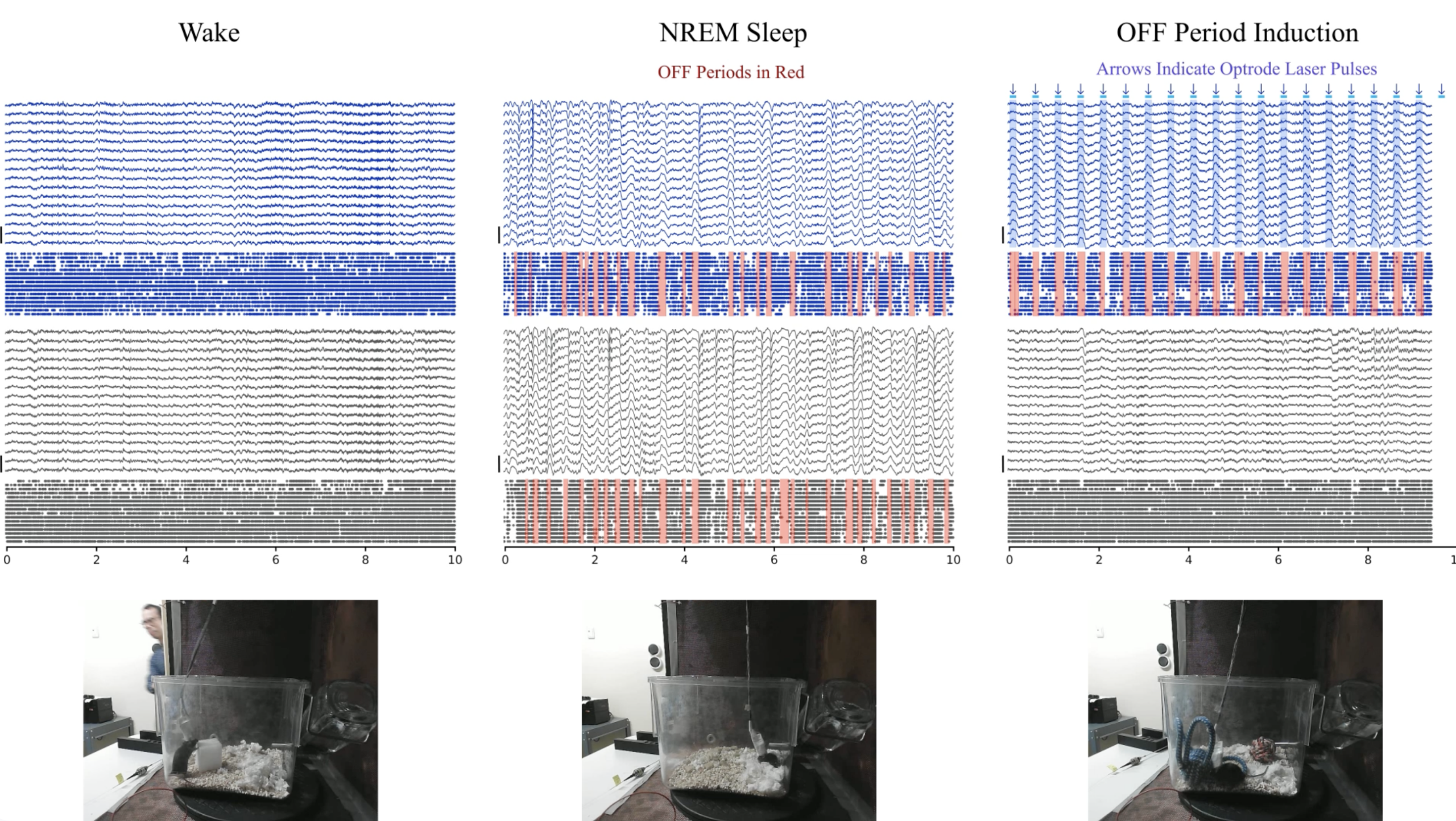
Researchers in the US have triggered brain activity that usually happens during sleep in awake mice, inducing restorative cognitive effects, potentially contributing to therapies for cognitive decline.
During sleep, the connections between neurones in the brain are either strengthened or weakened, which is important for cognition and memory.
Researchers at the University of Wisconsin-Madison (UW-Madison) had previously found that when rats and humans are sleep-deprived, their brains sporadically and briefly mimic activity that typically occurs during sleep.
Now, in mice, the team genetically altered neurones in the brain’s outer layer to respond to light, using a technique called optogenetics, and consistently induced this brain activity while mice were deprived of sleep for five hours. When mice slept after this period, their brain activity was lower, suggesting less need for sleep.
By analysing mice’s tactile memory, for which sleep is important, by placing them in an environment with a known and a new floor texture, the team found that mice which had induced sleep-like brain activity while they were awake could recall the known texture as well as mice that had slept, indicating that the induction of sleep mimicked the restorative effects of normal sleep.
“What we’re essentially doing is forcing sleep in a local region of the brain. While that part is solidifying memories and restoring learning capacity, other parts stay aware/vigilant and connected to environment,” said Chiara Cirelli, researcher at UW-Madison and leader of the study in Nature Neuroscience.
Future research will aim to understand whether this process can be replicated in humans using non-invasive transcranial stimulation and whether it has similar beneficial effects on cognition.