
Researchers in Belgium and the UK have found that wounds heal faster in female mice than in males, with sex hormones influencing how their skin regenerates.
The skin’s outer layer is constantly renewed as stem cells divide to produce new cells. Some remain stem cells, while others pass through an intermediate stage before becoming specialised skin cells that move to the surface and are eventually shed.
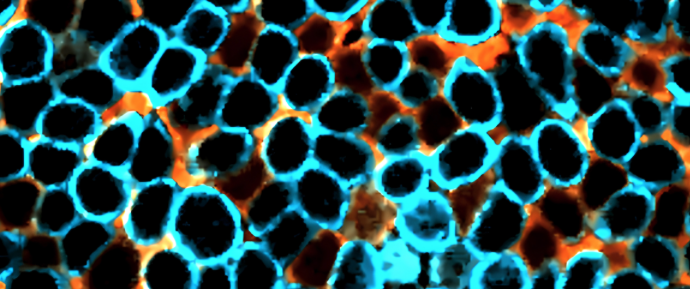
Researchers from EARA member Université libre de Bruxelles (ULB), Belgium and the University of Cambridge, UK, used advanced microscopy to track skin cells and their descendants in living mice over five months. They found that in female mice there was more coordinated activity between related stem cells. Two descendant cells from the same division were more likely to coordinate whether they divided further or matured, while these events were less synchronised in males.
To investigate the role of sex hormones such as testosterone, the researchers removed the testes in male mice and found that their skin cell behaviour became more similar to that in females. Treatment with testosterone restored male-like patterns of cell maturation. In females, removing the ovaries reduced stem cell proliferation and coordination, while oestrogen restored proliferation. Experiments using laboratory-grown human skin models also showed that testosterone promoted skin cell maturation.
The researchers also compared wounds in male and female mice and found that wounds in females closed faster, particularly during the first few days.
“Sex is a parameter too often overlooked in biology and medicine. We will now investigate the differences between males and females during the formation and progression of skin cancers, as well as the molecular mechanisms responsible for these differences,” said Cédric Blanpain, professor at ULB and lead author of the study published in Nature.
CREDITS: ULB