
Research from Germany has shown that transplanting human heart muscle cells into the damaged hearts of monkeys can improve heart function following a heart attack.
During a heart attack, part of the heart muscle is deprived of oxygen and nutrients, causing cells to die and scar tissue to form. This permanently weakens the heart and can lead to chronic heart failure/insufficiency.
Researchers at EARA member Hannover Medical School (MHH), working with the German Primate Centre, produced human heart muscle cells from reprogrammed human stem cells, grew them into small clusters and transplanted them into the hearts of cynomolgus macaques that had previously experienced experimentally induced heart attacks.
Three months later, the transplanted cells had formed new heart muscle tissue, and some treated monkeys showed improved heart function compared with untreated controls. Although the treatment also caused temporary irregular heartbeats (arrhythmia), they gradually decreased.
Macaques were chosen because their hearts are more similar to human hearts in size and beating rate than those of mice or rats. Transplanted human cells can also survive with medication that prevents immune rejection, which often happens when using pigs. Robert Zweigerdt, from MHH and co-author of the study published in Nature Communications, said that using other animal models “…would not be compatible with human heart muscle cells, which have their own human heart rate, meaning that observations made [with macaques] do not allow for conclusions to be drawn about humans.”
Further research is now needed to establish the long-term safety and effectiveness of this new strategy, particularly the risk of arrhythmia, before it can be introduced into human clinical trials.
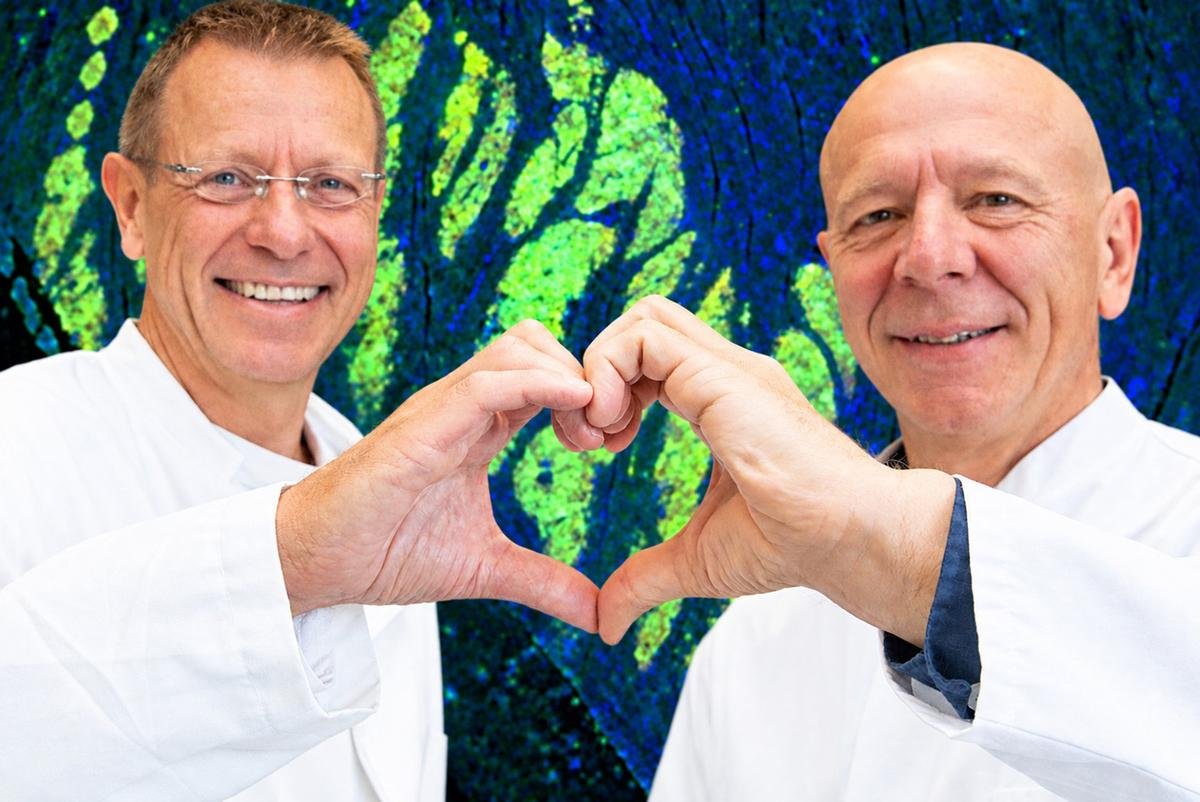
Ulrich Martin (left) and Robert Zweigerdt. CREDITS: LEBAO; Karin Kaiser/MHH