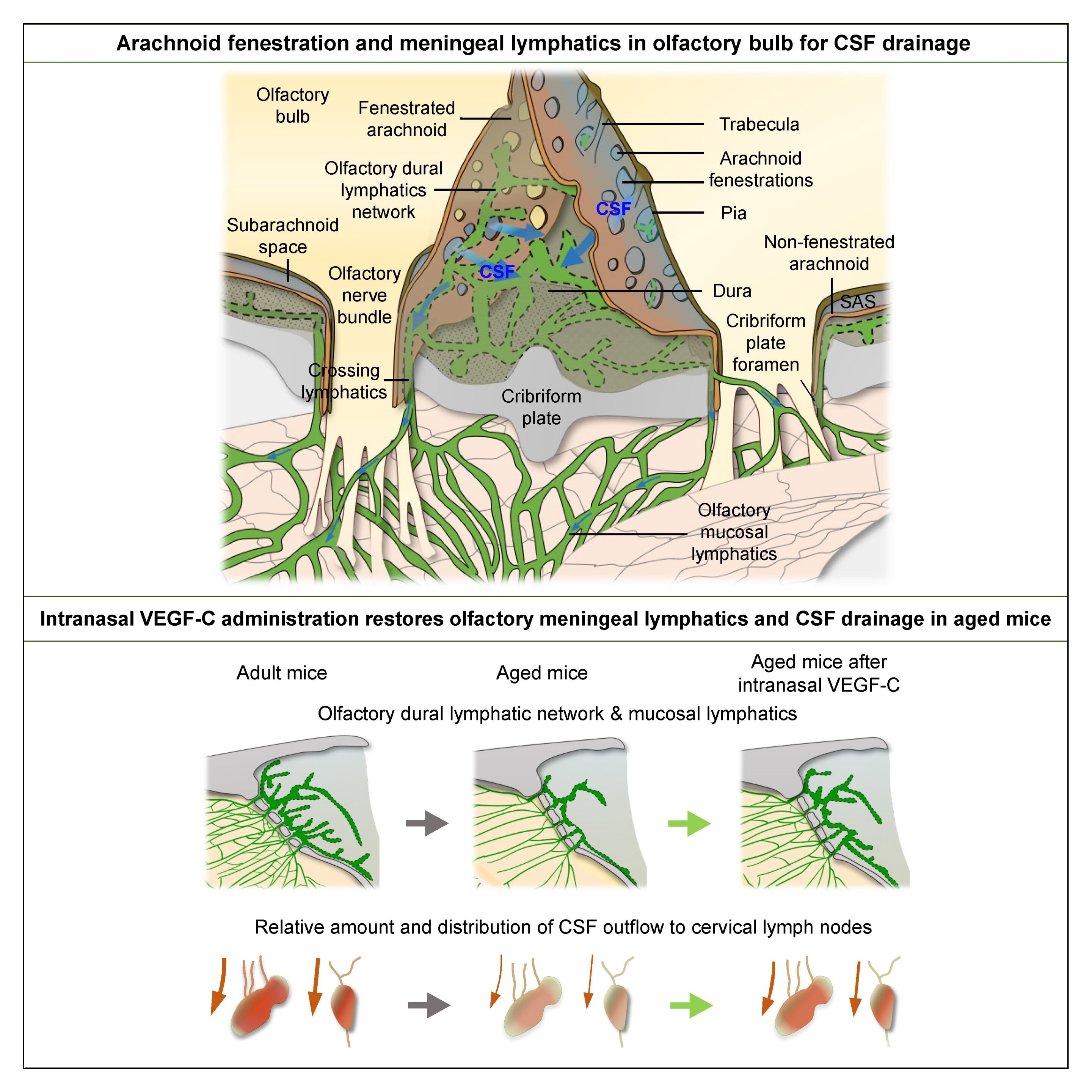
Researchers in South Korea have identified, in mice and cynomolgus monkeys, microscopic openings in a protective layer of the brain that allow the spinal fluid to drain waste.
The brain continuously produces waste that must be removed to maintain healthy function. Cerebrospinal fluid (CSF) plays a central role in this process by carrying away proteins such as those that, when accumulated, cause Alzheimer’s and Parkinson’s. Although it was known that much of this waste drains to the lymph nodes, it has remained unclear how it works.
Researchers in the Institute for Basic Science (IBS), South Korea, identified microscopic openings in the arachnoid membrane, a thin protective layer around the brain that contains the cerebrospinal fluid cushioning the brain.
Through advanced imaging in mice in which lymphatic vessels glow under the microscope thanks to the genetic engineering of a protein called Prox1, the team found that CSF accumulated around the membrane opening before entering the lymphatic vessels. When the openings were physically blocked, CSF drainage was markedly reduced, which also occurred naturally in aged mice. Similar arachnoid fenestrations were also identified post-mortem in monkeys.
Gou Young Koh, lead author of the study published in Cell, said: “Our findings show that [the arachnoid membrane] also contains specialized gateways that allow cerebrospinal fluid to enter the lymphatic system. Understanding how these gateways change with aging opens new opportunities for studying brain waste clearance and neurological disease.”