
Research in Germany on pregnant mice showed that tiny blood clots regulate maternal blood flow through the placenta to support healthy development.
The placenta supplies the developing baby with oxygen and nutrients and removes waste, while also helping prevent the mother’s immune system from rejecting the fetus by carefully controlling maternal blood flow. Small placental clots had previously been linked to problems rather than healthy growth, since blood clotting and immune issues are linked to pregnancy complications such as pre-eclampsia, recurrent miscarriage, and autoimmunity. A team at EARA member Hannover Medical School (MHH) used pregnant mice with genetic modifications to genes related to blood clotting and immune pathways. This allowed them to study how these tiny clots (microthrombi) guide maternal blood flow in the developing placenta.
When the researchers genetically blocked normal clot formation, the pregnant mice bled more. Conversely, excessive activation of part of the immune system, which caused widespread clotting, severely disrupted placental development, showing that pregnancy requires a careful balance between clotting and bleeding.
Markus Abeln, from MHH and lead author of the study published in the Journal of Clinical Investigation, said: “These so-called placental microthrombi play a crucial role: Like small temporary dams, they restrict the flow of maternal blood at specific points. In this way, they help direct blood flow through the developing placenta.”
The researchers will now investigate whether the same mechanisms operate in people, using human placental tissue and other human studies.
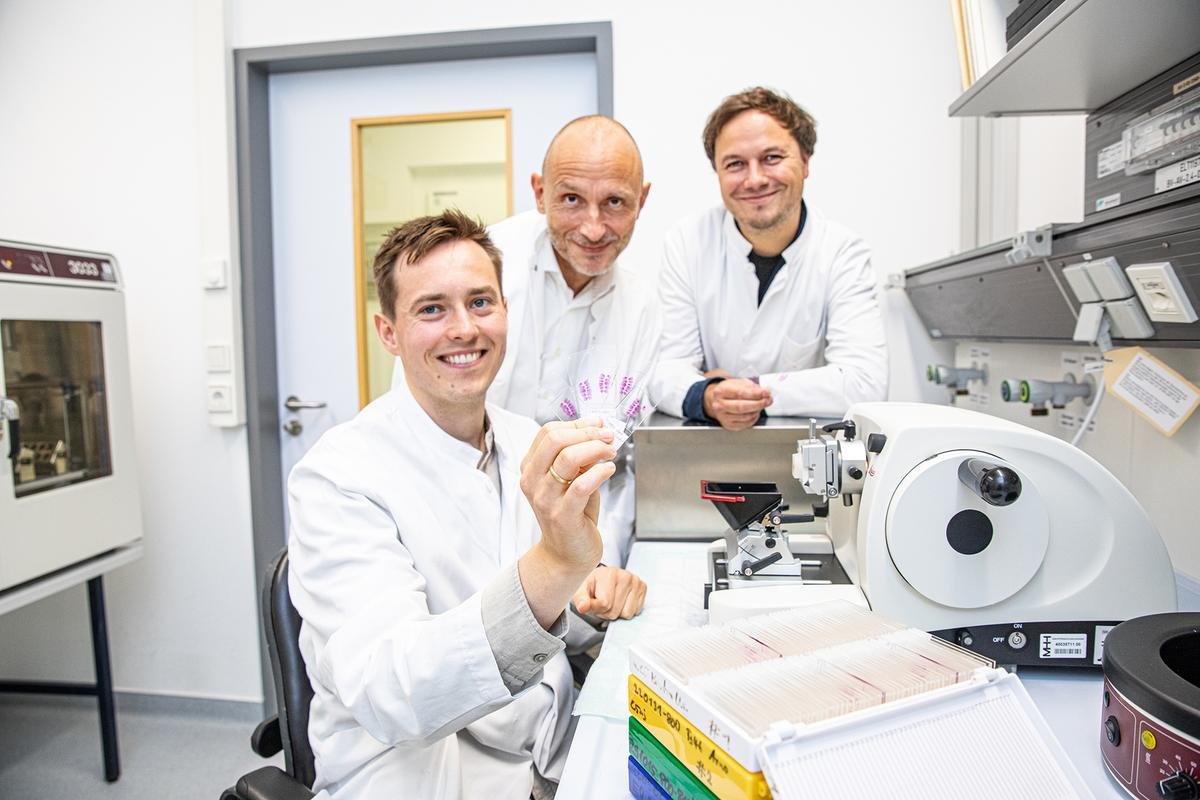
Researchers Arno Smid, Andreas Tiede, and Markus Abeln (from left) in the lab. They are showing glass slides with sections of placental tissue from the mouse model. CREDITS: Karin Kaiser/MHH