
Researchers in China have found that sperm development in tree shrews resembles that in humans and macaques more closely than in mice, highlighting their potential to complement existing models for studying male infertility.
Infertility affects around one in six people worldwide, with male-related causes contributing to about half of cases. Although nearly 150 genes have been linked to male infertility, its causes often remain unknown. Mice are widely used to study sperm development, but some genes involved in human reproduction are absent or different in rodents.
Researchers at the Chinese Academy of Sciences compared testis tissue from tree shrews — mammals closely related to primates — macaques and mice and found that tree shrew and macaque sperm had symmetrical, oval heads and comparable lengths, whereas mouse sperm had distinctive hook-shaped heads and were longer.
The team also analysed gene activity in thousands of individual cells from adult tree shrew testes and compared the results with existing datasets from human, macaque and mouse testes. Gene activity in tree shrew cells more closely resembled that of primates, particularly in late-stage spermatids, the developing cells that mature into sperm. More than 700 genes were active in humans, macaques and tree shrews but were not detected in mice. From those genes, 66 were expressed similarly in tree shrews and primates and seven have no mouse counterpart.
Published in Nature Communications, the study suggests that tree shrews can be used to investigate the effects of genes that have a particular role in sperm development in primates. The next step will be to modify promising genes in tree shrews to study male infertility.
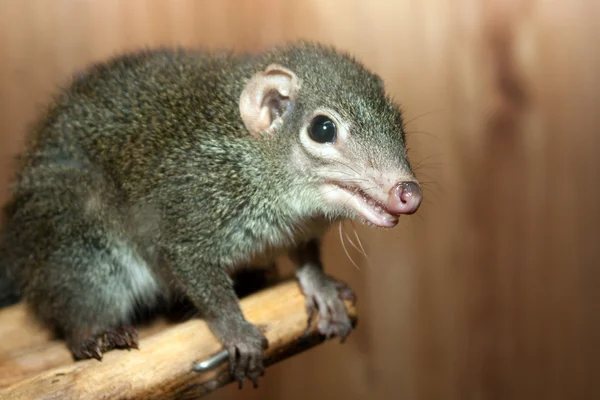
Tree shrew.