
Researchers in Norway have shown that zebrafish combine information from the senses like mammals, suggesting this brain function evolved independently in different species.
Humans and other animals rely on different senses to perceive the world, such as vision, sound and vibrations. Although the brain receives this information separately, it combines it into a single perception of the world. Until now, it was unclear whether distantly related vertebrate animals, such as fish and mammals used similar strategies to achieve this, despite more than 400 million years of evolution.
A team from the Kavli Institute for Systems Neuroscience in Norway used zebrafish that were genetically modified so that nerve cells would light up when activated, to track how the brain responded to flashes of light, water vibrations or both. They found that information from different senses was first processed separately by neurones in the zebrafish pallium brain region before being combined by specialised neurones that responded only when both stimuli occurred together.
Although zebrafish use a different brain region than mammals for this processing, the preglomerular complex rather than the thalamus, the way the senses are integrated into a single output follows the same principles.
"You want to thicken your soup. You can put potatoes and rely on the starch, or you can put flour, and it also works. The solutions are similar, but you do not necessarily need to rely on the same material as long as it functions similarly,” said Emre Yaksi, senior author of the study published in Science.
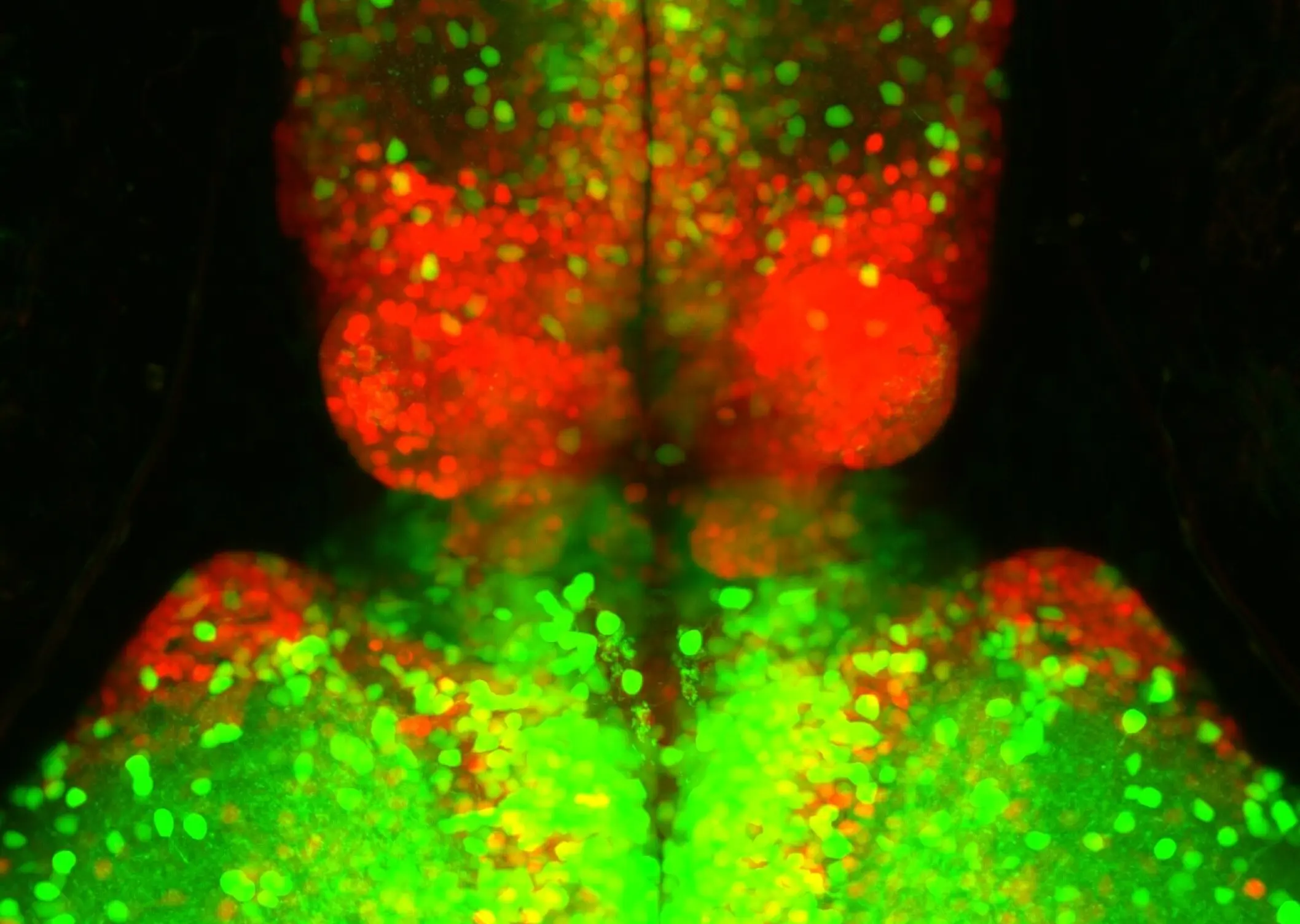
Microscopy image of zebrafish brain. CREDITS: Kavli Institute for Systems Neuroscience.