
Researchers from the Netherlands have found that sleep deprivation affects how mice recall previous social interactions with other mice, but an approved asthma drug restores these memories.
Sleep plays an important role in forming, storing and recalling memories. Previous research has shown that sleep deprivation can disrupt the brain's ability to retain information. However, less is known about how losing sleep affects memories of social interactions.
A team at the University of Groningen investigated this, by testing whether mice recognised other mice after previous social interaction. Mice that were sleep deprived for six hours between encounters were unable to recognise the other mice. However, sleep-deprived mice injected with the asthma drug roflumilast — previously linked to memory consolidation and retrieval in rodents and humans — before the second encounter were able to recognise the mice they had previously met.
The researchers also used optogenetics — a technique that allows specific brain cells to be activated using light — to directly reactivate the cells that stored the original social memory. When these cells were active, sleep-deprived mice could recognise the other mice for several days. This finding confirmed that the memory was still present but inaccessible after sleep deprivation, as observed with roflumilast treatment. “If we can understand the underlying mechanism, we may develop novel ways to truly and persistently restore the recall of individual social experiences, but also target other forms of amnesia,”said Robbert Havekes, from the University of Groningen and lead author of the study published in Science Advances.
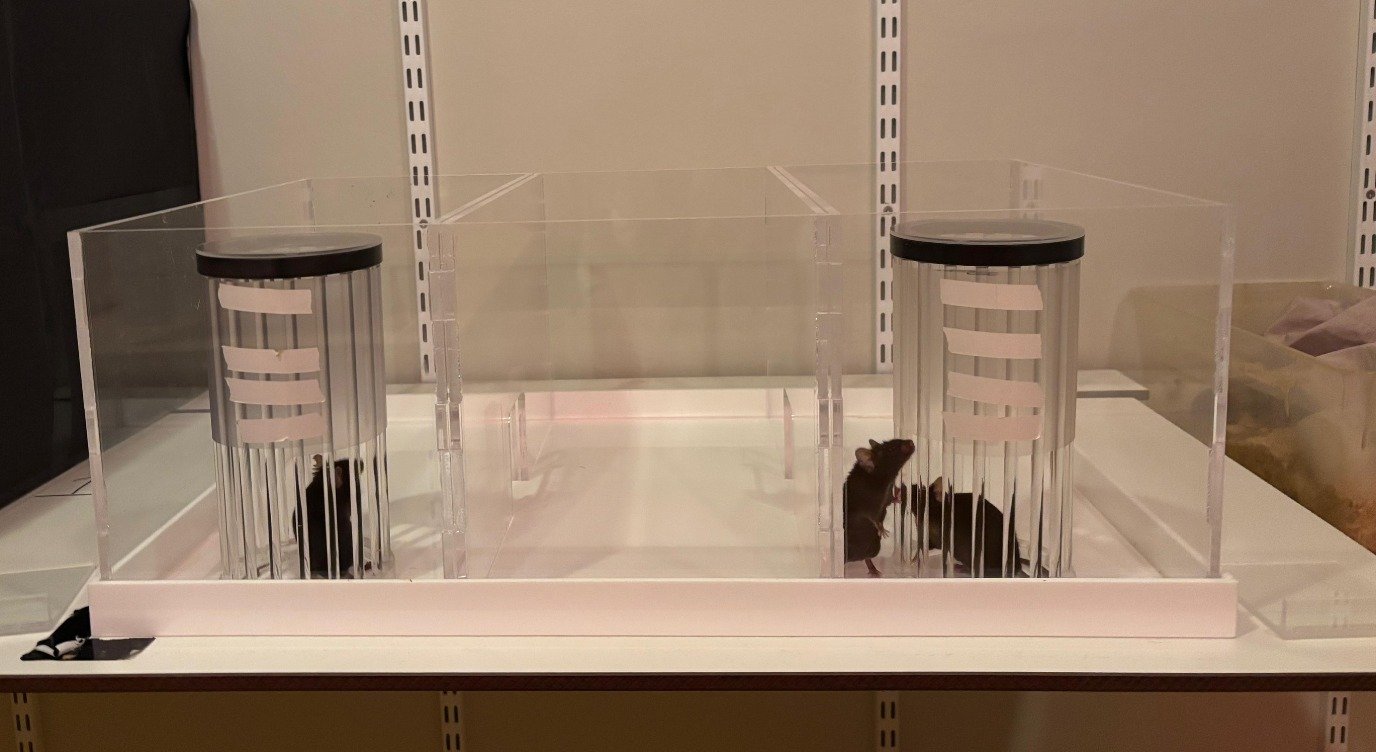
Experimental set-up to study social recognition. Credit: Havekes Lab, University of Groningen