
Research with both human and mouse data from the UK developed a blood test that predicts increased lung cancer risk five years before diagnosis, potentially enabling preventive treatment.
Lung cancer remains the leading cause of cancer-related deaths worldwide, with around 2.5 million new cases yearly. Previous research has shown that air pollution can trigger lung inflammation, activatingdormant cells carrying cancer-causing mutations. The same team, led by researchers at The Francis Crick Institute and University College London, set out to determine whether this inflammation could be detected by changes in circulating proteins in the blood before cancer develops.
Blood plasma samples from more than 48,000 participants in the UK Biobank were analysed and linked to cancer registry data from eight different data sets. Using machine learning, a type of artificial intelligence, they identified a pattern of increase in 14 blood proteins, named a signature. The group of proteins includes an inflammatory protein called interleukin-1 beta (IL-1β) that, together with factors such as age, smoking status and previous lung disease, could predict an individual’s risk of developing lung cancer within five years.
In mice exposed to air pollution, the researchers found increased levels of the proteins in this signature and multiplication of KAC cells, lung cells that can give rise to tumours. Blocking IL-1β reduced thequantity of these cells and slowed early tumour development, suggesting that before an existing tumour there is already an altered inflammatory environment in the lungs that can lead to cancer.
By associating data from 4,651 participants in the Novartis CANTOS clinical trial, which investigated the effect of the anti-inflammatory drug canakinumab in lung cancer, they found evidence that the efficacy of the treatment could be superior in individuals with high levels of the 14-protein signature. Elevated levels of the same protein signature were also observed in people who later developed chronic obstructive pulmonary disease (COPD) or idiopathic pulmonary fibrosis.
Charles Swanton, from the Francis Crick Institute and lead author of the study published in Cell, said: “This work supports a relatively new idea in the field, that some common age-related diseases, causing a high burden of disease in the community, share a common, presymptomatic state of inflammation. We think the signature could in the future help to predict and help prevent lung cancer and other lung diseases.”
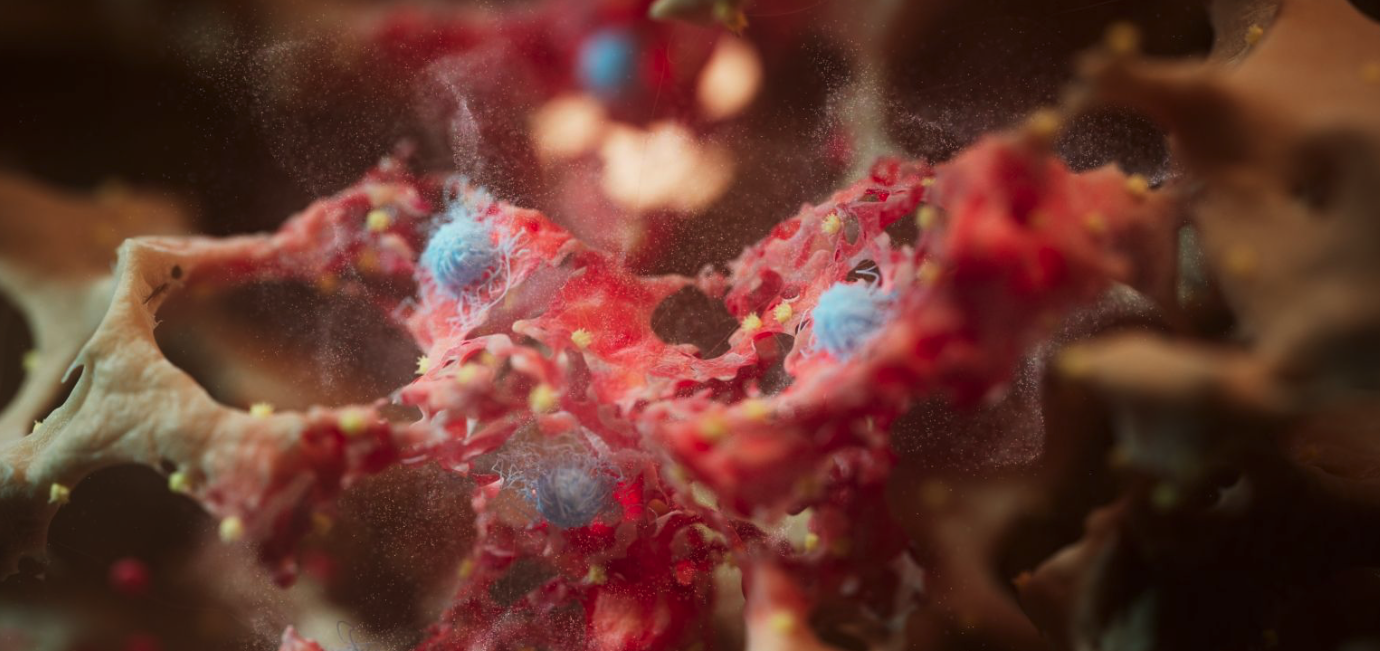
Credit: Michael Schwimmer and Jeroen Claus (Phospho Biomedical Animation).