
A study in the US has continuously monitored fish and found that midlife behaviour can predict how long they will live, shedding light on how ageing evolves in vertebrates.
African turquoise killifish are among the shortest-lived vertebrates used in research and share characteristics with longer-lived species, like humans, such as complex brains.
Researchers from the Wu Tsai Neurosciences Institute, from Stanford University, studied the behaviour of 81 killifish continuously from puberty to death, using an automated camera setup that recorded each fish in their own tank. By analysing posture, speed, rest and movement, the researchers identified 100 behavioural syllables, which are short and repetitive actions, and correlated these behaviours with longevity.
Despite living in the same conditions and being genetically identical, fish that would end up living longer or shorter could be divided into two groups with distinct behaviours by early midlife, and the researchers could even predict the lifespan of an animal by analysing only a few days of its behaviour. Sleep patterns and activity levels were key factors: shorter-lived fish tended to sleep day and night and swam less vigorously than longer-lived fish.
This continuous monitoring also revealed that ageing is not a gradual process. Fish display stable behaviours for long periods before rapidly shifting to a new ageing stage. By analysing gene activity in eight organs, they discovered that these shifts were linked to genetic alterations, particularly in the liver, where groups of genes involved in biological maintenance were more active in shorter-lived fish.
"We now have the tools to map aging continuously in a vertebrate. With the rise of wearables and long-term tracking in humans, I'm excited to see whether the same principles — early predictors, staged aging, divergent trajectories — hold true in people," said Claire Bedbrook, researcher at Stanford University and author of the work published in Science.
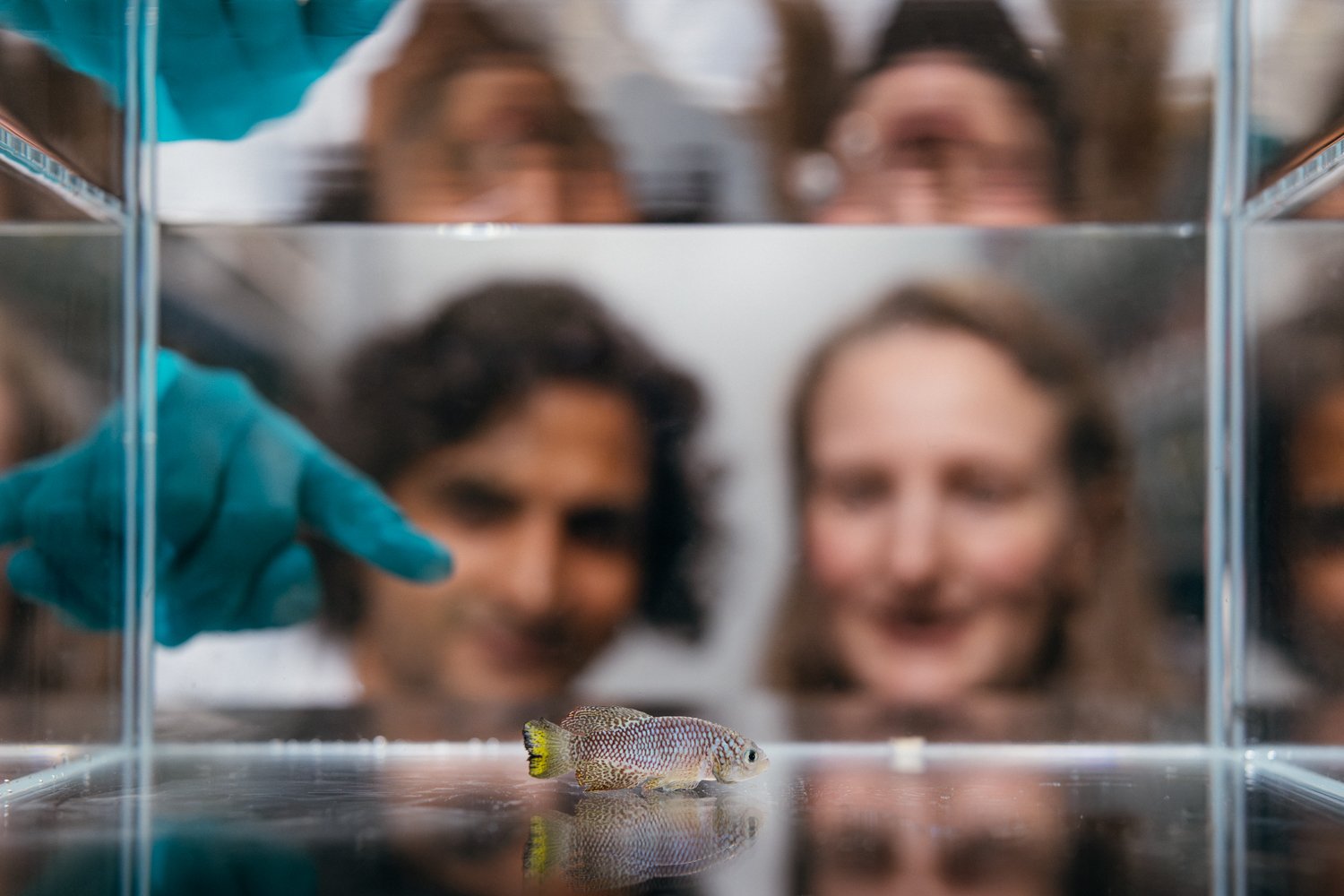
Researchers Ravi David Nath and Claire Nicole Bedbrook place African killifish under continuous behavioural surveillance to track movement patterns across their lifespan, finding that activity levels in young adults may serve as an early predictor of longevity.