
Researchers in Norway discovered that a specific type of brain cell directs rats’ attention for a target before they move.
Brain grid cells, neurones that fire in hexagonal patterns, are commonly known as the brain GPS for scanning the location ten times a second. Researchers from the Norwegian University of Science and Technology, including Nobel prize winners May-Britt Moser and Edvard Moser, who first discovered these grid cells, wanted to understand if they have an active role in navigation besides sweeping the surroundings.
The team devised an experiment in which rats chased a piece of food that moved fast and unpredictably. By simultaneously recording their brain activity, the researchers found that grid cells fired more quickly and focused on the direction of the bait when the rats saw the food. However, in these experiments, cells could be signalling rats’ attention or a movement, since both occurred at the same time and direction. So, the researchers looked for the rare moments in which the food bait made arcs behind the rats and swung in the opposite direction to their movement and found that the grid cells fired according to the position of the bait regardless of the direction the rats were looking in.
This pattern was observed even in the absence of food or other external factors. Using a narrow corridor with a reward at a dead end, which rats had to walk backwards to exit, the researchers saw the same pattern in grid cells while rats walked back without anything to lure them, suggesting that the grid cells encode an intention in the mind to focus attention.
“If you think you were born with a poor sense of direction, you have to live with it. If you understand that the map is something you build and fasten yourself, you can do something about it,” said May-Britt Moser, author of the study published in Science, about the relevance of the findings in human daily life.
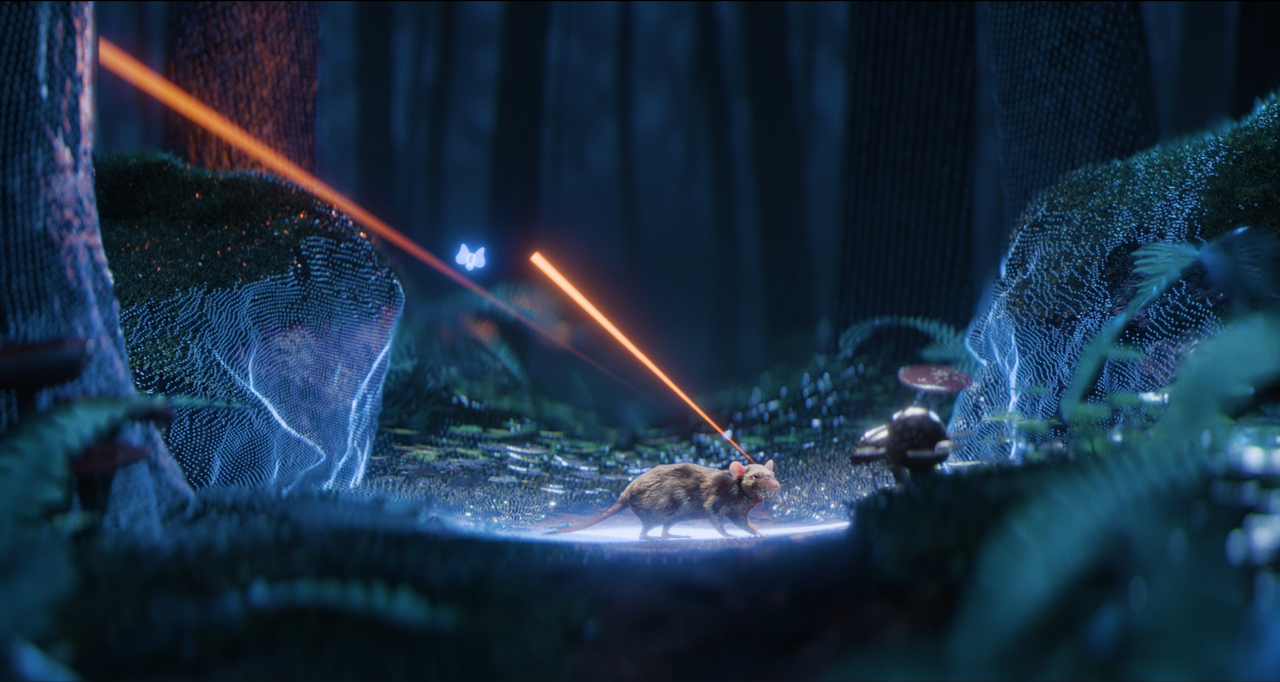
Still image from The Brain's Searchlight - an animation by Helmet Productions.