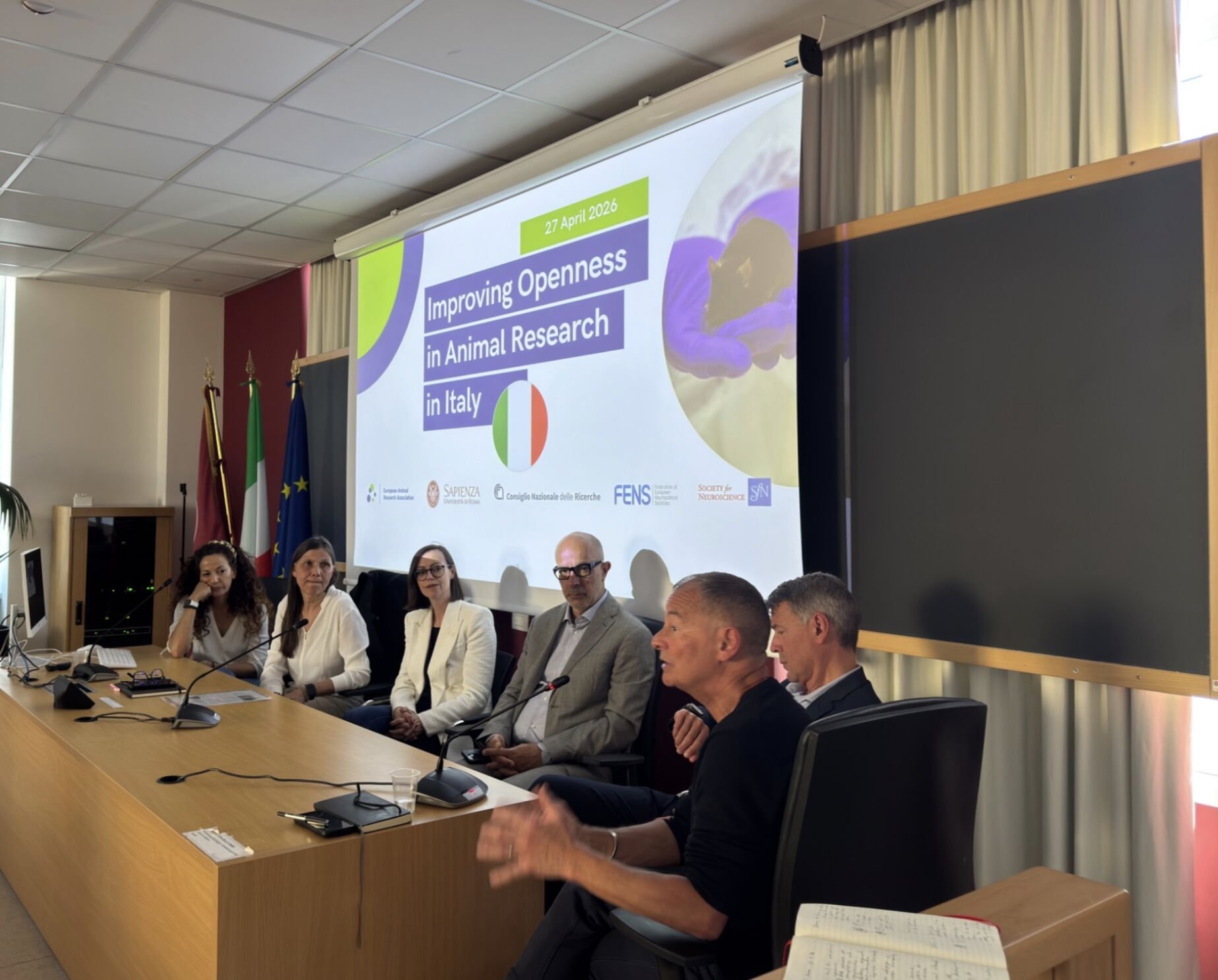
EARA, Sapienza Università di Roma and the Consiglio Nazionale delle Ricerche (CNR) held an in-person event in Rome this week on improving openness in communications about animal research in Italy. It was part of EARA’s Openness Events and brought together researchers, animal welfare professionals, research support and communications staff to discuss how institutions can speak more confidently with the public, policymakers and other stakeholders about animal research, while also addressing new approach methodologies (NAMs).
The workshop opened with a welcome from Antonella Polimeni, the rectress of Sapienza Università di Roma, an EARA Member, highlighting their institutional commitment to transparency, including being one of the signatories of the Italian Transparency Agreement. Cristina Limatola, also from Sapienza’s, further detailed how the institution is leading in openness in Italy, giving the example of a new institutional webpage with detailed information on animal research and its context in research made at the university. Marcello Raspa then discussed openness and transparency agreements in animal research and science within the CNR, including the role that research infrastructures can play in building trust and credibility.
Kirk Leech (EARA) addressed why openness matters now in Italy, perhaps more than ever, focusing on the work that needs to be done by institutions to counteract misinformation by activist groups and take action against the premature phase-out pressure to end all animal research in the EU. Nuno Miguel Gonçalves (EARA) presented EARA’s Patient Discovery Project and how this patient engagement project is reshaping the way animal research is being discussed with non-specialist audiences, and having patient voices heard in both scientific and policy-driven discussions, where they are almost always previously shut out.
The scientific case studies then grounded the discussion in real research. Sara Marinelli (CNR), whose work focuses on pain, presented a fundamental research example that is now evolving in the drug discovery pipeline and how animal models on spinal cord injury contributed to this progress, while ensuring this is communicated clearly to audiences unfamiliar with the research behind it, namely to patient groups. Silvia Piconese (Sapienza) research focuses on both fundamental and translational immunology, including regulatory T cells and cancer immunology, showcasing a case study on how preclinical evidence in mice is supporting potential clinical life-saving solutions.
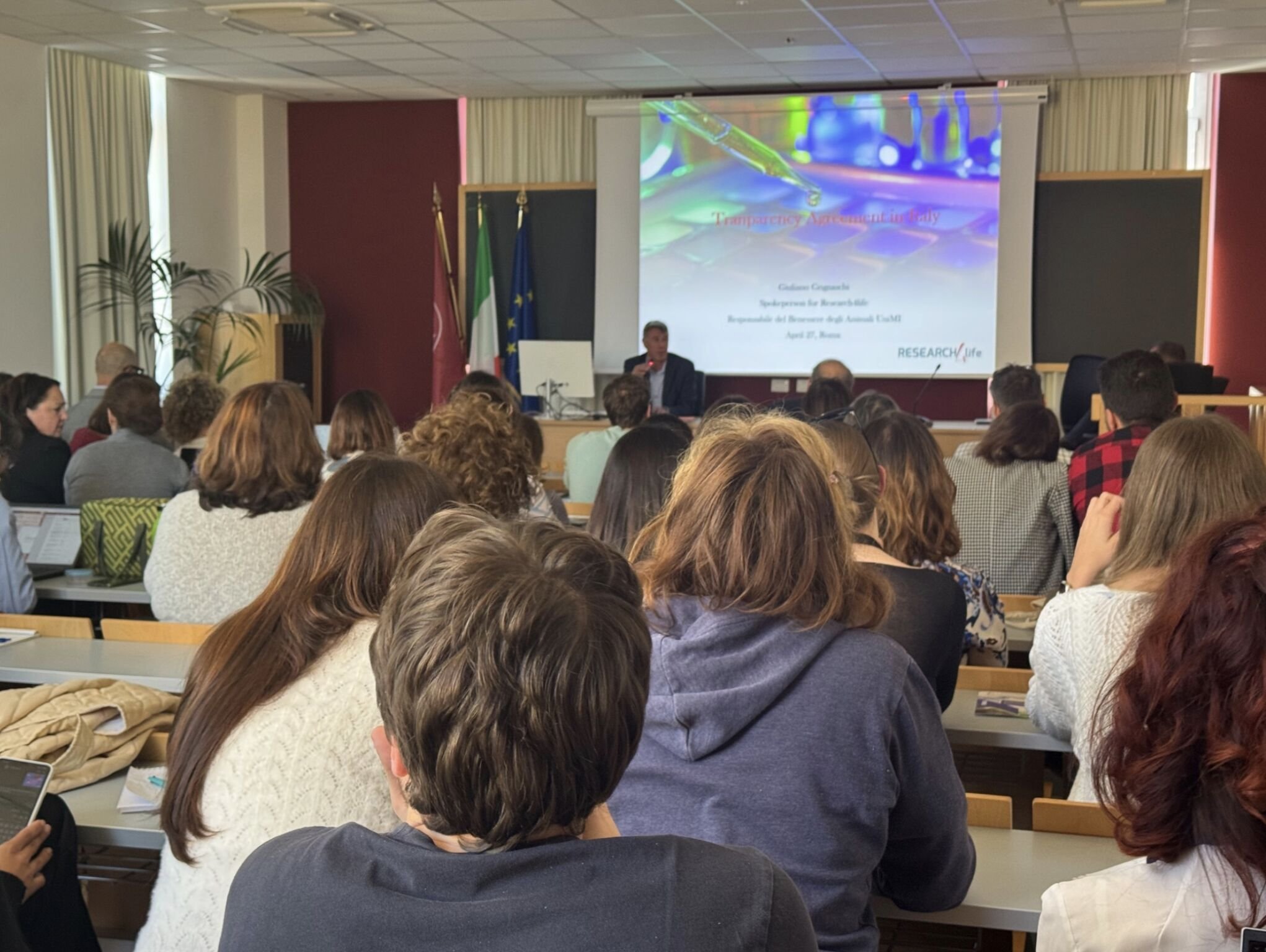
Giuliano Grignaschi (Research4Life and University of Milan) closed the talks with an update on the Italian Transparency Agreement, clamouring for more commitment from institutions on applying the four commitments of the agreement, with the danger of this groundbreaking initiative in Italy being left behind.
The panel discussion explored some of the practical barriers that continue to limit transparent communication in Italy, including researchers’ lack of proper communication tools, institutional risk-aversion and the need to firstly address the underlying scientific and medical aims that animal research allows, without forgetting to put it into context and not underestimate how animal welfare and ethical decisions are an integral part of the regulatory approval process and reliable science. Participants and panellists insisted that presenting the whole truth of animal research is vital, as is acknowledging the limitations of animal models and NAMs altogether.