The fourth webinar of the EARA Webinar Series, “What Does Animal Research Really Look Like? – Accurate Images for Transparency”, was held on 27 October, and attracted more than 730 registrations and almost 500 live participants.
The session brought together experts from Germany, Switzerland, the UK and the US to discuss how photographs, videos and virtual laboratory tours can help institutions communicate their research while addressing public perceptions of a sensitive subject and emerging challenges such as images generated by artificial intelligence (AI).
In the absence of accurate images, others fill the gap and the biomedical research sector is still recovering from decades of secrecy and needs to counter sometimes gruesome, out-of-context images of animal research shared by animal activist groups. Research institutions must provide accurate images of animal research, including procedures that may be difficult to communicate, to improve transparency and public understanding, according to speakers at the webinar.
Opening the webinar, EARA Deputy Director Nuno Miguel Gonçalves presented findings from EARA's previous website study, which found that only 44% of institutions had published a statement about their use of animals in research, while just 37% included images of research animals. He argued that stock images are no longer sufficient for meaningful transparency and introduced EARA's new Media Bank, which encourages institutions to share authentic photographs of their research animals, facilities and procedures.
Susanne Diederich, Press Officer at the German Primate Center (DPZ), Germany, described how the institute has progressively become more open about showing the reality of its research, moving from simplified illustrations of experimental setups to photographs and videos of actual procedures. She described how DPZ has used personal stories from researchers and animal caretakers to explain its scientific work, including a video featuring a neuroscientist discussing her research in which, for the first time, the institute showed monkeys with implants used for neuroscience research. “We have to pair facts with faces, show the people,” she said, arguing that personal stories and emotions are important elements of communication alongside scientific information. Diederich also presented examples of the institute's communication about research involving cardiac patches, including photographs of a surgical procedure involving a monkey, stressing that the context in which images appear is fundamental.
Michaela Thallmair, Head of the Office for Animal Welfare and 3R at EARA Member the University of Zurich (UZH), Switzerland, presented the university's experience of proactively publishing authentic images of animals, facilities and experimental procedures. Recalling the institution's earlier communications, she explained that its website once contained almost no images of animal research, while online searches predominantly returned photographs that did not reflect the conditions at UZH. “We said, well, this is not how reality at our university looks,” she recalled. “We decided that we want to have pictures from procedures.” Since 2016, UZH has shared contextualised photographs of real research projects, showing different animal species, and both surgical and non-surgical procedures for different scientific objectives. Thallmair said that the university's approach has been appreciated by journalists and animal protection organisations, while greater openness has also helped establish dialogue around controversial research.
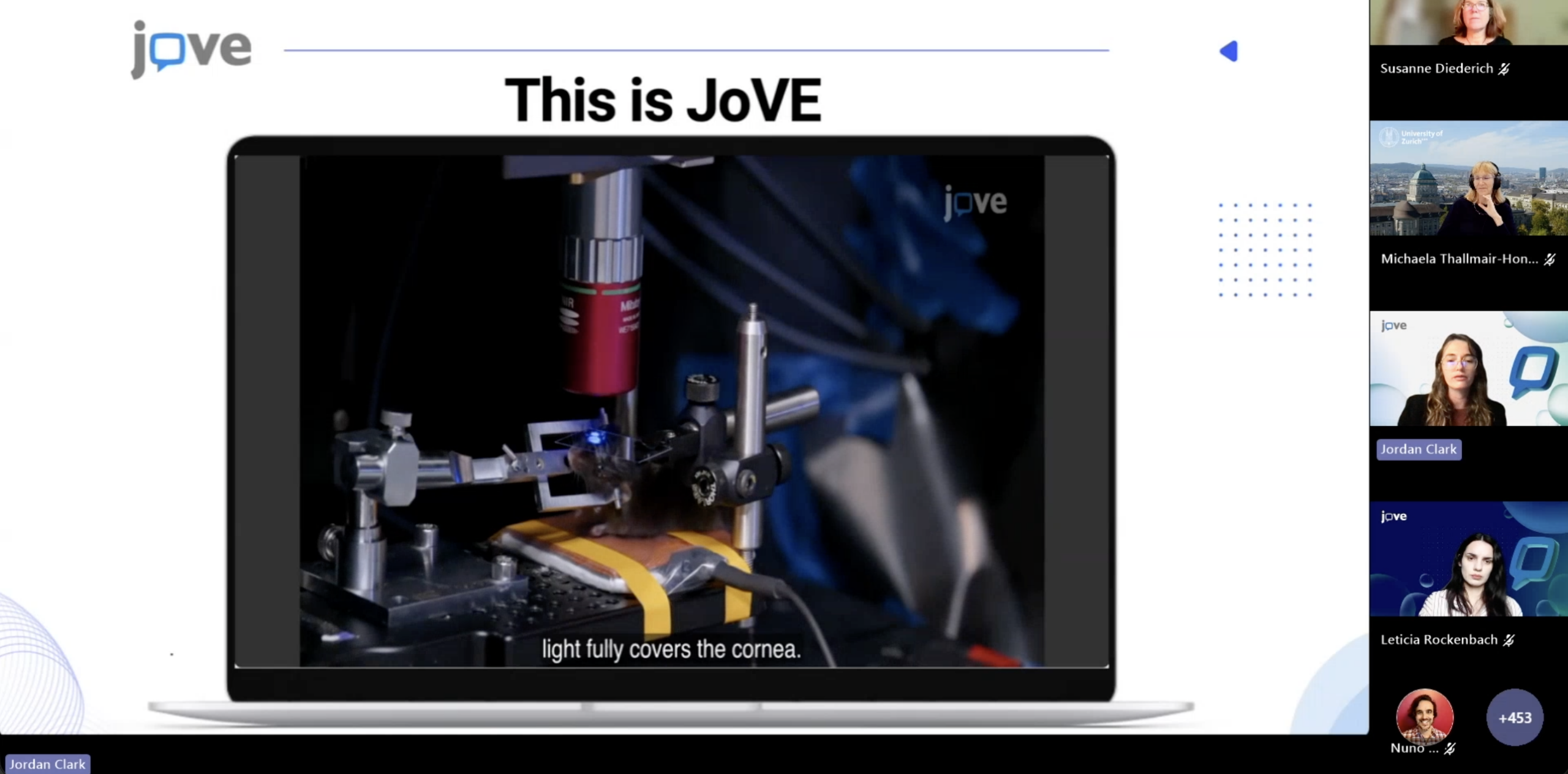
Jordan Clark, Scientific Advisor at Journal of Visualized Experiments (JoVE), US, explored how scientific video can improve the communication and reproducibility of experimental procedures, including those involving animals. Clark described how JoVE's Lab Animal Research collection has expanded from 14 to 44 videos, covering animal handling, experimental techniques and the 3Rs. The resources combine footage of real procedures with explanatory animations and undergo review involving veterinary expertise. The aim, Clark explained, is to ensure that “whoever watches it not only understands how a procedure needs to be done, but what's actually happening as that procedure is taking place.” She also highlighted the importance of involving laboratory animal science professionals in developing the resources, ensuring that the videos reflect current practices and the needs of researchers.
The final presentation came from Jamie Yuan, Video Producer at EARA Member Understanding Animal Research (UAR), UK, who demonstrated how virtual laboratory tours can open research facilities to audiences unable to visit them in person. Using interactive floor plans, 360-degree photography and embedded videos, visitors can explore animal facilities at their own pace and discover aspects of animal research that rarely feature in public communications. “It makes the everyday visible,” Yuan explained. “When you think about animal research, you don't necessarily think of cage cleaning, food prep, or welfare checks.” UAR has developed tours for six research institutions, with its Lab Animal Tour initiative attracting more than 350,000 page views since launching. Videos adapted from these tours have also generated more than 100,000 views on social media. However, Yuan warned that technological sophistication alone does not guarantee transparency. “Just because you have a virtual tool, you have pictures on your website, that doesn't necessarily mean you're being transparent,” he said. “The credibility of a tool depends on how it's made, not just the technology it uses or how it's presented.”
The panel discussion, moderated by Nuno Miguel Gonçalves, explored how far institutions should go when showing sensitive aspects of animal research and whether highly polished visual materials can undermine perceptions of authenticity. Yuan acknowledged the difficulty of finding the right balance, referring to feedback describing one of UAR's videos as overly polished. “That word slick sort of implies a level of production which maybe is hiding the truth,” he said, suggesting that showing everyday activities such as cage cleaning and food preparation can help audiences understand the wider reality of animal research.
The examples shown in the presentations raised a wider question about the consequences of withholding images of difficult procedures when the media may use other, potentially inaccurate material instead. Thallmair agreed that images must be selected carefully but warned against portraying only the least challenging parts of research. Diederich agreed, saying: “I think an important thing is that you have to be honest,” explaining that institutions cannot accurately communicate neuroscience research involving monkeys while concealing the implants and surgical procedures required for that research.
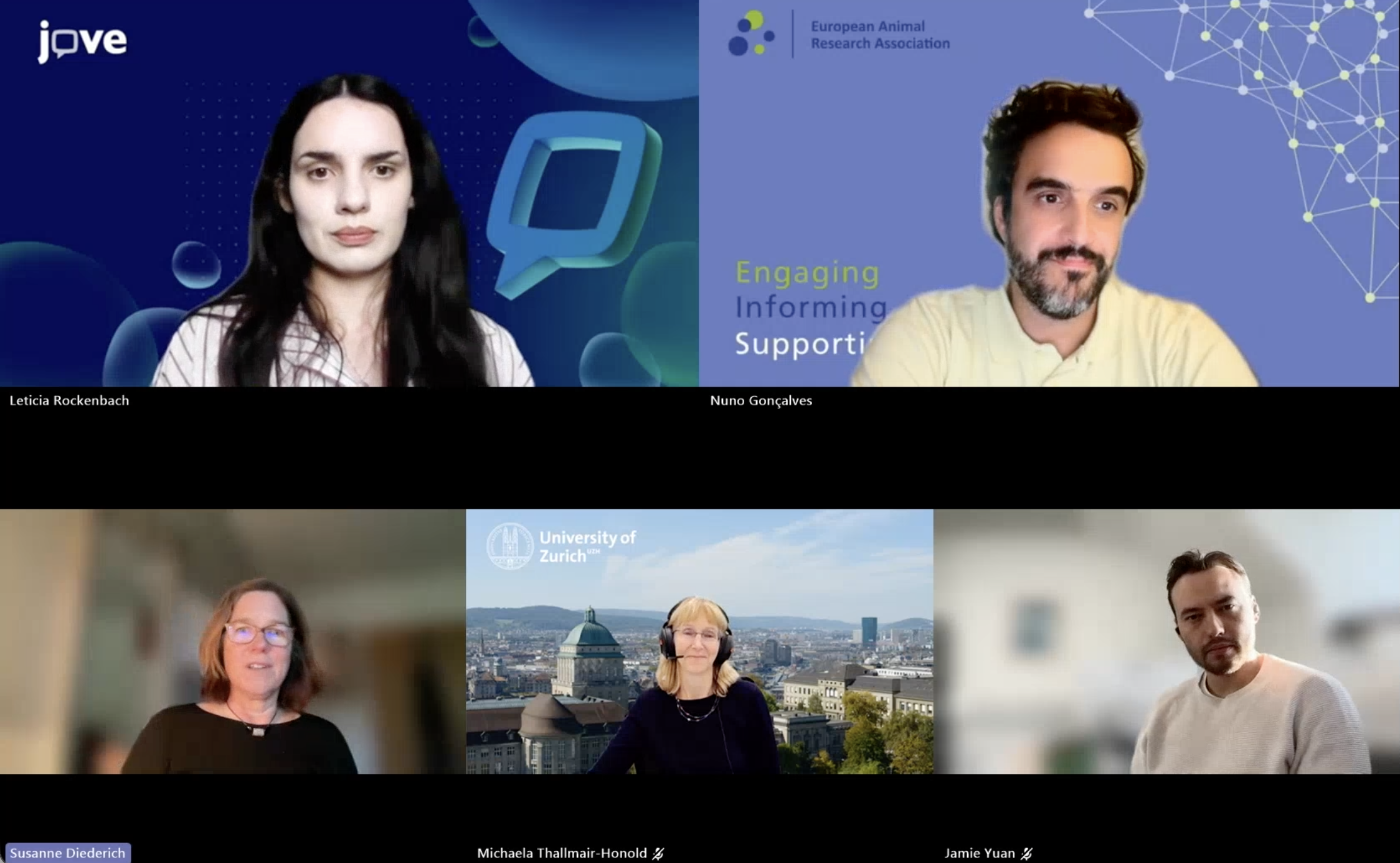
The discussion also addressed the growing challenge of AI-generated images and videos, which can be used to present misleading representations of animal studies. Leticia Rockenbach, from JoVE, warned that inaccurate AI-generated videos of procedures are already appearing online. “If you type in 'mouse dissection’, you can find several videos which are AI generated and they're not actually accurate,” she said, arguing that authentic, reviewed visual resources are increasingly important.
The panel also discussed whether greater openness could improve relationships with animal protection organisations. Diederich described how DPZ engages with protesters and seeks opportunities for dialogue, even when disagreements over animal research remain. Thallmair explained that UZH has developed relationships with Swiss animal protection organisations through facility visits and discussions, including cooperation on the rehoming of research animals. “We will not have the same opinion about everything. That's clear. But I think we have now established a mutual understanding,” she said.
The webinar concluded by highlighting that greater transparency requires not only more photographs and videos, but also a willingness to show the full reality of animal research, provide sufficient context, and engage with different audience segments who may be unfamiliar or concerned about experimental procedures on animals, namely policymakers, patients, and even clinicians.
EARA is looking for further collaborations with institutions to enrich our Media Bank, so if you would like to contribute with your own research and facility images, please contact hpinheiro@eara.eu.
An edited recording of the webinar is available on EARA's YouTube channel.