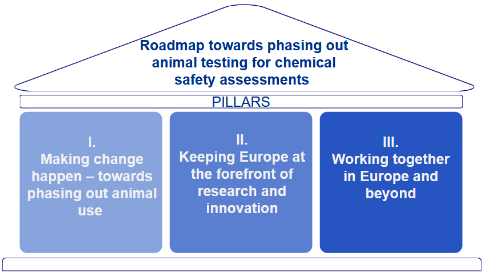
The European Commission has published its long-awaited Roadmap towards phasing out animal testing for chemical safety assessments, setting out how non-animal approaches could progressively replace animal studies across multiple regulatory sectors while maintaining human and environmental safety standards.
The roadmap, developed in response to the 2023 European Citizens' Initiative Save Cruelty-Free Cosmetics – Commit to a Europe without Animal Testing, covers 15 legislative areas, including industrial chemicals, pesticides, biocides, pharmaceuticals and food additives. Accompanied by a detailed Staff Working Document, it outlines short-, medium- and long-term actions to support the transition.
A central condition of the roadmap is that non-animal approaches must provide a level of protection equivalent to current methods before they can replace animal tests. The Commission acknowledges that direct replacement is not yet feasible for some of the most complex safety endpoints, including repeated-dose and reproductive toxicity. Instead, future assessments are expected to rely increasingly on a mechanistic understanding of how substances cause harm, drawing on evidence from multiple complementary methods.
Implementation will be coordinated through a new Roadmap Steering Team bringing together Member States, regulators, industry, academia and NGOs. A call for participation is expected in the coming weeks, with the group becoming operational later in 2026. The Commission is also developing a public dashboard to track progress, including regulatory acceptance, industry uptake and investment in non-animal approaches.
While short-term actions are expected to be completed by 2029, no deadlines have been set for medium- and long-term objectives. The absence of fixed timelines reflects the scientific and regulatory challenges involved in replacing animal studies, particularly in areas where validated alternatives remain unavailable.
Monique Sundin