The FENS Forum 2026 in Barcelona, from 6 to 10 July 2026, brought together thousands of neuroscientists from around the world to discuss the latest advances in brain research. Throughout the meeting, EARA contributed to several high-profile activities, highlighting the importance of transparent communication about animal research, the complementary role of new approach methodologies (NAMs), and greater patient involvement in preclinical neuroscience.
The Brain Debate
The Brain Debate
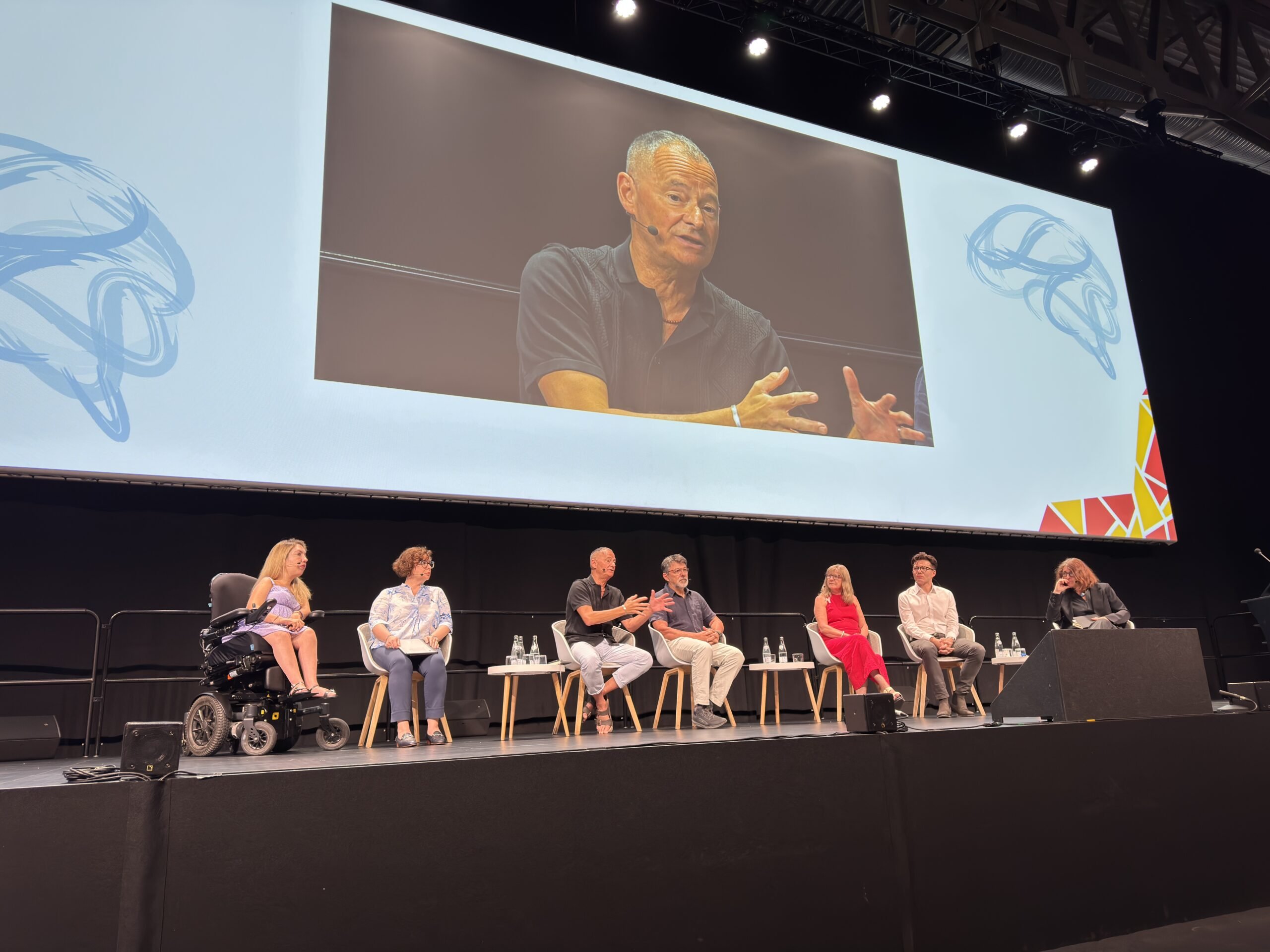
The Brain Debate is a staple event at the FENS Forum, held in the conference’s largest lecture hall immediately before the opening ceremony and attracting more than 3,000 participants. This year’s debate, From animals to alternatives and the future of research models, focused on the growing pressure to prematurely phase out animal research in favour of NAMs, which are increasingly being presented as ready-to-use replacements.
Kirk Leech, EARA Executive Director, highlighted two key challenges facing the field: the conflicting definitions of NAMs being adopted by regulators and funders, and the growing tendency to present NAMs as replacements rather than complementary methodologies. He also noted that researchers remain largely absent from public discussions on animal research, leaving activist organisations as the dominant source of information and contributing to politically driven rather than scientifically informed decisions.
Other panellists, which included EARA members, reinforced the importance of openness. Angela Roberts (University of Cambridge, UK) highlighted how public attitudes began to change following the introduction of the UK Concordat on Openness in 2014, which inspired Transparency Agreements now involving more than 600 institutions worldwide. Emmanuel Procyk (CNRS, France) emphasised the need for greater transparency in non-human primate research through initiatives such as Biosimia and EU-SIMIA. Viola Galligioni (Netherlands Institute for Neuroscience) argued that openness should also extend within institutions so that animal care staff better understand and communicate the importance of their work.
The discussion also addressed the complementary relationship between animal studies and NAMs. Alexandra Tzilivaki (Charité Berlin, Germany) explained that computer models still depend on data generated through animal research, while Sergiu Pașca(Stanford University, US) warned against overpromising the capabilities of either animal or non-animal methods, arguing that unrealistic expectations ultimately undermine public trust in science.
Moderated by Christelle Baunez (CNRS, France), president of the FENS CARE Committee, the debate concluded with a call for neuroscientists to take a more active role in communicating their research and addressing misinformation.
Patient engagement in neuroscience
Patient engagement in neuroscience
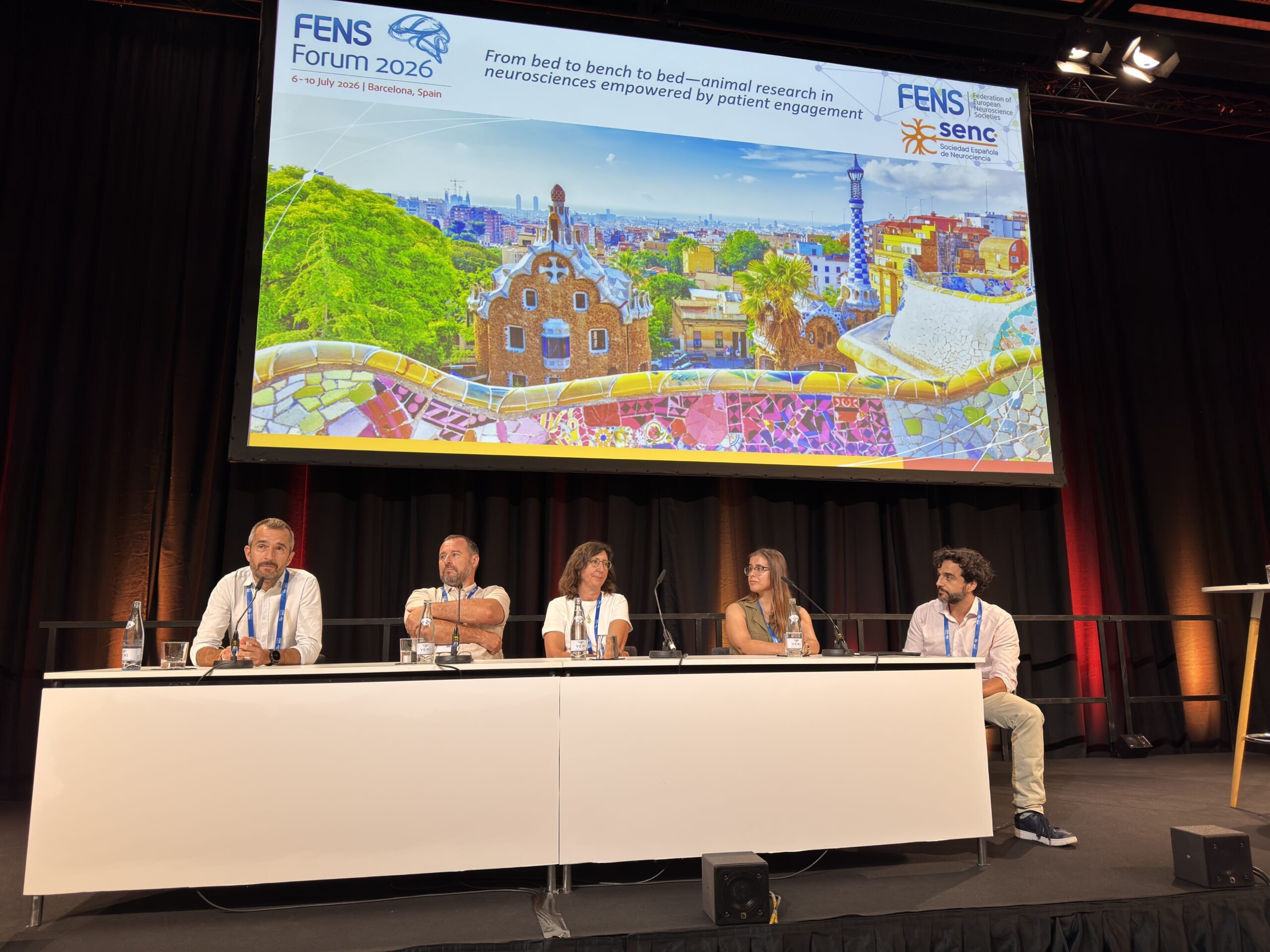
EARA also organised a Special Interest Session, supported by the FENS CARE Committee, entitled From bed to bench to bed—animal research in neurosciences empowered by patient engagement. The session explored how involving people with lived experience can strengthen neuroscience research from its earliest stages.
Nuno Gonçalves, EARA Deputy Director, opened the session by highlighting the growing importance of patient involvement alongside the research community’s increasing commitment to transparency. Inês Serrenho, EARA Patient Engagement Officer, presented EARA’s Patient Discovery project, which helps patients make informed decisions about preclinical research and promotes their participation in research discussions.
Researchers from EARA Member institutions, Marta Nieto (CNB-CSIC, Spain) and Peter Janssen (KU Leuven, Belgium), demonstrated how animal research remains essential for understanding brain development and for developing visual prosthetics and brain-machine interfaces, while also explaining how patient perspectives are helping to shape their research.
Stroke advocate Iñigo Uriarte (@ictuencer.es) provided the patient perspective, calling for patients to be involved throughout the research process. “If you give us an opportunity to participate in a professional way in research from start to finish, we will be a useful source of knowledge. Patients should be in the middle of research,” he said.
Public engagement
Public engagement
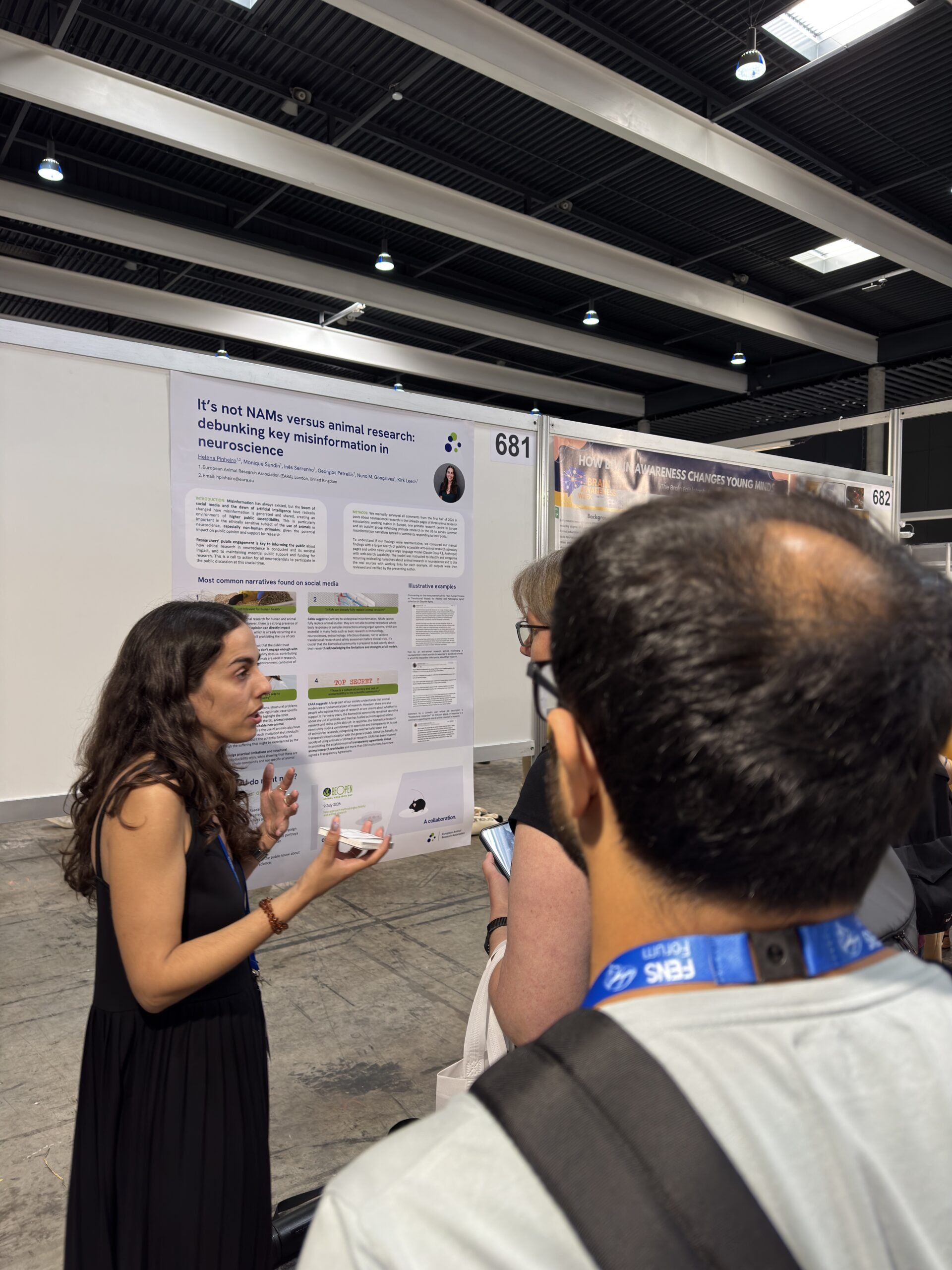
EARA Communications and Social Media Officer Helena Pinheiro presented the poster titled Not NAMs Versus Animal Research: Debunking Key Misinformation in Neuroscience, which examines misinformation about animal research and the overpromising of NAMs on social media.
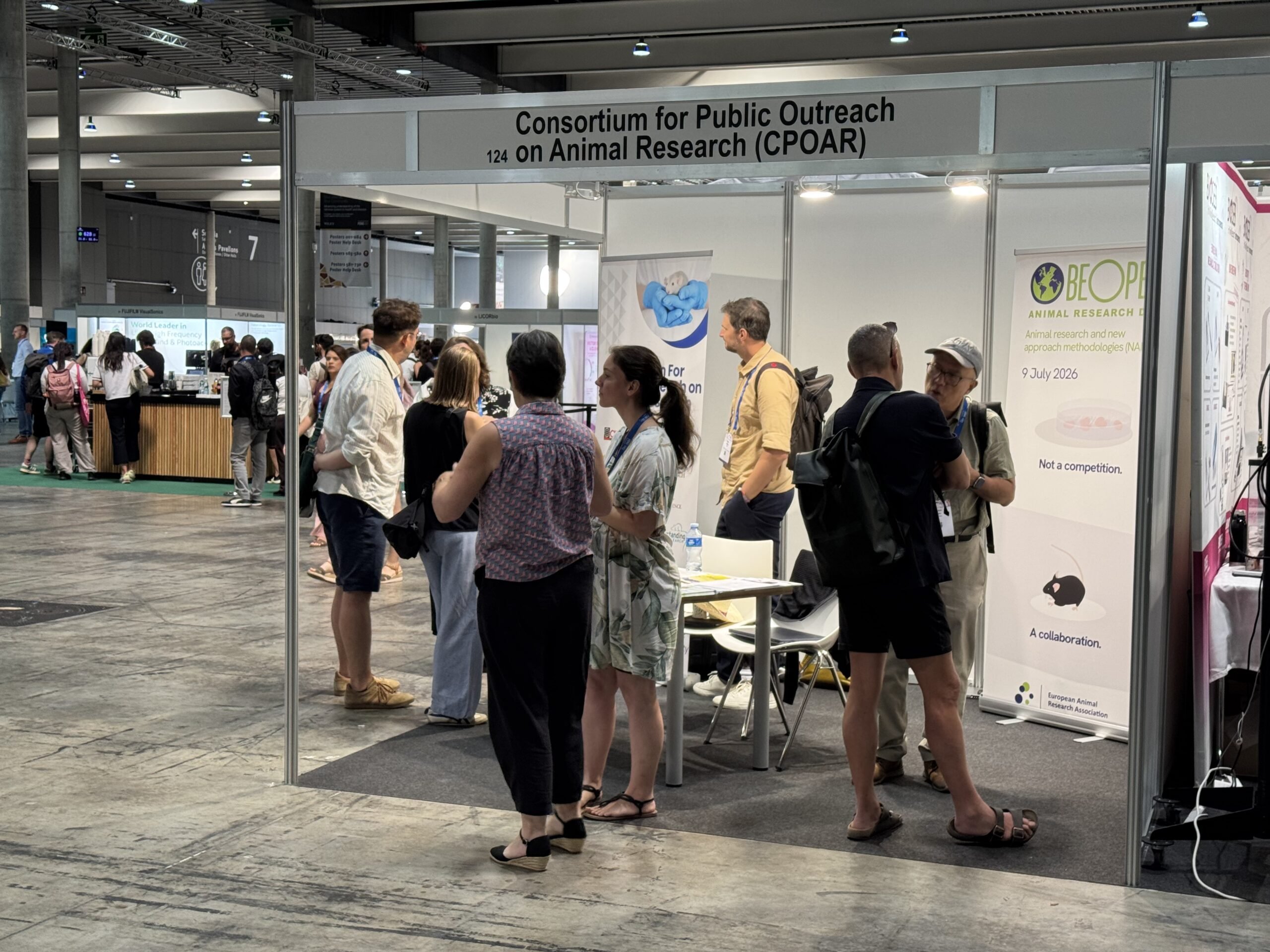
EARA also co-coordinated the Consortium for Public Outreach on Animal Research exhibition booth, where scientists were provided with practical tools to improve communication about their research and the responsible use of animals with non-specialist audiences.
EARA also used FENS 2026 as a platform to launch #BOARD26, our annual campaign, Be Open About Animal Research Day, so check our socials for all the content we produced for this special day on openness and transparency around the world.
The FENS Forum highlighted the growing recognition that openness, patient engagement and balanced communication about animal and NAMs are essential for maintaining public trust and supporting high-quality neuroscience research.