
A German study has developed the first genetically altered primate — marmosets — to study human deafness that mimics key characteristics of the condition, which is one of the most common sensory congenital disorders in humans.
Researchers at the German Primate Center, the University Medical Center Göttingen and collaborators at the Max Planck Institute for Multidisciplinary Sciences, from the EARA member Max Planck Society, altered a gene involved in human congenital deafness in marmosets, called OTOF. When this gene is not functional, the inner ear lacks the protein otoferlin, which is crucial for the transmission of sound signals to the brain.
The team altered OTOF using the gene-editing tool CRISPR in fertilised marmoset eggs and implanted the embryos in surrogate mothers. The pregnancies and development of the embryos were normal, and after the marmosets were born, auditory tests showed that they were deaf from birth, as occurs with humans with congenital deafness.
“With the OTOF-knockout marmosets, we now have, for the first time, a primate model that realistically replicates human OTOF-related hearing loss,” said Tobias Moser, from the University Medical Center Göttingen, leader of the study in Nature Communications. “This gives us a crucial tool for developing new therapies in a more targeted and safer manner, while also considering their long-term effects.”
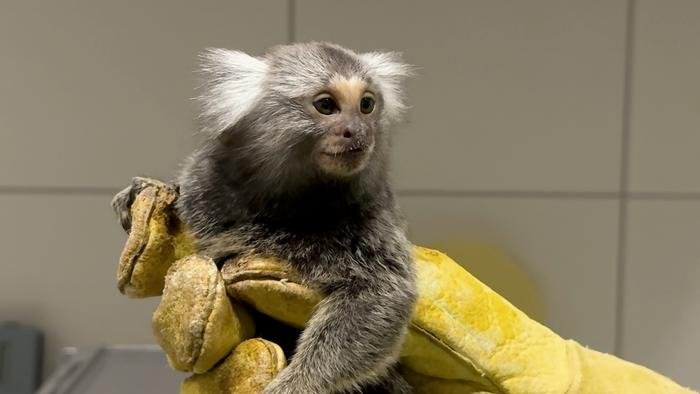
Marmoset used in the study. CREDITS: Katharina Diederich / German Primate Center