
Researchers in Belgium have developed a technology that allows monkeys to navigate a virtual environment using only their brain activity, a potential solution for patients with neurological disorders.
The technology, known as brain-computer interface (BCI), creates a direct communication pathway between the brain and an external device, such as a computer or a robot. It works by recording brain signals through electrodes and translating them into commands that a computercan interpret.
Most existing systems rely on signals from a single brain region, which can limit flexibility and precision. A team at EARA member KU Leuven developed a new BCI that combines signals from multiple brain regions involved in movement, aiming to enable a more natural and flexible control of movement.
To test the system, three rhesus monkeys were implanted with the device and trained to interact with a complex 3D virtual environment. After initial observation of screen movement, the animals learned to make their digital interface, called an avatar, respond directly to their brain activity. Without making any physical movement, the monkeys were able to guide the avatar to reach targets, avoid obstacles and adjust its trajectory when conditions changed.
“We found that the brain adapts to the system surprisingly fast. This makes the technology a much better candidate for applications for patients,” says Peter Janssen from KU Leuven and lead author of the study published in Science Advances.
The researchers aim to use this technology in people living with conditions such as Amyotrophic Lateral Sclerosis and Parkinson’s disease within the next two years.
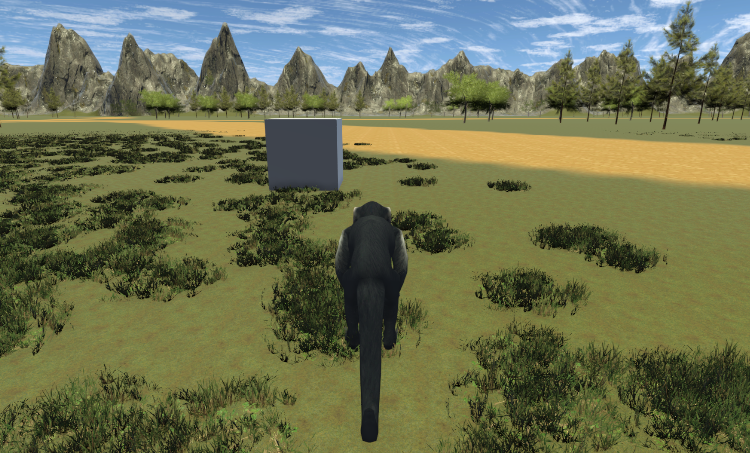
Without moving a muscle, monkeys were able to navigate an avatar through a virtual world. CREDITS: KU Leuven