
Researchers in Sweden have identified a target of the immune response to genital herpes, with the potential to lead to the first vaccine against it.
Genital herpes is a lifelong infection caused primarily by the HSV-2 virus. There is no vaccine available, and although antiviral medicines can help control symptoms, they do not eliminate the virus, which remainsdormant in nerve cells and can reactivate throughout a person’s life.
Researchers at the EARA Member University of Gothenburg, Sweden, focused on glycoprotein G, a protein found on the surface of HSV-2 and infected cells, and found that, in mice, viruses lacking a specific form of this protein that binds to cell membranes could still multiply, but their spread was limited in affecting new cells, namely nerve cells. Moreover, the removal of certain sugar molecules normally attached to this protein also diminished viral infection.
The researchers then evaluated glycoprotein G as a vaccine target. Mice inoculated with the protein developed a strong immune response, protecting the animals against genital herpes and preventing the virus from spreading to the nervous system.
Rickard Nordén from the University of Gothenburg and lead author of the study published on PLOS Pathogens, said: “Our results identify glycoprotein G as both a virulence factor and a promising vaccine target. This provides a strong rationale for including the glycosylated form of the protein in future herpes vaccine development.”
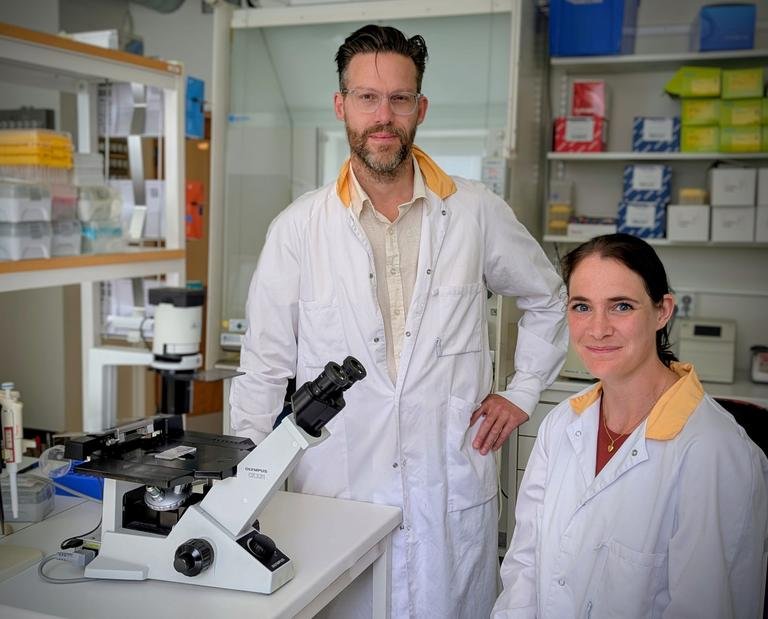
Rickard Nordén and Ebba Könighofer, Institute of Biomedicine, Sahlgrenska Academy at the University of Gothenburg and Sahlgrenska University Hospital. CREDIT: Sofia Brunét