
A study in mice in the US found that brain support cells can communicate with one another, suggesting they play a more active role in brain function.
Neurons form networks that transmit information across the brain, while some support cells help maintain the environment around them and feed them with valuable molecules. These cells are called astrocytes and are known as star-shaped cells due to their long, branched extensions. When these projections meet, they connect through gap junctions—tiny channels that allow neighbouring cells to exchange molecules important for brain function.
A team at NYU Langone Health investigated whether astrocytes were connected across the brain by introducing a harmless virus into mice that tagged small molecules moving between astrocytes. Using advanced 3D imaging, the researchers reconstructed these connections acrossthe whole brain and showed, for the first time, that these networks link different brain regions.
To see if these networks respond to changes in external signals, the researchers trimmed whiskers on one side of the mice’s face. This altered the signals sent to the brain and led astrocyte networks in brain regions that process these signals to reorganise, becoming smaller and forming new connections with different astrocytes, thus adapting to new signals.
“By challenging our understanding of how the brain communicates over long distances, our results may offer fresh insight into how it develops, ages and behaves in conditions such as Alzheimer’s and Parkinson’s disease,” said Shane A. Liddelow, from NYU Grossman School of Medicine and co-lead author of the study published in Nature.
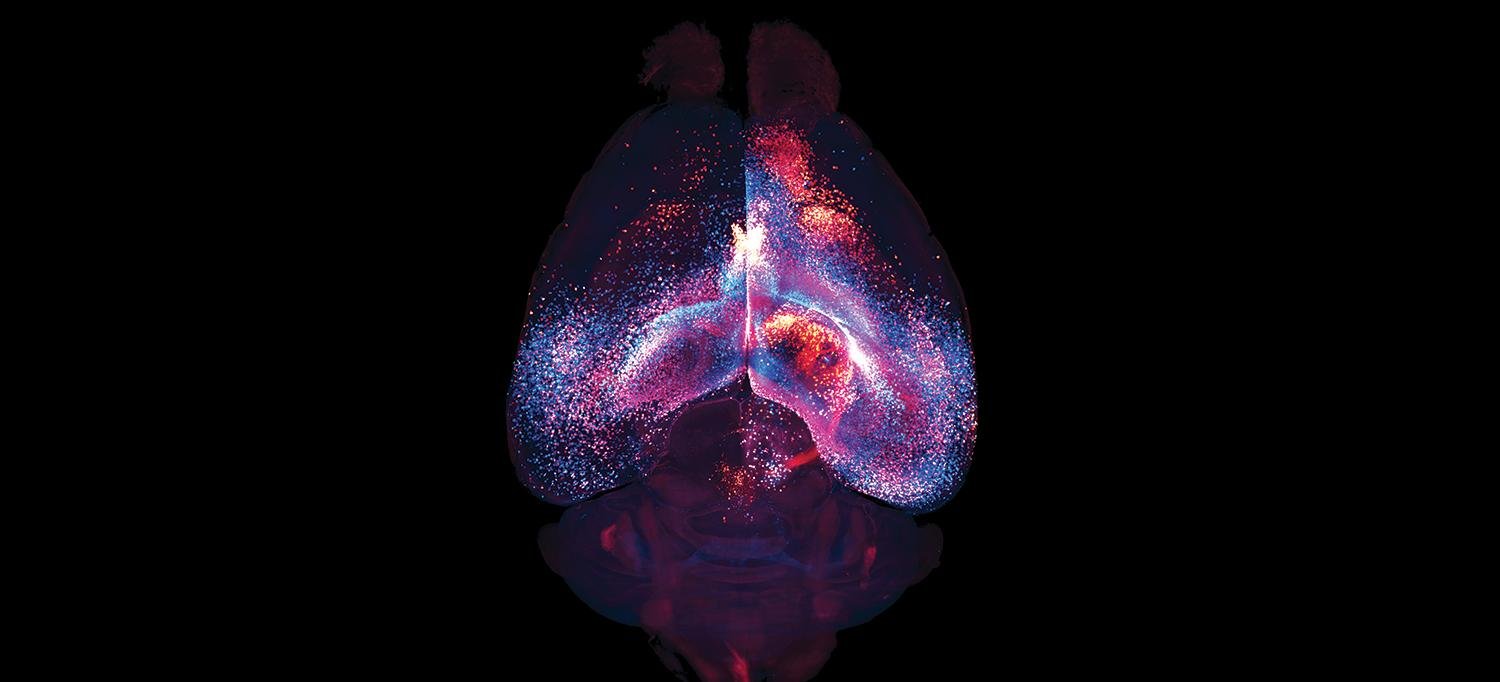
CREDITS: COOPER ET AL. NATURE. 2026.