
A study in Canada has found that vitamin B3 can activate the immune system to attack brain cancer cells in mice.
Glioblastoma is the most common and aggressive malignant brain cancer in adults. Patients are typically treated with surgery, radiotherapy and chemotherapy, but the cancer almost always returns, and survival rates have changed little over the past two decades.
Researchers at EARA member University of Calgary first investigated vitamin B3, also known as niacin, in mice implanted with human glioblastoma cells. They found that niacin, combined with temozolomide – the standard therapy for glioblastoma– activated immune cells, namely monocytes, macrophages and microglia, to attack tumour cells. The treatment reduced tumour growth and prolonged the animals’ survival.
Based on these findings, the team launched an early-stage human clinical trial to evaluate the safety and potential benefits of adding niacin to standard treatment in patients with newly diagnosed glioblastoma. The first results showed that 82% of the 24 participants remained free from cancer progression six months after treatment, compared with 54% in previous studies of standard treatment.
“Niacin treatment rejuvenates immune cells so they can do what they are supposed to do, attack and kill the cancer cells. I see it as an ongoing ‘battle for the brain,” said Voon Wee Yong, professor at the University of Calgary and lead author of the study published in the Journal of Neuro-Oncology.
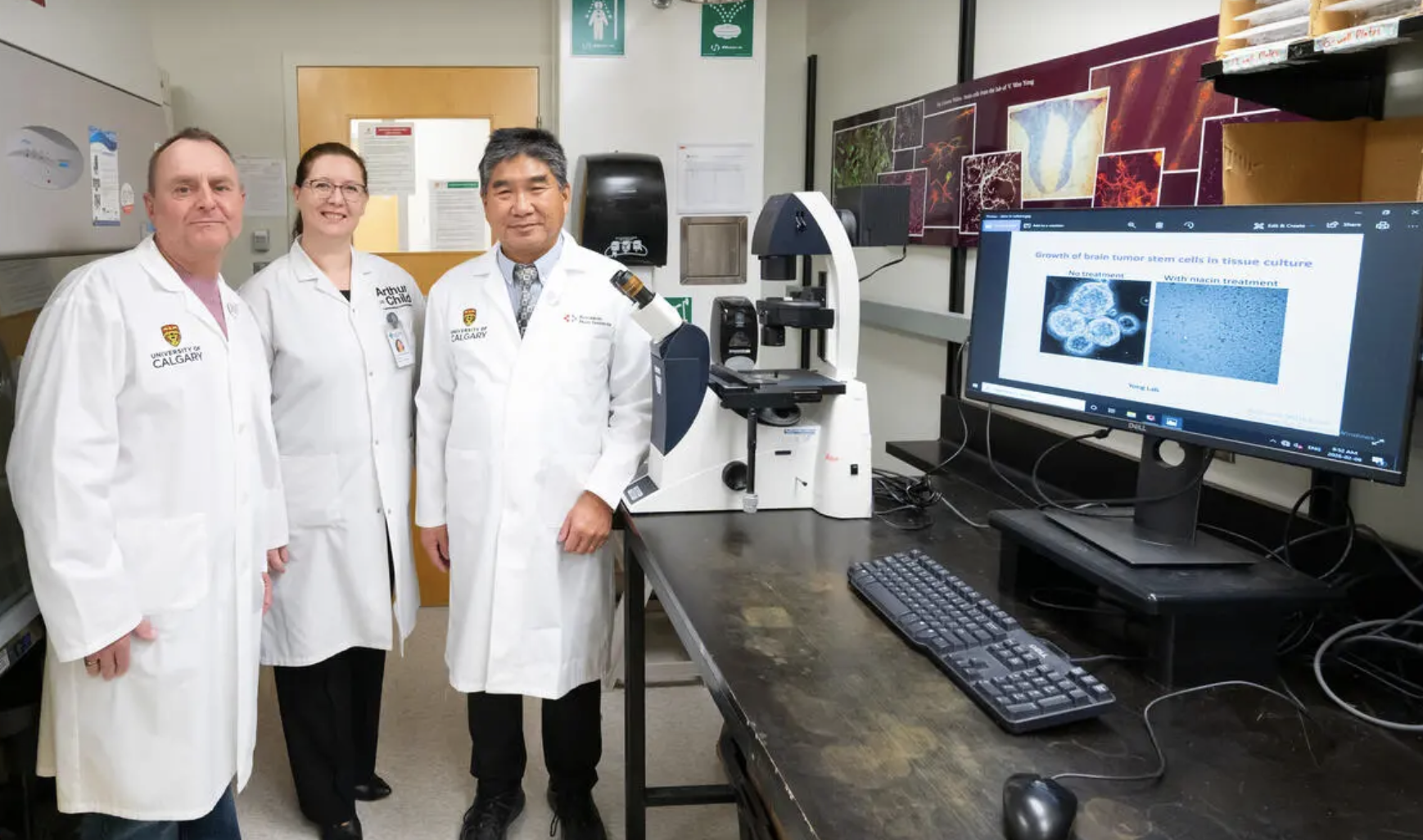
Patient and study participant Ed Waldner, centre, with Dr. Wee Yong and Dr. Gloria Roldan Urgoiti in a University of Calgary lab. Credit: Gavin Young/Postmedia