
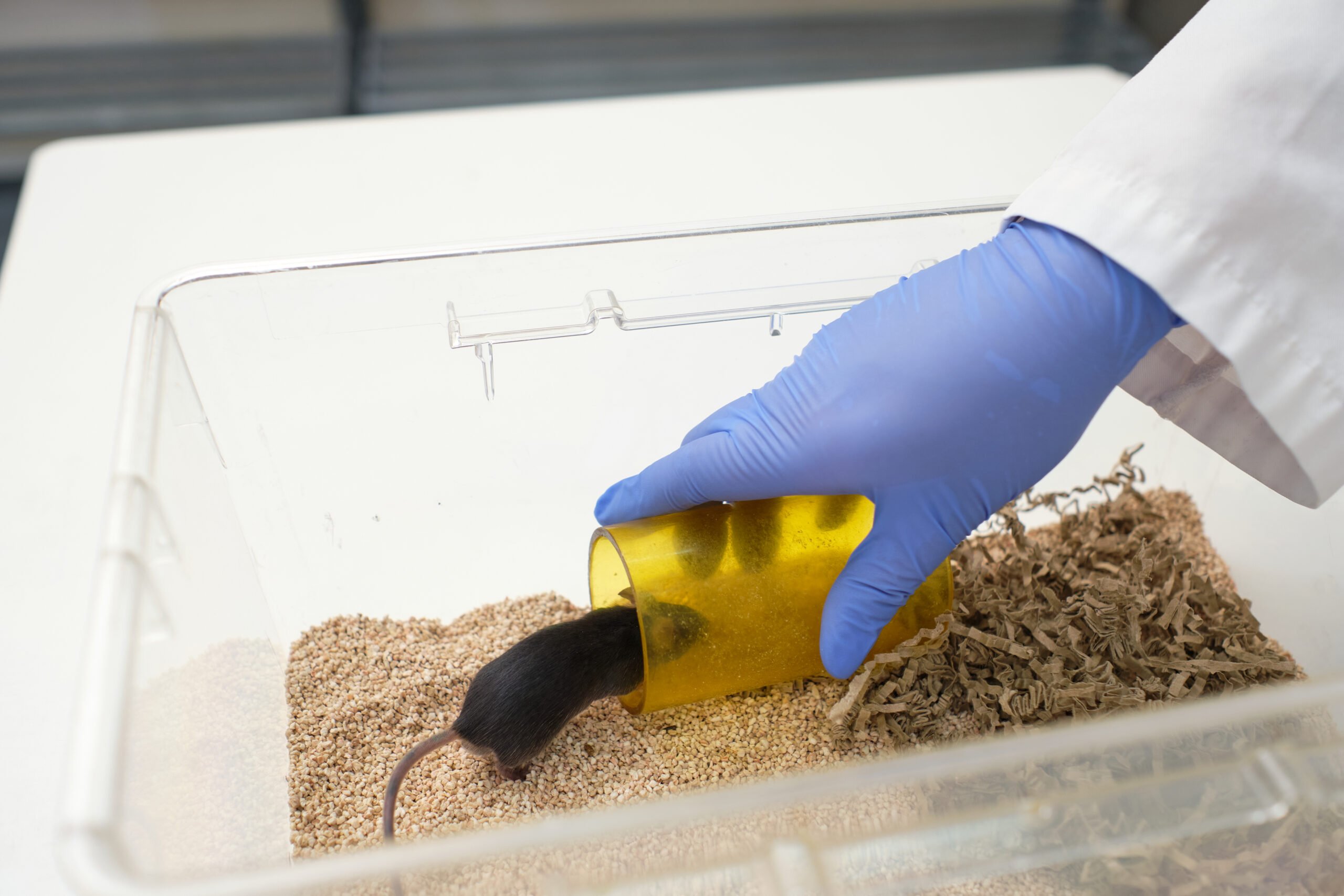
Cancer research is one of the most active areas of biomedical science and one where animal studies continue to play a central role. Cancer is not a single disease but a broad group of conditions involving complex interactions between genes, cells, tissues, the immune system and the wider body. While new approach methodologies, including non-animal methods, are increasingly important, many critical questions about how cancers develop, spread and respond to treatment can currently only be answered by studying living organisms.
Research involving animals is essential for us to save lives. Most cancer treatments used today wouldn’t exist without this type of work.
Cancer Research UK
Why are animals used to study cancer?
Which cancer research areas benefits from animal research?
Immunotherapy has transformed cancer treatment by harnessing the body’s own immune system to target cancer cells. One major class of immunotherapy, known as checkpoint inhibitors, was first shown to be effective in mice by revealing how cancer cells suppress immune responses. Animal studies enabled researchers to understand the molecular “brakes” used by tumours to evade immune attack and to identify ways to block them. This work laid the foundation for checkpoint inhibitor therapies now used to treat cancers of the lung, kidney, skin and lymphatic system. The pioneers of this approach were awarded the Nobel Prize in Physiology or Medicine in 2018.
Animal research continues to play a crucial role in improving immunotherapy and understanding why it works well for some patients but not others. A recent UK study, at the Wellcome Sanger Institute, identified two genes that influence how tumours respond to immunotherapy. By combining cancer cells from patients with cells from their own immune system and testing the findings in genetically modified mice, researchers showed that tumours lacking these genes were more vulnerable to immune attack. In these mice, tumours grew more slowly and were more likely to regress when treated with immunotherapy. Data from patients supported these findings, suggesting that such genes could be used as predictors of which patients are most likely to benefit from treatment.
In pancreatic cancer, one of the most difficult cancers to treat, decades of animal research paved the way for a new clinical trial in the UK combining an immunotherapy drug, pembrolizumab, with the targeted therapy olaparib. Pembrolizumab was first studied in humanised mice, where it was shown to help the immune system recognise and attack cancer cells, while olaparib was originally tested in mice to demonstrate how it prevents cancer cells from repairing DNA damage. Together, these approaches are now being tested in patients whose tumours carry specific genetic changes, aiming to improve outcomes while reducing unnecessary side effects.
EARA member Uppsala University has shown that a new antibody treatment in mice combining multiple immune-activating functions can both slow tumour growth and, at higher doses, prevent cancer from developing altogether. By precisely targeting cancer-specific gene alterations and amplifying the activity of specific immune cells, this approach is used to test complex, immune-based therapies before they are considered for use in people.
Why haven’t we found a cure for cancer?
Which animals are used in cancer research?
Zebrafish offer unique advantages in cancer research, particularly because their transparent embryos make it easier to visualise cancer cells and tumours in living animals, as well as track how they may spread. Cancer cells from patients can be transplanted into zebrafish to rapidly assess how tumours respond to different treatments and their toxicity.
By artificially introducing genes linked to cancer into zebrafish, these animals can develop tumours that have very similar characteristics to human cancers.
Zebrafish embryos are also widely used in genetic screens. These large-scale tests in which normal animals are compared with those that have had specific mutations introduced, to detect differences between them, allowing researchers to identify genes, molecules and pathways involved in cancer, thus supporting drug discovery.
However, zebrafish cannot model every aspect of cancer seen in mammals. Some organs commonly affected by cancers, such as the lung, breast and prostate, are not present in zebrafish, limiting how certain tumour types can be studied. In addition, young zebrafish do not yet have a fully developed adaptive immune system, which restricts their use for studying complex interactions between tumours and the immune system. Their lower body temperature can also influence how transplanted human tumour cells behave. For questions requiring full immune responses, organ-specific cancer models or long-term disease progression, researchers therefore rely on complementary mammalian models, such as mice.
More about the role of zebrafish in biomedical research can be found here.
Limitations of animal research in cancer
New approach methodologies in cancer research
Artificial intelligence is also accelerating cancer research by helping scientists design and optimise experiments. For example, a new AI tool developed by Stanford University Medical Center called CRISPR-GPT uses large volumes of published data to suggest experimental strategies and flag potential errors before laboratory work begins. In early tests, CRISPR-GPT successfully guided researchers in switching off genes that support tumour growth in lung cancer cells and activating genes linked to treatment resistance in skin cancer cells, with experiments working on the first attempt. Such tools can speed up discovery and make research more efficient.
Cancer is a complex, whole-body disease that involves not only uncontrolled tumour growth but also interactions with blood vessels, the immune system and distant organs, particularly during metastasis - the spread of cancer to other parts of the body. NAMs currently capture only parts of cancer biology and cannot yet reproduce whole-body interactions, immune responses or long-term disease progression. As a result, they complement rather than replace animal research in cancer studies, which remains essential for understanding how cancer behaves within a living organism.